Market intelligence · daily brief
Freight bills outpace volume, LA and Long Beach watchmen delay a strike, and small suppliers lose margin to fuel and tariffs
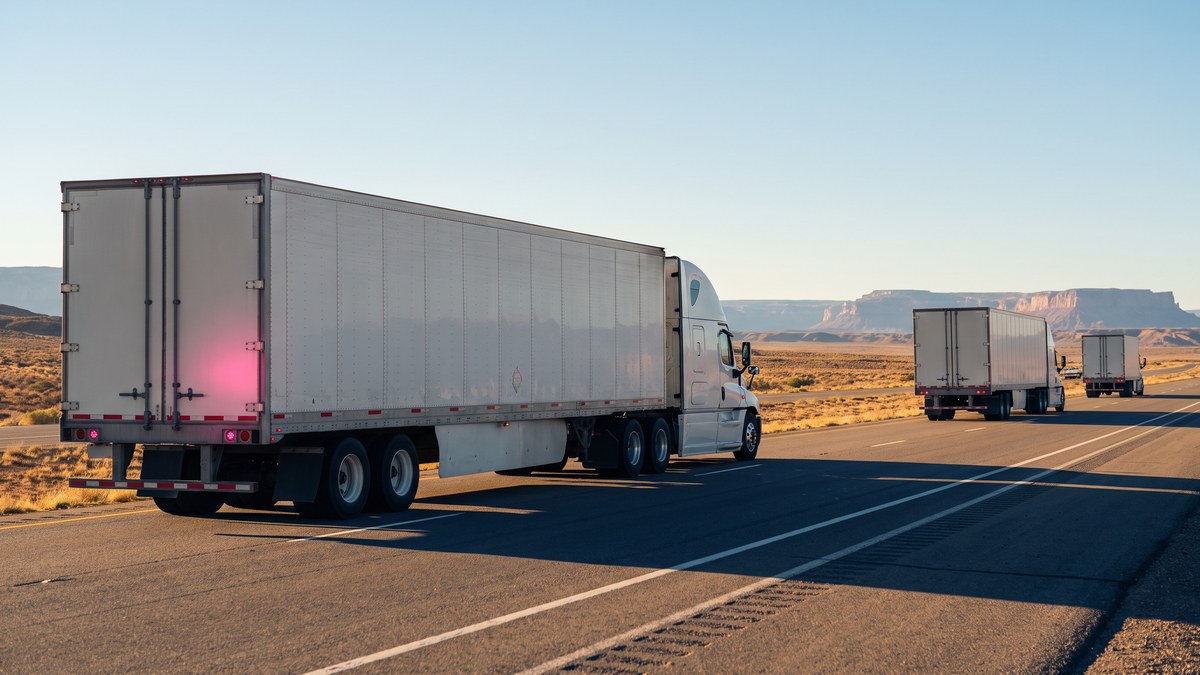
Shippers are paying far more to move about the same amount of freight, security watchmen at the Los Angeles and Long Beach ports have put off a threatened strike while talks continue, and a study of private-company financial statements finds small firms in fuel-heavy, tariff-exposed industries giving up margin even as their sales grow.
Shippers pay far more to move about the same amount of freight
Shipper spending in the third quarter was 32.1% higher than a year earlier, the biggest annual rise since 2021, according to U.S. Bank's latest Freight Payment Index, as reported by CSCMP's Supply Chain Quarterly. The report puts most of the increase down to tighter carrier capacity and diesel above $6.50 a gallon nationally.
Volumes barely moved. National shipments rose 0.4% from the second quarter and 0.5% from a year earlier, the first gain on both measures since 2021. Outlays are "rising much faster than freight volumes," said Bob Costello, the American Trucking Associations' chief economist, so shippers "are spending substantially more to move essentially the same amount of freight".
Spending went up in every region, against both the prior quarter and the prior year. The Southwest had the steepest annual increase, 51.6%, which the report links to especially tight capacity after enforcement actions cut the number of drivers available for domestic hauls. In California, diesel reached $8.25 a gallon in late September.
Why it matters: When freight rises faster than the goods it carries, delivered prices can climb even if a supplier's own costs hold still. Buyers renewing freight or delivered-price agreements can ask carriers and suppliers how fuel surcharges are set, which lanes are tightest, and whether another route or mode would lower the bill.
LA and Long Beach watchmen push their strike deadline to Nov. 4
The roughly 250 watchmen who guard terminals at the ports of Los Angeles and Long Beach will keep negotiating past their Nov. 1 deadline, which postpones a strike that could have stopped cargo, SupplyChainBrain reports, citing Bloomberg. Their union, ILWU Local 26, and the employers' group, the Pacific Maritime Association, signed an extension that runs to 5 p.m. on Nov. 4, the PMA said on Oct. 30.
The watchmen's last contract expired in July 2025, and the two sides have met regularly since then with help from the Federal Mediation and Conciliation Service. The watchmen guard six container terminals across the two ports, and the PMA has warned that dockworkers and marine clerks, who have their own contracts and are not part of this dispute, are expected to back the watchmen if they walk out.
According to the PMA, a disruption at those terminals could affect roughly 85% of Long Beach's cargo and one-third of what moves through Los Angeles. The two neighboring ports recently reported record volumes, and between them they carry roughly one-third of the nation's containerized goods arriving or leaving by sea.
Why it matters: The deadline moved, but the risk did not go away. Importers with containers due at the two ports this week can confirm with their forwarders which terminals handle their boxes, keep a trucking or alternate-gateway fallback ready, and check how many days of stock would cover a short stoppage.
Small private firms lose margin to fuel and tariff costs as sales grow
Small private companies in industries exposed to both tariffs and heavy fuel, freight or energy bills saw gross margins shrink in 2025 even as their sales held up, according to an analysis by Abrigo, a risk and lending software provider for US financial institutions, reported by CSCMP's Supply Chain Quarterly. The study compared 2025 results with a 2024 baseline across 17 tariff-exposed industries, looking only at US companies with sales under $50 million.
The four most exposed industries, which include primary metals makers and trucking companies, saw median sales growth improve by 3.1 percentage points while median gross margins fell 166.3 basis points. Primary metal manufacturing was squeezed hardest: its margins narrowed by 583.1 basis points while its sales-growth rate rose 6.7 points. Trucking showed a similar split, as sales growth improved 3.0 points while margins narrowed 332.7 basis points.
"Small businesses typically have less margin to absorb the impact that tariffs may have on their input costs," said Rob Newberry, a senior consultant at Abrigo, adding that some may need extra funding before they can pass the increases to customers. The figures come from private-company financial statements in Abrigo's own banking data platform, so they describe privately held borrowers rather than every small supplier.
Why it matters: Many metals, construction and logistics suppliers fit this profile: small, privately held and paying both duties and diesel. Buyers can expect more price-increase requests from them, and can watch for signs that thin margins are straining a supplier's cash, deliveries or quality before that turns into a missed shipment.
The thread
Each item shows where the cost of moving and making goods is landing: freight bills climbing faster than volume, a port labor contract still unsettled, and small suppliers paying for fuel and duties out of their own margins. Buyers who know where those costs sit can decide early whether to absorb, share or route around them.