Retail Procurement Transformation

AI-Powered Sourcing for Retail Companies

Retail procurement operates under permanent pressure with thin margins and complex indirect spend. Over 80% retailers surveyed say they're spending more time sourcing with lower pay than in the past.

THE CHALLENGE

Why Retail procurement is leaving money on the table

Retail procurement operates under permanent pressure: margins are structurally thin, consumer demand shifts seasonally, and indirect spend categories โ€” packaging, store supplies, marketing services, fixtures, logistics, uniforms โ€” proliferate faster than sourcing teams can manage. Yet despite this complexity, the majority of retail procurement events below a certain value threshold never reach structured competitive bidding. They are awarded to incumbents via email, repeat purchase orders, or buyer discretion.

Industry benchmarks consistently show retail organizations leave 8โ€“15% of addressable indirect spend on the table annually due to insufficient competition and unstructured sourcing processes. For a $500M retailer spending 20% of revenue on indirect categories, that represents $8โ€“15M in unrealized annual savings.

The real competition isn't Coupa or Jaggaer โ€” it's still Excel and email. Most procurement events in this industry run on spreadsheets and email chains, not enterprise platforms.

Why This Moment Matters

Three forces are converging simultaneously: a talent crisis as experienced practitioners retire faster than they are replaced, mounting cost pressure to do more with less, and supply chain volatility that has made supplier diversification a board-level imperative.

For financial services specifically, CFOs and boards are now paying attention to procurement in a way that would have been unthinkable pre-2020. Technology spend is under scrutiny as SaaS proliferation inflates the technology cost base. Professional services spend is under pressure as cost discipline becomes a board-level mandate. Third-party risk management has moved from a compliance checkbox to a strategic function. All three create demand for exactly what AI-native eSourcing delivers: structured, documented, competitive procurement at speed.

THE SOLUTION

How AI-Native eSourcing changes the question

Zinit's AI-native platform eliminates the friction that prevents competitive bidding from happening at scale in retail environments.

Seasonal category coverage

Retail procurement has pronounced seasonal cyclesโ€”holiday packaging, summer promotions, back-to-school fixtures, Valentine's Day POS materials. Zinit generates structured RFPs for these events in minutes, enabling sourcing to happen before the seasonal window closes rather than defaulting to incumbent pricing by default.

Rapid supplier expansion

Zinit's 103-million-supplier network surfaces regional packaging converters, specialty fixture manufacturers, and alternative logistics providers that most retail teams have never engaged. AI matching is based on category, geography, and qualification criteria โ€” not just keyword search.

Tail spend at scale

In retail, tail spend is disproportionately large. Store-level purchases, maintenance contracts, cleaning services, and facility supplies often bypass procurement entirely. Zinit's same-day deployment and intuitive interface enables store operations and category managers to run structured events without any IT support or training program.

Bid normalization

Retail bids arrive in non-comparable formats โ€” different packaging units, different service inclusions, different delivery terms. Zinit enforces apples-to-apples comparison, eliminating the incumbent advantage that comes from specification ambiguity.

Cycle time compression

Zinit reduces sourcing cycle time by up to 90%. In retail, speed is itself a savings lever: faster sourcing means fewer emergency purchases, fewer sole-source awards under time pressure, and more time to negotiate.

WHERE WE HELP MOST

Key spend categories for Retail

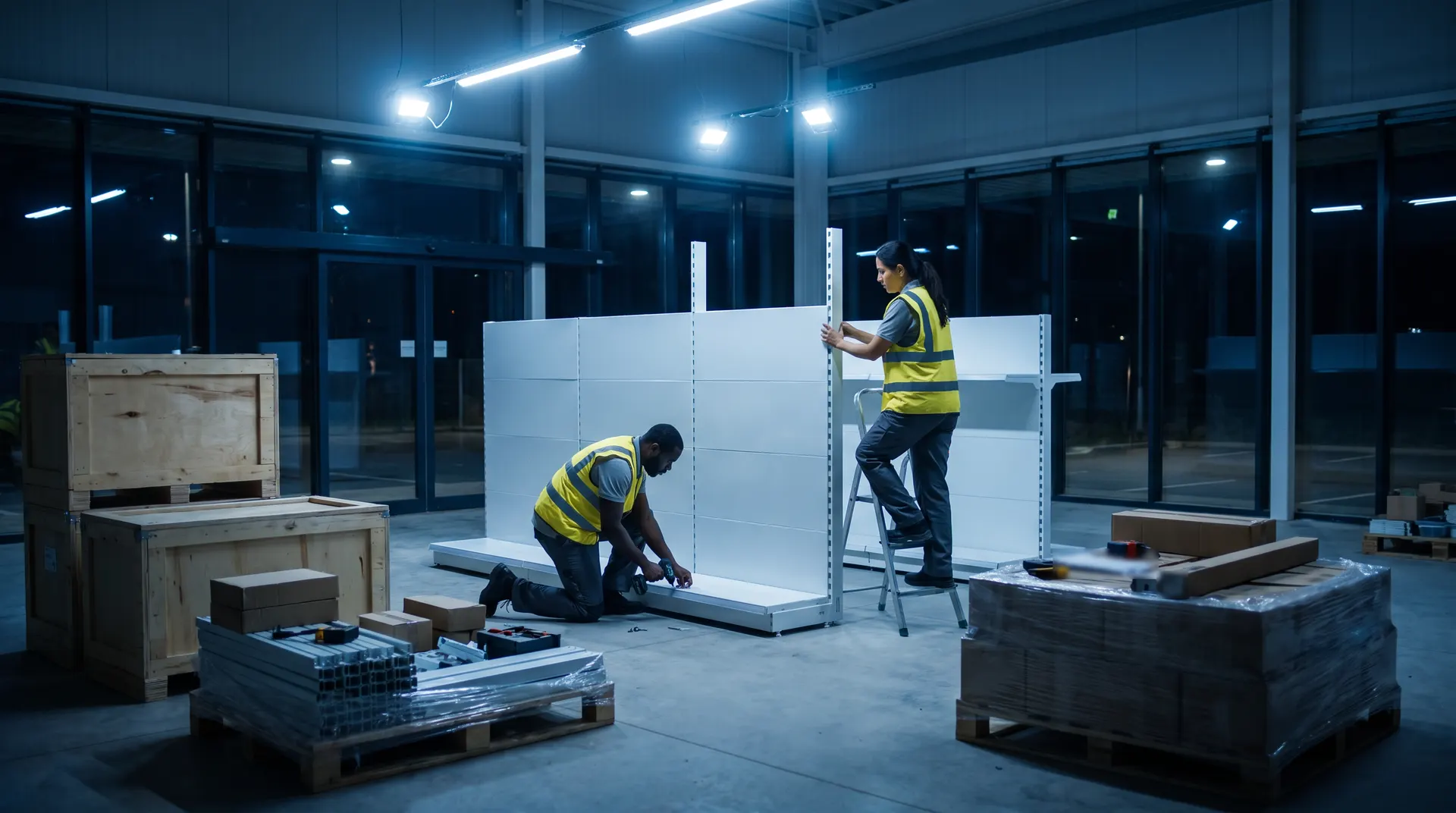
Store Operations & Fixtures & Retail Supplies

Shelving, displays, signage

Packaging & Labeling

Packaging materials

Marketing promotion & Point of Sale

In-store marketing materials

Logistics & Fulfillment (e-com)

3PL, warehousing

Facility management & maintenance

Store facility services

Professional services

Consulting, legal services

VERIFIED BENCHMARKS

Proven savings across retail categories

Category / LeverSavings Range
Packaging materials (competitive re-sourcing)12โ€“22%
Store fixtures and displays10โ€“18%
Marketing production and promotions15โ€“25%
Logistics and carrier services8โ€“15%
Facility management and janitorial15โ€“25%
IT hardware and peripherals10โ€“18%
Professional services12โ€“22%
Uniforms and PPE10โ€“18%
Sourcing cycle time reductionUp to 90%
Supplier participation per event2x increase
TYPICAL OUTCOMES

What you can expect

15โ€“25% reduction across addressable indirect spend categories

60โ€“80% reduction in sourcing cycle time per event

2โ€“4x increase in supplier participation per bid

Complete sourcing documentation supporting audit requirements

Same-day deployment โ€” no implementation project, no IT resources required

WHY ZINIT

Why Zinit vs. Traditional Sourcing Platforms

Legacy platforms like Coupa or Jaggaer require 6โ€“12 month implementations, large IT budgets, and dedicated procurement technology teams before the first sourcing event runs.

Zinit removes these barriers entirely.

Traditional platforms

  • 6โ€“12 month implementation
  • large IT budgets
  • dedicated procurement technology teams

Zinit

  • deploys in under 24 hours
  • zero IT involvement
  • outcomes-based pricing

Result

AI-native eSourcing accessible regardless of company size or existing technology stack.

The No-Risk Starting Point

Start with a one-hour tail spend benchmark: Zinit can show where its pre-negotiated rates and competitive supplier pool beat your current pricing โ€” at zero cost and zero commitment. Most procurement leaders can't say no to that conversation.

Request a Demo