Zinit Industries Pharma & life sciences

Pharma procurement on both sides of the GxP line.

Inside the line, the supplier you choose sets how long quality and FDA take, because a site FDA has already inspected for the work usually comes in on a 30-day supplement instead of months of prior approval. Outside it, a category can go out to bid this quarter. Zinit's AI agents search suppliers by region, qualification and FDA inspection record, collect what quality asks for with every bid, and run the events your team approves.

  • 103M+ supplier and company database
  • First RFP in under an hour
  • Your team directs and approves
  • SOC 2
Example company: its suppliers at the GxP lineOne patented tablet, made in the US from an imported API (fictional)
6 months soonerPicked on its FDA record, the second source ships its first lot in month 18 instead of month 24, and every month on the imported API costs the example $600,000.
  1. 100%duty

    on imported patented drugs, their APIs and the APIs' key starting materials from September 29, 2026, unless the country of origin or a company agreement sets a lower rate.

  2. 4months

    FDA's goal for acting on 90% of prior approval manufacturing supplements, while product made under a 30-day supplement can ship 30 days after FDA receives it.

  3. 12%held over a facility

    of FY2024-25 applications and supplements needing a facility assessment drew a complete response letter because of a facility, and more than half of those facilities were already rated OAI or potential OAI.

What an imported API for a patented drug pays from September 29, 2026

  1. No plan or agreement: 100% duty
  2. Approved onshoring plan: 20% duty
  3. EU, Japan, Korea, Switzerland: 15% duty
  4. United Kingdom: 0% duty
  5. Onshoring plan and pricing agreement: 0% duty
  6. Made in the US: 0% duty
  7. Generics and biosimilars: 0% duty
Section 232 duty under Proclamation 11020 of April 2, 2026, on patented drugs, their APIs and the APIs' key starting materials. Excipients, and imports solely for clinical trials or research, carry none. The 17 companies listed in Annex III started on July 31, 2026, and every other company on September 29.

Worked example: what each month on the imported API costs

$600,000 a month

  • Duty on the imported API$9.6M a year × 100% ÷ 12$800,000
  • Less Maker A's higher price$9.6M a year × 25% ÷ 12−$200,000

Six months sooner is $3.6M. Our arithmetic from the example's own figures, since the audits, transfer, validation batches and stability program cost the same on either path. With an approved onshoring plan the duty would be 20%, or $160,000 a month, until it rises to 100% on April 2, 2030.

RFPs published from

  • Caterpillar - Zinit customer logo
  • Wipro - Zinit customer logo
  • Bacardi - Zinit customer logo
  • JD.com - Zinit customer logo
  • Cargill - Zinit customer logo
  • Avery Dennison - Zinit customer logo

Where the GxP line runs through a site's spend.

The line does not follow the split between direct and indirect spend. CGMP covers anyone whose work touches the product, its materials, its records or the rooms where it is made, so the contractor cleaning the filling suite sits inside the line while the same company cleaning the offices sits outside it. Your quality unit decides which side each supplier is on, and that decision sets how a change is made.

Inside: CGMP covers the work

  • Materials

    APIs, excipients, containers and closures are held back from use until your quality unit releases each lot.

    21 CFR 211.84

  • Contract makers and labs

    FDA treats contract manufacturers, packers and testing labs as an extension of your own plant, and your quality unit approves or rejects what they make.

    21 CFR 200.10, 211.22

  • Work in the GMP areas

    Contracted cleaning follows the plant's sanitation procedures, which sit in the same section as the procedures for pest control.

    21 CFR 211.56

  • Consultants, calibration, computer systems

    Consultants who advise on manufacturing must be qualified and recorded, and instrument calibration and the control of computer systems are CGMP duties.

    21 CFR 211.34, 211.68, 211.160

  • Clinical and nonclinical work

    A sponsor selects and oversees each CRO and keeps responsibility for the trial, and nonclinical safety studies run under good laboratory practice.

    ICH E6(R3); 21 CFR 58

Outside: ordinary spend

IT service desks and business software, offices and grounds, facilities outside the GMP areas, travel and meetings, professional services, marketing and event agencies, office supplies.

Quality approves none of it, so it can go out to bid whenever a contract allows.

The rules make you responsible for the work and leave the vendor's qualification to your quality system, which is why the line is your quality unit's call. Device makers follow the QMSR and ISO 13485 instead, which the medical devices tab below covers.

What sets the date in each kind of company.

Large pharma, biotechs, CDMOs and device makers buy inside the same line, but each one holds a different date, and a different supplier decides it.

Large pharma: networks moving under the 2026 duty

What sets the date

  • The duty applies from September 29, 2026 to every company outside Annex III, whose 17 listed companies started on July 31.
  • An approved onshoring plan's 20% rate rises to 100% on April 2, 2030, and the plan may tie its timeline to the FDA approvals it expects.
  • Every site a product moves to needs a filing whose category follows that site's FDA inspection record for the work.

Where sourcing moves it

Candidates searched by region and FDA record, so more moves go in as 30-day supplements, and the categories outside the line competed while the network changes.

Mid-size and emerging biotech: the CDMO and the CRO

What sets the date

  • A biotech's own 10-K says FDA approval is needed before a new manufacturer can make commercial supply, so a CDMO change starts long before the date it is needed.

  • Under ICH E6(R3), final at FDA since September 2025, the sponsor selects and oversees each CRO and keeps responsibility for the trial.
  • OMB's list of biotechnology companies of concern is due by December 18, 2026, and the federal-contract bans follow a FAR revision, with five years of protection for contracts signed before they apply.

Where sourcing moves it

CDMO, testing-lab and CRO searches by modality, capacity and inspection record, with quality's questionnaire in the RFP.

CDMOs: materials bought for clients' processes

What sets the date

  • Each client's quality agreement decides which changes, including a change of component supplier, need the client's approval first.

  • For APIs, ICH Q7 says a contract manufacturer changes no process, test method or specification unless the client is informed and approves.
  • Just under half of 2026's new US drug shortages involved a product made by a single manufacturer, and a forced change then waits for every client's approval.

Where sourcing moves it

Second sources for client-approved materials found and documented before a shortage, so each client's quality unit reviews a file instead of a request.

Medical devices: suppliers under the QMSR

What sets the date

  • Since February 2, 2026 the QMSR has brought ISO 13485:2016 into 21 CFR 820, with an ongoing, risk-based assessment of suppliers.
  • FDA asks for a supplier-driven material change to be analyzed even when the material stays within specification, and the risk questions decide whether a new 510(k) is needed.

  • FDA says about half of US sterile devices are sterilized with ethylene oxide, and EPA's 2024 sterilizer rule began its compliance dates in April 2026.

Where sourcing moves it

Contract sterilizers and component suppliers searched with their certifications, capacity and FDA record, so design and quality assess a short list.

Rules and rates as of October 2026. FDA's review goals under PDUFA VII and GDUFA III run through September 30, 2027.

Who signs a supplier change, and what each signer needs.

Inside the line a new supplier goes through change control, and the quality unit can stop it at any point. The evidence each signer needs can arrive with the bid, so quality starts from a shortlist instead of from an award.


Change control (example)
Change
Add a second source for the API, same route of synthesis
GxP impact
Yes: a material filed in the NDA
Regulatory category
30-day supplement if the new site's last FDA inspection for this work was NAI or VAI; prior approval if FDA has never inspected it for the work or its last inspection was OAI
SignerAssessesGets from Zinit's file
Site operationsAssessesthe transfer plan and the three validation batchesGets from Zinit's fileeach maker's process fit and capacity, stated in its bid
ProcurementAssessesthe event and the commercial termsGets from Zinit's filebids compared on landed cost with the duty, and the months each option takes
QualityCan stop itAssessesthe questionnaire, the audit and the quality agreement, then the release of the first lotsGets from Zinit's filethe questionnaire, certificates and last inspection with the bid, as files for your own quality system, and, where the supplier gives them before an award, its first comments on your quality agreement
Quality controlAssessesfull testing of the first lots before testing is reducedGets from Zinit's filespecifications and certificates of analysis for three batches
Regulatory affairsAssessesthe filing categoryGets from Zinit's fileeach site's FDA inspection classification and date, from FDA's public data
FinanceAssessesthe business caseGets from Zinit's filewhat each month of waiting costs, and what each option saves

FDA asks for the quality agreement to be kept separate from the supply contract, so the two travel with the bid and are signed apart. The roles beyond the quality unit are how a typical change runs, and your own procedure names them.

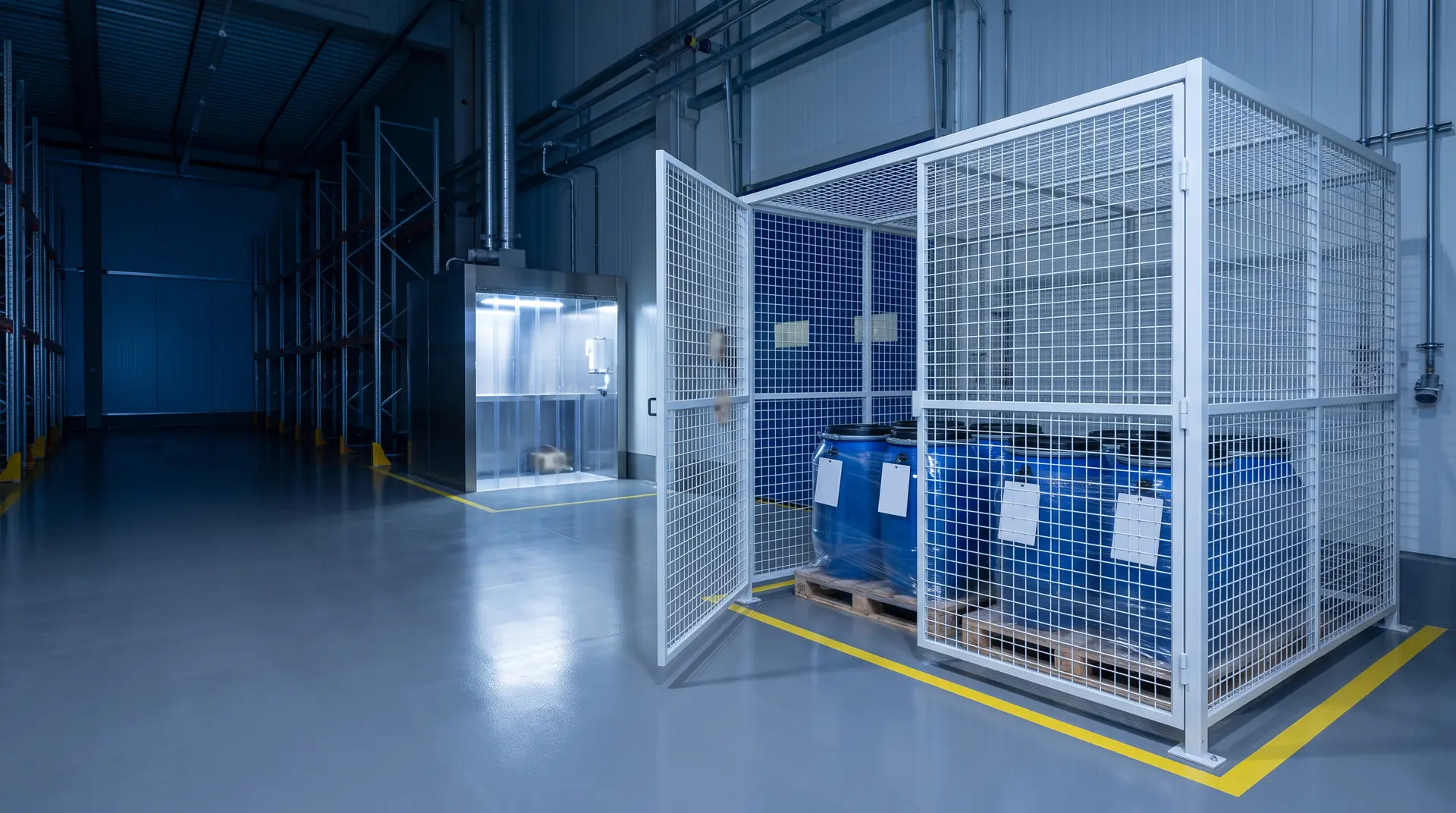
The first drums from a new maker wait in quarantine until quality releases them.

One supplier change, worked through.

The company is fictional, and the rules, rates and FDA clocks are real and cited at the foot of the page. Zinit is connected to your ERP and contract files, so nothing is uploaded, and your team approves each step.

Zinit · Example company · API second source

What Zinit reads, as it is

  • ERPDATA Purchase orders and spend, 24 monthssynced
  • Contract filesPDF Supply and service agreementsread
  • Quality systemCSV Approved supplier list, with each supplier's GxP classread
  • RegulatoryXLSX Sites filed in the NDAread
  • Customs brokerCSV Entries with country of origin and duty paidread
  • Quality systemCSV Open change controlsread

The quality system's lists are read from an export, and nothing is written back to it.

The categories inside the line, and the market for each.

Each category runs on its own clock, so the search reads a different fact first in each one.

Small-molecule API makers

What decides the datethe site's FDA record for the synthesis, and the transfer

Established suppliers
  • Cambrex
  • Curia
  • SK pharmteco
  • Thermo Fisher Scientific (Patheon)
  • Sterling Pharma Solutions

Biologics drug substance

What decides the datecapacity at the right scale, and a transfer measured in batches

Established suppliers
  • Lonza
  • FUJIFILM Biotechnologies
  • Thermo Fisher Scientific (Patheon)
  • AGC Biologics
  • Catalent

Sterile fill-finish

What decides the datethe line's container formats and its aseptic record

Established suppliers
  • Simtra BioPharma Solutions
  • Thermo Fisher Scientific (Patheon)
  • PCI Pharma Services
  • Jubilant HollisterStier
  • Grand River Aseptic Manufacturing

Vials and prefilled syringes

What decides the datea change of container type is a prior approval supplement

Established suppliers
  • SCHOTT Pharma
  • Gerresheimer
  • Stevanato Group
  • BD

Stoppers and seals

What decides the datea closure change that may alter impurities needs prior approval

Established suppliers
  • West Pharmaceutical Services
  • Datwyler
  • Aptar Pharma

Single-use bioprocess systems

What decides the datechange notifications, which surged after 2020

Established suppliers
  • Cytiva
  • Thermo Fisher Scientific
  • Sartorius
  • MilliporeSigma
  • Avantor

Contract testing labs

What decides the datemethod transfer, then a 30-day supplement to move the testing

Established suppliers
  • Eurofins BioPharma Product Testing
  • Charles River Laboratories
  • SGS
  • Pace Life Sciences
  • Alcami

Clinical research organizations

What decides the datethe study's start, with the sponsor responsible throughout

Established suppliers
  • IQVIA
  • ICON
  • Thermo Fisher Scientific (PPD)
  • Parexel
  • Medpace

Device sterilization

What decides the dateethylene oxide capacity and EPA's compliance dates

Established suppliers
  • Sterigenics (Sotera Health)
  • STERIS AST
  • E-BEAM Services
  • Steri-Tek

Established suppliers in each category, shown to illustrate the market, not as a list of Zinit's customers or partners.

The questions a pharma sourcing team asks first.

Does Zinit qualify suppliers or decide which side of the line they sit on?

No. Your quality unit approves every supplier inside the line and keeps the approved supplier list, and your regulatory team sets each filing category. Zinit reads the classification your quality system already holds, finds candidates, and collects the documents quality asks for with each bid.

Does it touch our validated systems?

No. Zinit does the sourcing work beside your quality system, ERP and document management, reading exports and contracts, so supplier approval, change control and release stay in the systems you already run, and nothing is written back to the quality system. The documents quality relies on are filed in your quality system, which stays the record.

Where does the inspection record come from?

From FDA's public Data Dashboard, which publishes final NAI, VAI and OAI classifications by site, date and project area. It does not say which type of operation an inspection covered, and it leaves out pre-approval and state inspections, so your regulatory team confirms the record for the work in question, and a site with no record is checked with the maker before anyone treats it as uninspected.

Does any of this replace the audit?

No. The questionnaire, the audit, the quality agreement and full testing of the first three lots all stay with your quality team. What changes is the order, because the documents that arrive with the bids let quality decide which sites to audit first and book those audits from the shortlist, while the commercial event is still running.

Does a new API maker always come in on a 30-day supplement?

No. FDA's guidance in force makes a move to a site with a satisfactory inspection for that type of operation a 30-day supplement, while a change in the route of synthesis, a site FDA has never inspected for the operation, or other differences in the process make it prior approval. FDA's 2018 draft on drug substance changes, still not final, would treat a new API source as a multiple change. Your regulatory team decides, and the search shows them the facts they decide on.

How does the duty enter the comparison?

Each bid states where the API is made and where its key starting material comes from, because for a patented drug the duty covers both, and the comparison adds the rate that applies to your company. Your trade counsel confirms the classification, the origin and any onshoring plan or agreement.

We make generics. Does any of this apply?

Generics and biosimilars carry no section 232 duty for now, but the change rules are the same for an ANDA, and FDA's goal for a standard prior approval supplement on an ANDA is 6 months, or 10 when a pre-approval inspection is needed. Outside the line, the events are the same for any company.

How long until a result?

The event is set up in under an hour from the specification and route your regulatory team has already released, and the bids take the time the makers need. Outside the line a renewal can be awarded within weeks, and inside it the first result is a shortlist your quality and regulatory teams can act on.

Our filings and formulas are confidential.

They stay that way. The technical package goes only to the shortlisted makers, after the confidentiality agreements your legal team uses are signed, and an API maker receives only the route and specifications your regulatory team has reviewed and released to it.

Will you contact our current maker?

Not without you. Nobody is invited until your team approves the list, and your current maker hears about a second source from you.

What does it cost?

Zinit is supplier-funded and free to buyers: only the supplier your team selects as the winner pays a commission, the losing bidders pay nothing, and nothing is owed until you award. The commission rates are published openly on our site, and because the fee is tied to the award your team makes rather than to who competes, Zinit earns the same whichever qualified supplier you choose.

What does Zinit not do?

It does not make or test anything, approve suppliers, hold your approved supplier list, file with FDA or decide a filing category, and it does not replace your quality system, your ERP or your regulatory team.

Start with one supplier change.

Bring the change your CFO is asking about, or a renewal outside the line, and see its clock with the facts quality and regulatory need already in hand. Your team directs and approves, and Zinit's procurement people work alongside yours.

Sources

  1. [1] The White House (April 2, 2026), Proclamation 11020, Adjusting Imports of Pharmaceuticals and Pharmaceutical Ingredients into the United States100% on patented pharmaceuticals and their ingredients; 15% for the EU, Japan, Korea and Switzerland; 20% with an approved onshoring plan until April 2, 2030; zero with a pricing agreement until January 20, 2029; generics and biosimilars excluded; effective July 31 and September 29, 2026
  2. [2] Federal Register (April 9, 2026), 91 FR 18183, FR Doc. 2026-06956Proclamation 11020
  3. [3] The White House, Proclamation 11020 Annex Ipatented pharmaceutical articles include their active pharmaceutical ingredients and key starting materials
  4. [4] US Department of Commerce, Bureau of Industry and Security (August 4, 2026), 91 FR 49406zero rate for UK-origin patented pharmaceuticals entered on or after July 31, 2026
  5. [5] US Department of Commerce, Bureau of Industry and Security (September 23, 2026), 91 FR 60360excipients are not pharmaceutical articles; no section 232 duty on imports solely for clinical trials or research, from September 29, 2026
  6. [6] US Department of Commerce, Bureau of Industry and Security (May 13, 2026), 91 FR 26989onshoring plan applications may tie their timelines to expected FDA approvals
  7. [7] US Food and Drug Administration, Changes to an Approved NDA or ANDA, Revision 1 (April 2004, still final)a move to a site without a satisfactory CGMP inspection for the type of operation is a prior approval supplement; otherwise most site moves are 30-day supplements; a satisfactory inspection is NAI or VAI
  8. [8] US Food and Drug Administration, CMC Postapproval Manufacturing Changes To Be Documented in Annual Reports (March 2014)a new supplier of an inactive ingredient named in the application, specification unchanged
  9. [9] US Food and Drug Administration, Postapproval Changes to Drug Substances (draft, September 2018, not for implementation)a switch from one drug substance manufacturer to another proposed as a change in source, a multiple change
  10. [10] 21 CFR 314.70supplements and other changes to an approved NDA; product made under a 30-day supplement may be distributed 30 days after FDA receives it
  11. [11] US Food and Drug Administration, PDUFA VII Performance Goals and Procedures, FY2023-202790% of prior approval manufacturing supplements acted on within 4 months, other manufacturing supplements within 6
  12. [12] US Food and Drug Administration, GDUFA III Performance Goals and Program Enhancements, FY2023-2027standard ANDA prior approval supplements within 6 months, or 10 with a pre-approval inspection
  13. [13] US Food and Drug Administration, Report on the State of Pharmaceutical Quality, FY202528% of FY2024-25 submissions needing a facility assessment received a complete response letter, 43% of them over a facility
  14. [14] US Food and Drug Administration, Data Dashboard, compliance dashboardsfinal NAI, VAI and OAI inspection classifications
  15. [15] US Food and Drug Administration, Data Dashboard, inspectionsstate and pre-approval inspections are not included
  16. [16] 21 CFR 211.84components, containers and closures withheld from use until released by the quality control unit
  17. [17] 21 CFR 211.22the quality control unit approves or rejects components and products made under contract
  18. [18] 21 CFR 200.10contract facilities as an extension of the manufacturer's own facility
  19. [19] 21 CFR 211.56sanitation procedures, including pest control, apply to contractors
  20. [20] 21 CFR 211.34consultants
  21. [21] 21 CFR 211.68automatic, mechanical and electronic equipment, including computer systems
  22. [22] 21 CFR 211.160laboratory controls, including the calibration of instruments
  23. [23] 21 CFR 58.1good laboratory practice for nonclinical laboratory studies
  24. [24] US Food and Drug Administration, Contract Manufacturing Arrangements for Drugs: Quality Agreements (November 2016)the owner's quality unit remains responsible; changes to components and their suppliers; quality agreements kept separate from commercial terms
  25. [25] ICH Q7, Good Manufacturing Practice Guide for Active Pharmaceutical Ingredientssuppliers approved by the quality unit; contract manufacturers make no change without the contract giver's approval
  26. [26] ICH Q10, Pharmaceutical Quality System, section 2.7management of outsourced activities and purchased materials
  27. [27] ICH E6(R3), Good Clinical Practice (January 6, 2025)the sponsor selects and oversees service providers and keeps responsibility
  28. [28] US Food and Drug Administration, E6(R3) Good Clinical Practice (September 2025)ICH E6(R3) issued as FDA final guidance for industry
  29. [29] Federal Register (February 2, 2024), 89 FR 7496Quality Management System Regulation, effective February 2, 2026, incorporating ISO 13485:2016; ongoing, risk-based supplier assessment
  30. [30] US Food and Drug Administration, Deciding When to Submit a 510(k) for a Change to an Existing Device (October 2017)supplier-driven material changes analyzed even within specification
  31. [31] Public Law 119-60, National Defense Authorization Act for Fiscal Year 2026, section 851 (December 18, 2025)the OMB list of biotechnology companies of concern within one year; five years of protection for earlier contracts
  32. [32] American Society of Health-System Pharmacists, drug shortage statistics (January 2001 to June 2026)48% of 2026's new shortages involve sole-source products
  33. [33] Abeona Therapeutics, Form 10-K for 2024 (March 2025)FDA approval is required before any new manufacturer can be used for commercial supply
  34. [34] US Food and Drug Administration, Sterilization for Medical Devicesabout half of US sterile medical devices are sterilized with ethylene oxide
  35. [35] US Environmental Protection Agency (April 5, 2024), 89 FR 24090ethylene oxide emissions standards for commercial sterilizers, compliance from April 6, 2026
  36. [36] BioPhorum (August 2022)supply change notifications surged after the pandemic began
Request a demo
Request a demo