Zinit Categories Fleet and automotive

Fleet procurement

Compare fleet management companies, leases and fuel cards on what each mile will cost you

A lease rental is mostly a choice about how fast the vehicle gets paid down, so the lowest number in a stack of fleet bids often leaves the largest balance at sale. Zinit's AI agents put every fleet management company, lessor and fuel card on your own vehicles, miles and resale history, with depreciation, interest, fees, repairs and fuel shown apart, so your team awards on the cost per mile of a whole replacement cycle.

  • 103M+ supplier and company database
  • First RFP in under an hour
  • Your team directs and approves
  • SOC 2

One van, three open-end leases

Upfitted cargo van, 48 months and 72,000 miles. Book value under each bid, against the one resale value all three are held to.

$0$20k$40k$60k012243648Months on leaseBid B $25,020Sells $21,800Bid C $17,360Bid A $12,380
BidRental, month oneBook value, month 48At sale
Bid A$1,437.80$12,380you get $9,420
Bid B$1,168.25$25,020you pay $3,220
Bid C$1,291.68$17,360you get $4,440
Bid B's rental is $123.43 a month under Bid C's because it pays down 60% of the van where Bid C pays down 72%, so at sale this van costs the company $3,220 under Bid B and returns $4,440 under Bid C, and Bid B carries $2,134 more interest along the way.

About four fifths of a fleet's cost per mile is the same under every bid

In the worked example, 420 vehicles run 32,640,000 miles over 48 months at about $0.99 a mile. The vehicles less what they sell for, repairs at network prices and fuel at the pump come to $26.63M whichever supplier wins, because they follow from the order, the used market and the pump. Bidders compete over the rest, $5.80M to $7.05M, and it is the part a rental or a lease rate factor cannot show you.

The whole cycle under Bid C, $32.44M

  • Vehicles less resale $14.84M
  • Fuel at the pump $8.29M
  • Repairs at network prices $3.51M
  • What the bid sets $5.80M

What each bid sets

  • Bid A, the renewal$6.46M

    after $58,828 back from the fuel card

  • Bid B$7.05M

    after $29,798 back from the fuel card

  • Bid C$5.80M

    after $73,535 back from the fuel card

  • Interest
  • Interest while vans wait
  • Management fee
  • Delivery fees
  • Repair markup and fee
  • Accident fees and recoveries
  • Sale fee
  • Telematics

Depreciation is left out of the bars on purpose: every bid's reserves and settlement add up to the same delivered price less resale, apart from the delivery fees shown. The IRS business mileage rate for the second half of 2026 is 76 cents a mile and AAA's 2026 average is $0.86 at 15,000 miles a year, for scale, and neither includes upfit.

Every line of the sheet has a public series behind it, and all four have moved

A resale estimate, an interest index, a fuel price and a repair bill can each be checked against a number your CFO can read, so every bid's assumptions can be put on the same dates.

What vehicles sell for

Manheim Used Vehicle Value Index, January 1997 = 100

205.92020latest

The index peaked at 257.7 in January 2022 and stood at 205.9 in September 2026, 20% lower, so a settlement credit that looked certain on a lease signed near the peak needs a fresh estimate.

What the balance costs

30-day average SOFR, percent

3.91%2020latest

From 0.05% in January 2022 to a high of 5.35% in August 2024, and 3.91% on November 5, 2026. Public lease quotes set the lease charge on the delivery date, subject to a floor.

What a gallon costs

EIA US retail, dollars a gallon, regular and diesel

$6.25$4.312020latest

Regular went from $2.81 in January 2026 to $4.31 in October, and diesel from $3.52 to $6.25, so a percent rebate pays about 1.5 times what it paid in January while a discount in cents pays the same.

What repairs cost

BLS CPI, motor vehicle maintenance and repair, January 2020 = 100

1561222020latest

Up 56.1% from January 2020 to September 2026, against 22.1% for new vehicles over the same months, which changes when keeping an older vehicle stops paying.

A real open-end quote, read line by line

This is one vehicle from a quote a large fleet lessor gave a California county, filed with its board in October 2026. The figures and line names are the quote's, and the reading beside them is ours.

Open-End (Equity) Lease Rate Quote

2027 passenger van, 60 months, 8,000 miles a year

  1. Capitalized Price of Vehicle$41,221.00

    The quote lets this move to the final invoice plus pre-delivery interest, and manufacturer incentives are assigned to the lessor, so ask every bidder to show them on this line.

  2. Other: transport and courtesy delivery$700.00

    $150 and $550 go on the delivered price, so they are financed for all 60 months.

  3. Total Capitalized Amount (Delivered Price)$41,921.00

    Everything below is worked from this number.

  4. Depreciation Reserve @ 1.4500%$607.85

    The percent is a choice, and it is the main reason rentals differ. At 1.45% for 60 months this county pays down 87% of the price.

  5. Monthly Lease Charge$201.67

    Set on the delivery date, subject to a floor. The same lessor's 2022 quote to another California county printed a $70.61 management fee inside this line.

  6. Total Monthly Rental Excluding Additional Services$809.52

    The number most bids get compared on.

  7. Reduced Book Value at 60 Months$5,450.00

    What is left on the books: the delivered price less 60 reserves.

  8. Service Charge Due at Lease Termination$400.00

    $400 here, and $475 and $495 on two other public quotes from the same lessor.

Also billed on delivery, outside the rental: a $170 initial administration fee.

What this county expects at sale

County staff estimated a residual of 60% of the original price at five years, which on $41,221 is $24,733. Less the $5,450 book value and the $400 charge, about $18,900 comes back or goes toward the next lease. A bid at a lower percent would show a lower rental, a smaller credit and more interest, on the same vehicle.

What the master lease behind a quote like this says

From the same lessor's agreement, as a California city filed it in 2025.

  • Within 30 days of the end of the term you pay as additional rent any amount by which book value exceeds the greater of wholesale value or 20% of the delivered price, and if book value is lower, the lessor pays you the difference.
  • That 20% floor falls away if the term runs past 48 months, the vehicle averages more than 15,000 miles a year, or the lessor judges it damaged or unusually worn, so a high-mileage fleet carries the resale all the way down.
  • Wholesale value is determined by the lessor in good faith, so ask how it gets set and ask to see the sale records.
  • End a lease early and the rentals and management fees paid are recalculated by the rule of 78s.
  • Federal tax law names the mechanism: a terminal rental adjustment clause lets the rental move up or down with what the lessor realizes when the vehicle is sold.

Open-end or closed-end decides who holds the resale, so compare them at your real miles

An open-end lease hands you the sale result, good or bad, and a closed-end lease prices the lessor's view of it into the rental and bills you for miles and wear beyond the contract. Leasing executives themselves describe an excess-mileage charge as capturing the extra depreciation those miles cause, which is why the two belong on one tab at the miles you actually drive.

What to readOpen-end (TRAC)Closed-end
Who holds the resaleYou. The sale price against book value is settled in cash, either way.The lessor, as long as the vehicle comes back inside the contract.
What the rental reflectsThe depreciation percent you agree, plus interest and fees.The lessor's own residual estimate, plus interest and fees.
Miles and wearNo separate charge: they show up as a lower sale price.Billed per excess mile, and for wear beyond the lessor's standard, which varies by lessor.
End of termA check to you or from you.Hand it back, pay any charges and walk away.
Ask forBook value by month, any floor, who sets wholesale value, the sale fee.Contract miles, rate per excess mile, whether miles pool across vehicles, the wear standard in writing, early termination.
How it goes on the tabReserves plus the settlement at your resale estimate.Rentals, plus your real miles over the contract at the quoted rate, plus your estimate for wear.

A fuel card discount only counts on the gallons it reaches

Fleet fuel cards quote a rebate, a discount at the pump or a price off the wholesale rack, and each one applies to a different slice of where your drivers actually fill up. The worked example buys 1,922,420 gallons over the cycle, priced at October 2026's $4.31 national average for regular, so the three card offers sort differently once they are laid over its fill data.

Where this fleet's gallons were bought

  • Bid B's partner stations
  • Other retail stations
  • Truck stops
  • Big-box and warehouse clubs
BidThe offerBack per gallon at $4.31At January's $2.81Over the cycle
Bid A1.00% rebate on retail fuel, truck stops and big-box excluded3.06¢1.99¢$58,828
Bid B5 cents a gallon off at its partner stations1.55¢1.55¢$29,798
Bid C1.25% rebate on retail fuel, truck stops and big-box excluded3.83¢2.49¢$73,535

On the pump sign five cents beats 1% of $4.31, though this fleet fills only 31% of its gallons at those stations, so it gets 1.55¢ back against 3.06¢.

What public card contracts show

  • A cooperative agreement a California county took up in 2025 pays non-state members 1.00%, and its definition of qualifying spend leaves out truck stops, big-box locations and gallons already repriced as cost-plus or retail-minus.
  • The same schedule requires payment within 26 days and a three-year contract, and lets the issuer trim the rebate when the federal funds rate is above 5.25%.
  • The issuer's multi-state contract offers 170 basis points plus a prompt-payment scale on 45-day terms, which shows how far the rate moves with volume and speed of pay.
  • The county's staff report lists a discount from a penny a gallon at in-network stations and acceptance at over 95% of stations nationwide, which is why acceptance and discount are two questions.

So every card gets priced on your last 12 months of fill data, by station type, at one price date, with its payment terms and exclusions written next to the number.

Where a fleet management company's money sits, as public contracts show it

The management fee is the line everyone negotiates, while the rest of a fee schedule sits on other lines, inside other lines or off the invoice altogether. These are real figures from public contracts, and they differ because the deals do, so read them as the shape of a fee schedule and put your own bidders' numbers on each line.

The lineWhere it showsWhat public contracts show
Management feeInside another line$70.61 a month inside a county's 2022 lease charge on a $47,073 cargo van.
Maintenance managementOn the invoice$5.35 a vehicle a month in New York's statewide contract as updated in July 2025, and $5.75 in North Carolina's, both light duty.
Supplier discountsOff the invoiceOne lessor's maintenance agreement lets it “retain for its own account” discounts based on its overall volume with a supplier, and one shop network tells shops they typically pay 4.35% per transaction.
Accident handlingPer event$50 for reporting in North Carolina, up to $125 a claim in that maintenance agreement, and $225 all-in per incident in New York.
Recoveries from at-fault driversPer event15% of the amount recovered in North Carolina, and 20% or $105 an incident in New York.
TelematicsOn the invoice$24 to $25 a unit a month and $49 for the device in North Carolina.
Delivery and administrationInside another line$550 courtesy delivery and $150 transport capitalized, and $170 administration billed, on the county quote above.
Selling the vehiclePer event$400 to $495 a vehicle on three public quotes from 2022 to 2026.

The order window can move a replacement by a year, and no rental shows it

Replacement plans run on dates the manufacturers publish and change. Trade data for 2025 put pickups and vans at about 20 weeks from factory order to the first upfitter, then about three months of upfit and another month of transport, and one large fleet manager tells customers to plan eight to twelve months for upfitted units.

Order to in-service, one upfitted van, 2025 figures

Factory order to upfitter20 weeks
Upfit13 weeks
Transport4 weeks

About 37 weeks

Published ordering windows

ModelLast 2026 orders2027 orders open2027 production
FordTransit, gasMay 8, 2026May 11, 2026Aug 10, 2026
FordSuper Duty pickupMay 1, 2026May 8, 2026Aug 10, 2026
RamProMasterApr 30, 2026May 6, 2026Aug 10, 2026
General MotorsSilverado 1500 regular cabMar 27, 2026Oct 15, 2026To be set
General MotorsSilverado 1500 double cabJan 9, 2026Jan 21, 2027Apr 12, 2027

Planning dates from one fleet manager's published schedule, read November 5, 2026. They change without notice, and the schedule warns that body styles, options and colors can drop out before a cutoff.

A Silverado 1500 double cab order that missed January 9, 2026 waits for banks to reopen on January 21, 2027, so a 48-month plan needs its order dates worked back from these windows, vehicle by vehicle.

Who can stop a fleet award, and what each needs to see

  • Treasury and the controller

    Can stop it

    Stops on How the lease lands on the balance sheet. Under ASC 842 a residual value the lessee guarantees counts in the classification test, and amounts probable of being owed count in the lease payments, so the settlement clause can change the answer.

    Needs to see Settlement exposure by class and month, the interest index, floor and reset date, and the clause itself for the lease memo.

  • Risk and insurance

    Can stop it

    Stops on Who may drive what, and who pays when something goes wrong. A vehicle rated at 10,001 pounds or more used in interstate commerce is a commercial motor vehicle under federal rules, and a public lease quote keeps the lessee insuring a vehicle until it is sold.

    Needs to see Driver record checks, accident handling and recoveries by line, and the lease's insurance requirements.

  • EHS and safety

    Can stop it

    Stops on Crashes, which the Network of Employers for Traffic Safety puts at $62 billion a year in direct costs to US employers, and the safety of a completed vehicle, since a final-stage manufacturer certifies a chassis it completes.

    Needs to see Safety equipment specified by class, the upfitter's certification, and who keeps the telematics data.

  • The people who drive them

    Stops on Nothing on paper, though a van whose shelves do not suit the job, or a card refused at the usual station, gets worked around. If cameras or driver scores are in scope, counsel reads your states' rules and any labor agreement first.

    Needs to see A pilot vehicle, the station list against their routes, and a say in the spec.

  • The fleet manager

    Stops on A plan the order windows cannot deliver.

    Needs to see In-service weeks by class, upfitter slots, and how units in term run off.

  • The category manager and finance

    Stops on A number nobody can trace.

    Needs to see Cost per mile across every line, each figure traced to the bid it came from.

How Zinit runs a fleet event

A 103M+ supplier and company database, AI agents that build the sheet and run the bidding, and procurement people who work beside your team.

  1. 1

    Your vehicles, your miles

    Zinit reads your lease schedules, your manager's invoices, fuel transactions, repair orders and past sales, and it builds the sheet every bidder prices: vehicles by class, miles, resale from your own sales, fills by station type and repairs at network prices. Your team confirms it before anyone sees it.

    One set of vehicles and miles that every bid prices

  2. 2

    Managers, lessors and the rest of the line

    Your incumbents and the suppliers your team approves, drawn from a 103M+ supplier and company database and narrowed to a short list your team signs off, from national fleet management companies to regional lessors, card issuers, telematics providers and upfitters near your locations. Nobody is contacted until the list is approved, and a bidder can price one line or all of them.

    A reviewed field before the award

  3. 3

    A whole cycle, leveled

    The first RFP is drafted in under an hour, and your team then settles the specs and terms; the bids take the time they take. Each bid is priced on your sheet with every fee on its own line and resale held to your number, so the settlement and the interest show. Every figure in the table points back to the place in the bid it came from, so your team checks it before finance sees it.

    A cost per mile your finance team can sign

Sometimes the incumbent's renewal is the best bid, and then your team renews with the market's prices in hand. Zinit is not a fleet management company, a lessor or a card issuer: it holds no vehicles and handles no claims, your existing programs keep running until your team decides otherwise, and your team directs and approves every award.

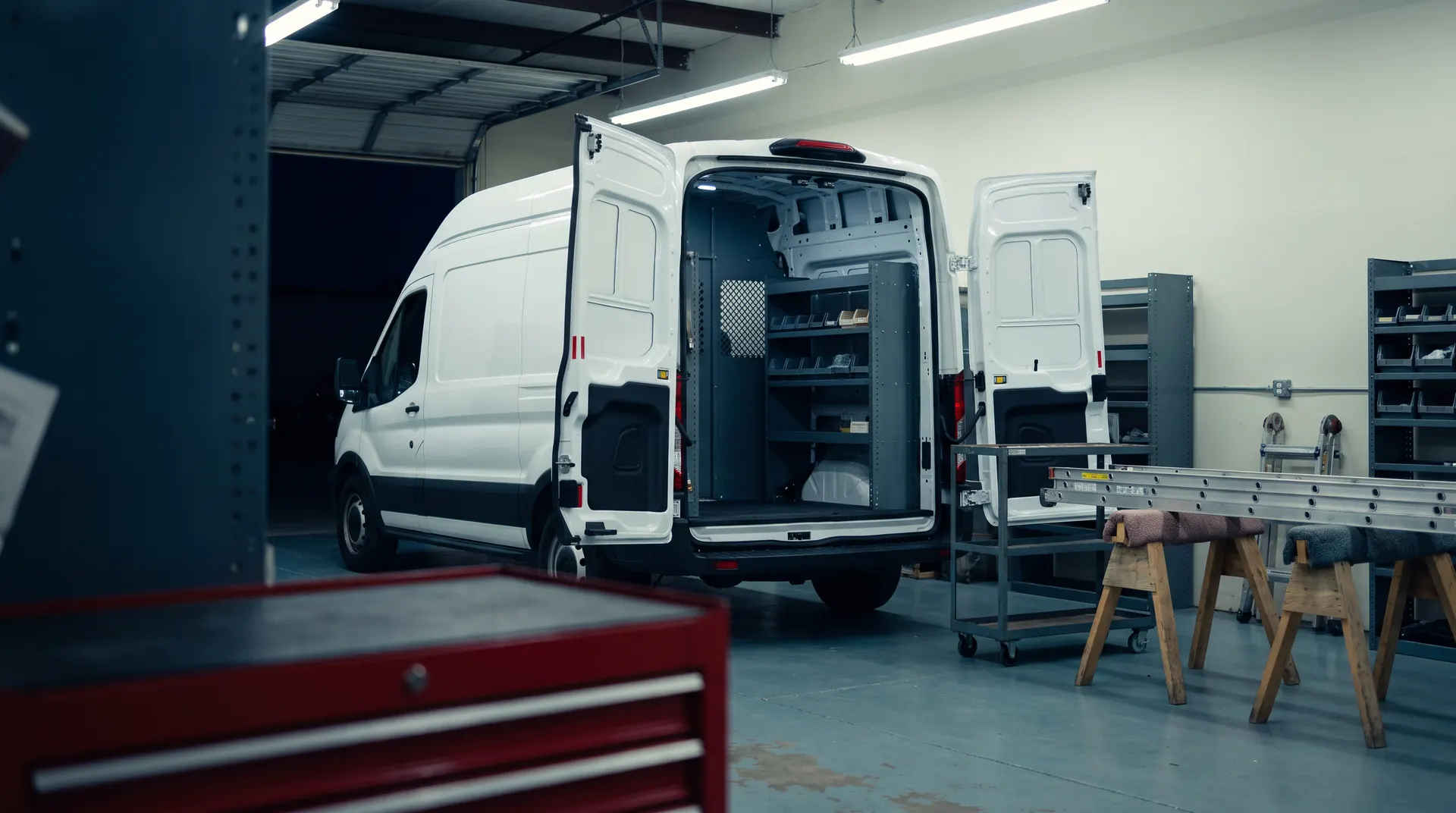
Upfit goes on the delivered price, so it sits in book value until the day the van is sold.

The walkthrough

One event, from your lease schedules to a number your treasury can read

A field-service company with 420 vehicles on a 48-month cycle is sourcing its next one. Every number below is worked from the lines shown.

Read what you already have

Lease schedules, the manager's invoices, fuel transactions, repair orders and past sales go in, and Zinit's agents pull out what a bidder needs.

  • 420 vehiclesthree classes on one 48-month cycle
  • 32,640,000 milesover the cycle, by class
  • 1,922,420 gallonswith where each was bought
  • 248 claimsover the last cycle, with $312,000 recovered from at-fault drivers

VERIFIED BENCHMARKS

Proven savings across Fleet & Automotive Procurement

Category / LeverSavings Range
Fleet management services competitive re-tender10-18%
Vehicle acquisition/leasing competitive RFP5-12%
Fuel program competitive sourcing5-12%
Fleet maintenance contracts10-18%
Telematics and tracking systems12-20%

Read a range like these against the line it names, because each sits on a small part of the cost per mile: in the worked example Bid C is 10.2% below the renewal on what a bid sets and 2.0% below it on the whole cycle.

Where fleet spend sits, and what to hold constant in each

Each of these can go out on its own or as one program, and a fleet manager bundling them is one more bidder on the sheet.

What you buyWhat it coversWhat to hold constant
Fleet management servicesOrdering, titling, maintenance control, accident handling and reportingVehicle count, every fee line, and what each fee includes
Vehicle acquisition and leasingPurchase, open-end and closed-end leases, lease-end programsDelivered price, term, miles, interest index, resale
Fuel programsFuel cards, on-site fuel, fuel management and reportingGallons by station type, one price date, payment terms
Maintenance and repairPreventive maintenance, repair networks, tires, glass, roadsideYour repair orders at network prices, and who keeps supplier discounts
Telematics and trackingGPS, driver behavior, cameras and routingUnits, device, term, and who owns the data
Driver safetyTraining, motor vehicle record checks and policyDrivers covered, checks per driver, and who reviews the results
Upfit and remarketingShelving, racks and service bodies, then the sale of the vehicleSpec by class, the upfitter named, net proceeds after fees
Fleet insuranceCommercial auto liability and physical damageStays with your licensed broker, since Zinit does not place insurance. The sheet carries the lease's requirements.

If you hire carriers rather than run vehicles, that is logistics and freight. Parts and supplies for your own shop are MRO, and insurance brokerage and other financial services are financial services spend.

The market, by what you are buying

A company of any size usually buys from several of these. Regional lessors, upfitters and shops near your locations are invited from the database, so they do not appear here by name.

Fleet management and leasing

ordering, leases, maintenance control and accident handling

  • Element
  • Holman
  • Wheels
  • Enterprise Fleet Management
  • Merchants Fleet
  • Emkay
  • Mike Albert

Fuel cards

card networks, rebates and fuel reporting

  • WEX
  • Corpay
  • U.S. Bank Voyager

Telematics

tracking, driver behavior and vehicle data

  • Geotab
  • Samsara
  • Verizon Connect
  • Motive

Upfit

van interiors, racks and service bodies

  • Knapheide
  • Reading Truck
  • Adrian Steel

Commercial vehicles

the manufacturers' fleet programs

  • Ford
  • General Motors
  • Ram

Remarketing

wholesale auctions and digital sale channels

  • Manheim
  • OPENLANE
  • ACV

Full-service truck leasing

medium and heavy trucks with maintenance included

  • Ryder
  • Penske

Established suppliers in each category, shown to illustrate the market, not as a list of Zinit's customers or partners.

One result across many RFPs, and the companies RFPs were published from.

A mining customer's result across its recent RFPs and the logo row from the homepage, both as the rest of the site shows them.

Mining

Saved over 12% across 28 recent RFPs

A mining customer's recent RFPs, across its categories. The customer is not named.

RFPs published from

  • Magna
  • Avery Dennison
  • Carlsberg Group
  • Ucell
  • JD
  • Cargill

As shown on the homepage.

The questions a fleet team asks first

What does it cost?

Zinit is supplier-funded and free to buyers: only the supplier your team selects as the winner pays a commission, the losing bidders pay nothing, and nothing is owed until you award. The commission rates are published openly on our site, and because the fee is tied to the award your team makes rather than to who competes, Zinit earns the same whichever qualified supplier you choose.

A supplier-funded fee can end up in the rental. Why would yours be any different?

It can, the same way any cost of winning can, which is why the tab compares every bid per mile, so whatever a bidder has built in shows in its number. It is also a different size, since under the fee schedule in Zinit's terms of service an award the size of the example's $24.22M, which leaves fuel out because that money goes to the pump, carries a $5,000 flat fee plus 0.03% of the RFP volume, about $12,300 once, which is about $29 a vehicle and 0.04 of a cent a mile over its 32,640,000 miles, against the $46 management fee Bid C charges on every vehicle every month. If your CFO would rather keep it out of the bids altogether, the same terms let the buyer elect to carry the fee when the RFP is published.

Is Zinit a fleet management company, a dealer or a vehicle broker?

Zinit runs the sourcing event, and it does not sell, lease, title or manage vehicles, so your team contracts with the winner directly. Some states' rules reach a paid party that arranges a vehicle sale or lease whatever it calls itself: Texas bars brokers of new vehicles and licenses vehicle lease facilitators, Virginia and California count negotiating a sale for a commission as dealing, and Ohio bars a dealer from paying a commission to anyone but its own salesperson. Before an event that covers the vehicles themselves opens, Zinit confirms with you and your counsel which states and which lines it can cover under those rules. Zinit gives no legal, accounting or tax advice.

We have hundreds of vehicles on our current lessor's leases. What happens to them?

Nothing moves because an event runs. Units in term stay on their leases until they reach replacement, because ending early brings the recalculation in the lease, and new orders go to whoever wins. That leaves two managers, two portals and two card programs for up to a cycle, which is a real cost, so each bidder prices taking over units in term and your operations lead puts a number on running both before anyone awards. The incumbent can keep the business at the market's prices, and sometimes that is the right answer.

Will a fleet management company quote on your sheet instead of its own proposal?

Some will not. A bidder that sends its own proposal and master lease still goes on the sheet, read line by line for your team to check against its document. Any line it will not state is marked as not stated and carried at your team's own assumption, shown as an assumption, so the total still adds up and the blank stays visible. Public quotes and fee schedules already print these lines, so a blank is a choice the bidder made.

Who sets the resale value on the sheet?

You do, from your own past sales by class and miles, and a bidder who sees it differently writes its view next to yours. Every bid is leveled on your number, and each bidder's remarketing goes in as net proceeds on past units, so a bidder with better sale results can show them without moving the comparison.

Who sees our fleet data?

The suppliers your team invites, under the event's terms, because a bidder cannot price without it. The sheet works by vehicle class, so driver names and unit numbers stay out unless your team adds them.

Should we lease or own?

That is treasury's call, and Zinit gives no accounting or tax advice. The sheet can carry an owned line at your cost of capital, with the same resale and the same repairs, so the difference shows up in dollars before anyone decides.

Can a fuel card or telematics go out without the fleet manager?

Yes. Each line can be priced and awarded on its own, and a manager who bundles them states what it charges for the line alone, so your team can see what the bundle is worth.

Do you have a fleet reference we can call?

Not yet, and we would rather say so. The results we can show come from other categories, so the fair way to test this is one line, such as the fuel card or the next batch of vans, on your own data, before anything bigger.

Is this only for vans?

No. Pickups, cars and medium-duty trucks run the same way, each with its own class on the sheet. The worked example leans on an upfitted van because that is where the capitalized cost, the resale and the wait pile up.

Start with the fleet contract or order cycle that comes up next

Bring your lease schedules, 12 months of fuel and repair data and your last vehicle sales. Zinit builds the sheet, runs the event and levels the bids per mile, with your team directing and approving every step.

Sources

  1. [1] County of Stanislaus, Board of Supervisors agenda item 5.B.4 (October 13, 2026), with Enterprise FM Trust Open-End (Equity) Lease Rate Quote 10159466 (July 29, 2026)the quote read line by line; the 60% residual estimate, $400 handling fee and lease charge set on delivery
  2. [2] City of Grover Beach, staff report on the Enterprise Fleet Management agreement (April 28, 2025), Master Equity Lease Agreement section 3additional rent against the greater of wholesale value or 20% of the delivered price; what removes that floor; the rule of 78s; interest before delivery
  3. [3] County of San Benito, Enterprise FM Trust lease rate quote 6155175 (January 5, 2022)a $70.61 management fee inside the lease charge on a $47,073.24 cargo van; $475 service charge
  4. [4] City of Salem, Illinois, Enterprise FM Trust lease rate quote 7190001 (April 27, 2023)$495 service charge on an upfitted chassis cab
  5. [5] City of Lake Oswego, Interstate cooperative contract with Enterprise Fleet Management, Maintenance Management and Fleet Rental Agreement (September 2015)supplier volume discounts retained for the manager's own account; up to $125 a claim
  6. [6] State of New York, Office of General Services, Group 72002 Award 23168, Fleet Maintenance Services, contractor and pricing (updated July 29, 2025)$5.35 a light-duty vehicle a month; $225 accident management all-in; subrogation $105 an incident or 20% of the amount recovered
  7. [7] State of North Carolina, Fleet Management Services contract 958B, ARI pricing workbook$5.75 a month to manage light-duty vehicles; $50 accident reporting; 15% subrogation; telematics $24 to $25 a unit a month, $49 device
  8. [8] Fleetio, FAQs for shops in its maintenance shop networkthe shop typically pays 4.35% per transaction, plus a shop fee
  9. [9] County of Stanislaus, Board of Supervisors agenda item (November 18, 2025), WEX Bank agreement through Sourcewell1.00% for non-state members; truck stops, big-box and repriced gallons excluded; payment in 26 days, three-year contract, the federal funds adjustment; a penny a gallon in network; over 95% of stations
  10. [10] NASPO ValuePoint, Fleet Card Services, WEX Bank Exhibit C2170 basis points standard volume incentive, a prompt-payment scale, 45-day terms
  11. [11] US Energy Information Administration, retail gasoline and diesel prices (monthly to October 2026, released November 3, 2026)regular and diesel, January of each year from 2020, January and October 2026
  12. [12] Federal Reserve Bank of St. Louis, FRED, 30-Day Average SOFR (SOFR30DAYAVG), read November 5, 2026the interest index on this page, 3.91%; 0.05% in January 2022 and 5.35% at the August 2024 high
  13. [13] Cox Automotive, Manheim Used Vehicle Value Index, September 2026 trends, and the index workbook through November 2025January values from 2020, the January 2022 peak of 257.7 and 205.9 in September 2026
  14. [14] US Bureau of Labor Statistics, CPI-U, motor vehicle maintenance and repair (CUUR0000SETD) and new vehicles (CUUR0000SETA01), January 2020 to September 2026the repair and new vehicle changes on this page
  15. [15] Internal Revenue Service, Standard mileage rates76 cents a mile for business use, July 1 to December 31, 2026
  16. [16] AAA, Your Driving Costs, 2026 brochure$0.8575 a mile at 15,000 miles a year, weighted average; 11.73 cents a mile for maintenance, repair and tires
  17. [17] Automotive Fleet, Order-to-Delivery Times Stabilize, but Challenges Remain (2025)pickups and vans at 20 weeks; upfit near three months plus a month of transport; eight to twelve months advised for upfit units
  18. [18] Wheels, Ordering and Production Schedule for US Vehicles (read November 5, 2026)order cutoffs, order bank openings and production starts by model; the warning about options dropping out
  19. [19] Automotive Fleet, Open-End Versus Closed-End Leasing (March 29, 2016)who holds the resale; excess mileage charges described as capturing additional depreciation; pooled miles
  20. [20] Automotive Fleet, How to Stay Out of Trouble When Your Closed-End Lease Ends (November 21, 2019)wear beyond normal is billed back, and what counts as normal varies by lessor
  21. [21] 26 U.S. Code section 7701(h), via Cornell LIIthe definition of a terminal rental adjustment clause
  22. [22] KPMG, Handbook: Leases (2026)how a TRAC works; a lessee-guaranteed residual in the classification test and amounts probable of being owed in lease payments under ASC 842
  23. [23] 49 CFR 390.5 and 49 CFR 567.5, via Cornell LIIa commercial motor vehicle at 10,001 pounds or more in interstate commerce; a final-stage manufacturer's certification
  24. [24] Network of Employers for Traffic Safety, Cost of Motor Vehicle Crashes to Employers, 2026$62 billion a year in direct costs to US employers
  25. [25] Texas Occupations Code sections 2301.002, 2301.006, 2301.251 and 2301.253broker and vehicle lease facilitator defined; brokers prohibited; lease facilitators licensed
  26. [26] Code of Virginia section 46.2-1500a motor vehicle dealer includes one who arranges or negotiates a sale or lease on behalf of others for a commission
  27. [27] California Vehicle Code section 285 (Internet Archive capture of the legislature's page)a dealer includes one who negotiates a vehicle sale for a commission
  28. [28] Ohio Revised Code section 4517.20a licensed dealer may not pay a commission in connection with a sale to anyone but its own salesperson
  29. [29] Zinit, Terms of Service, Schedule 1 (effective July 28, 2026)the flat fee and rate on the example's award, and the buyer's election to carry the fee
Request a demo
Request a demo