More qualified aerospace suppliers for every long-lead defense part.
Forgings and castings with one approved source are often the last parts to arrive, and their files need the most justification when a purchasing-system reviewer reads the year's orders. Zinit's AI agents find suppliers your quality team can approve, send the RFQ with your flowdowns attached and level the quotes on price and the week each lot reaches your dock, keeping a record of who was asked.
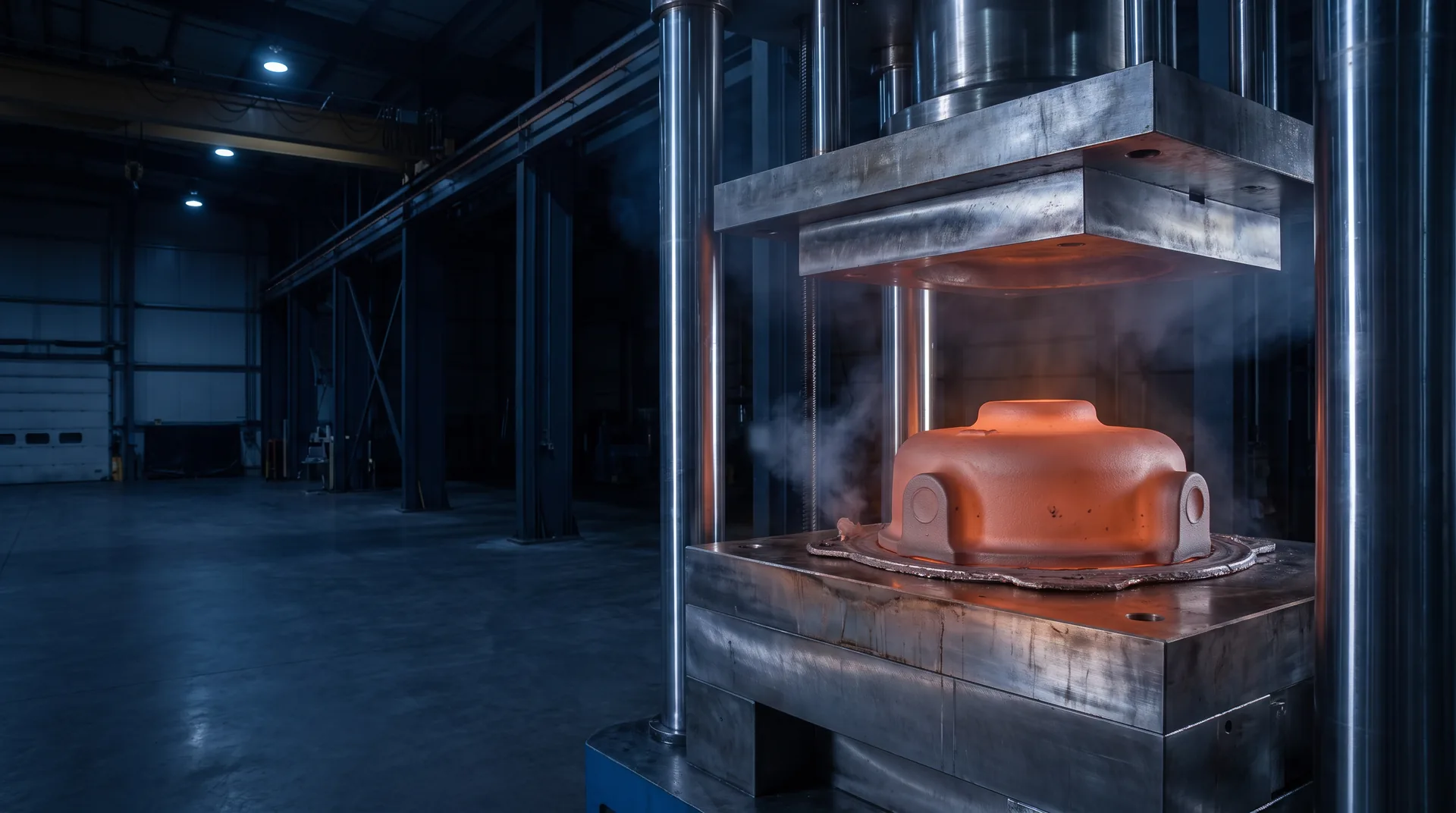
Ti-6Al-4V closed-die forging for an actuator housing, needed on dock in week 50 for the next production lot
RequisitionApproved in week 0holds
FlowdownsDO-A1 rating, domestic-melt specialty metals, quality and cyber clausesholds
Competition1 requested, 1 received, 1 responsivegapReviewer: Number of bids requested, received and responsive?
Sole-source justification"Only approved source", with no record of other sources consideredgapReviewer: Which sources expressed interest, and how were they evaluated?
Price analysisQuote of $12,400 against $7,600 paid in May 2021 (+63.2%)reviewer's questionReviewer: Was the historical price a valid basis for comparison?
Delivery60 weeks after an order in week 3: on dock week 63gap
The incumbent's slot, from order to dock
Forge's quoted lead time, 60 weeksOrder · week 3Needed on dock · week 50On dock · week 63
13 weeks lateAwarded as it stands, the file carries one bid against a price from 2021, and the forgings reach the dock in week 63, 13 weeks after the week 50 the production lot needs them.
Status
Quote received, week 2
Basis
One approved source
Key
holdsgapreviewer's question
How often reviewers found significant deficiencies, by business system
Business system reviews completed in fiscal years 2015 to 2017, as GAO tabulated them
Purchasing DCMA · 260 of 330the example's system79%
Estimating DCAA · 7 of 978%
Material management and accounting DCAA · 9 of 1275%
Accounting DCAA · 0 of 30%
Property management DCMA · 26 of 2,9341%
Earned value management DCMA · 9 of 8911%
GAO-19-212, February 2019. The clauses said "significant deficiency" then and say "material weakness" now. In July 2018 DoD was withholding payments from 11 contractors, about $238 million in all.
Worked example: what a disapproved purchasing system holds back
$1.2Ma month
From the final determination$24M billed a month × 5%$1.2M
While an accepted corrective action plan is followed$24M billed a month × 2%$480k
The ceiling when more than one business system is disapproved$24M billed a month × 10%$2.4M
The $24M is the example company's monthly billing in progress payments, performance-based payments and cost vouchers on contracts under the Cost Accounting Standards, the contracts the clause covers. The money is withheld rather than lost and comes back once the material weaknesses are corrected, which in six cases GAO followed took from 15 months to 5 years or more.
Five questions a purchasing-system reviewer asks of a file, and what Zinit does about each.
DCMA's analysts ask for a year of purchasing transactions about 90 days before a review and read the files against the 24 criteria of the purchasing-system clause. Their guidebook tells them to start with whether each award was competed, because the questions after it depend on the answer.
Question 1
How many bids were requested, received and responsive?
Competition, criterion (c)(7)
What Zinit doesMore qualified sources asked on each long-lead buy, found in a 103M+ supplier and company database and screened on the alloy, the process approvals and the registrations your quality team requires, with every request, quote and response recorded as the event runs.
Question 2
If it was not competed, which sources were considered, and who approved the justification?
Sole or single source, criterion (c)(9)
What Zinit doesThe search behind each sole-source decision kept with it, the sources found and the reason each was ruled out, so the justification your manager signs starts from evidence.
Question 3
Was the historical price a valid basis for comparison?
Price analysis, criterion (c)(10)
What Zinit doesCurrent quotes to compare, and where a part truly has one source, the prior price tested against the published producer price index for that class of part.
Question 4
Were price, quality, delivery and each supplier's capabilities evaluated?
Evaluation, criterion (c)(8)
What Zinit doesQuotes leveled on unit price, new dies and first articles, and the week each lot reaches your dock against the week your program needs it.
Question 5
Does the order carry every flowdown the prime contract requires?
Flowdowns, criterion (c)(2)
What Zinit doesThe RFQ goes out with your flowdown set and the DO or DX rating attached, so each supplier prices the terms it will sign.
Three moves that put competition into the file.
A 103M+ supplier and company database, AI agents that find and screen sources and draft the RFQ, and procurement people who work beside your team.
1
Find qualified sources
Zinit's Supplier Discovery Agent searches suppliers by category, region, and qualification and builds a competitive shortlist, which for a forging means the alloy, the press size, heat-treat and test approvals, export registration and where the metal was melted.
A short list your quality team can approve.
2
Send the RFQ with your terms
The event is set up from the requisition and the specification your export team cleared in under an hour, with the flowdowns and the rating attached, and the quotes then take the time forges need to price dies and first articles.
Quotes on the terms you will sign.
3
Level, award and keep the record
Quotes are leveled on price, dies, first articles and the week on dock, and your team awards with the record of who was asked, who quoted and why the order went where it did.
The award and its record together.
Sometimes no other forge can make the part in time, and then you know it before the order is placed, with the search kept to show it. Your incumbents are invited to every RFQ, and no new source quotes until your quality team approves it.
Who touches a long-lead subcontract, in the order it reaches them.
A forging order passes six desks between the requisition and the award, and the file collects something at each one.
1
Program manager
Owns the need date and the production lot it feeds
Gets from Zinit Each long-lead part's week on dock against the week the lot needs it, before anything is awarded.
2
Engineering and quality
Owns approved sources, first article inspection and special-process approvals
Gets from Zinit Candidates screened on the approvals you set, so quality reviews a short list rather than a directory.
3
Export compliance
Owns which technical data goes to which supplier
Gets from Zinit RFQs that carry only the specification you cleared, sent to suppliers whose registration you have checked.
4
Buyer or subcontract administrator
Owns the RFQ, the flowdowns and the file
Gets from Zinit Requests, quotes and responses recorded as the event runs, with the abstract of offers ready for the file.
5
Pricing analyst
Owns the cost or price analysis
Gets from Zinit Competitive quotes to compare, and the index test for the parts that have one source.
6
Director of procurement
Owns the purchasing system and its review
Gets from Zinit Fewer sole-source files, and the search behind each one that remains.
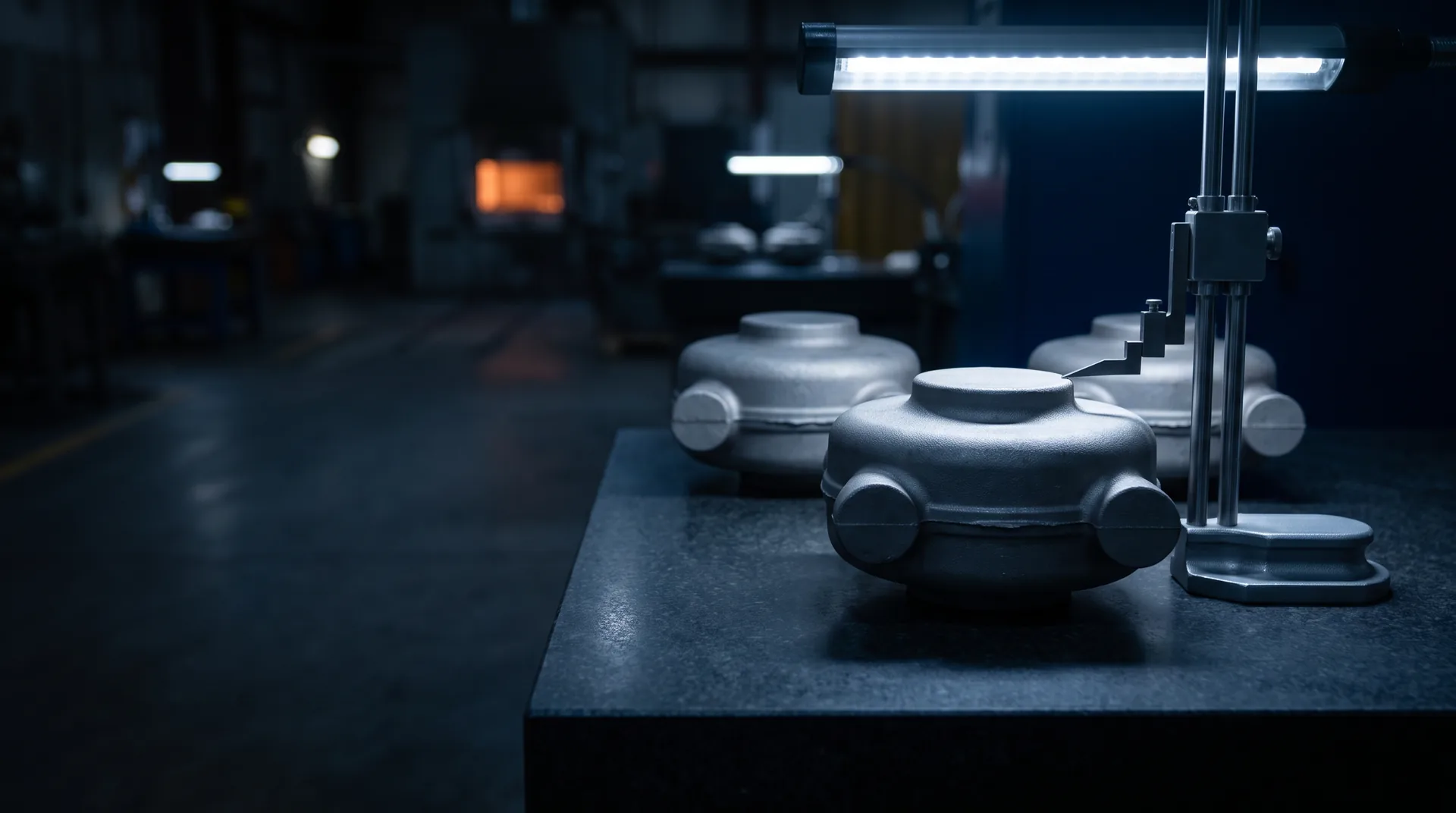
First articles from a new forge, under the inspection that decides when the lot ships.
From the requisition to an award and its record, in six steps.
Click a step. Zinit is connected to your ERP and supplier records, so nothing is uploaded, and controlled drawings stay in your own systems. Every figure belongs to the example part.
Zinit — Example part: titanium housing forging
Connected sources, already read
ERPREQ Requisition R-26-0417: 200 housing forgings, need week 50synced
ERPPO Purchase history: last order May 2021, $7,600 each, one sourceread
QualityASL Approved supplier list: one forge approved for this partread
QualityFAI First article records by supplier and partread
ProgramSCH Production lot schedule: forgings needed on dock in week 50synced
ExportPDF Specification sheet cleared for release to suppliersread
Forges searched and screened
Closed-die titanium forging, with presses the forge states can make the part23
AS9100 quality management system, on its certificate19
Nadcap accreditation for heat treating and nondestructive testing, on its accreditation11
Registered with the State Department under ITAR, as the forge attests9
Specialty metals melted or produced in the United States, as the forge attests6
Approved by your quality team to quote, after a desk review in week 12
Each screen shows what it rests on, a certificate, an accreditation or the forge's own attestation, and your quality team checks them before approving anyone to quote. Approval to quote is not approval to supply, since a new forge joins your approved supplier list only after quality's full review and its first article. Your incumbent is invited as well, so three forges quote, and the forges that passed every screen and were not invited stay in the record as the search behind this decision.
The RFQ, with your terms attached
DO-A1 priority rating, flowed down from the prime contract
Specialty metals melted or produced in the United States
First article inspection to AS9102 for a new source
Your quality clauses, with Nadcap for special processes
The CMMC level your team sets for this subcontract
Unit price, new dies, first article and weeks after order, quoted separately
Bids3 requested3 received3 responsive
Set up from the requisition in under an hour, then sent in week 1, after your quality team's desk review and your export team's clearance, to the incumbent and the two approved forges, and due in week 5, which gives a new forge four weeks to price dies and a first article. The forging drawing reaches each approved forge at the same time through your own controlled release, not through the RFQ.
Abstract of offers: three quotes leveled on price and date
Forging quote
Forge AIncumbent, approved
Forge BNew, found by Zinit
Forge CNew, found by Zinit, billet in stock
Unit price
$12,400
$10,950
$11,600
New dies
owned
$165,000
$140,000
Leveled for 200
$2.48M
$2.36M
$2.46M
Weeks after order
60
52
45
On dock Need week 50
week 63 13 weeks late
week 58 8 weeks late
week 51 1 week late
Forge AIncumbent, approved
Unit price
$12,400
New dies
owned
Leveled for 200
$2.48M
Weeks after order
60
On dock
week 63, 13 weeks late
Forge BNew, found by Zinit
Unit price
$10,950
New dies
$165,000
Leveled for 200
$2.36M
Weeks after order
52
On dock
week 58, 8 weeks late
Forge CNew, found by Zinit, billet in stock
Unit price
$11,600
New dies
$140,000
Leveled for 200
$2.46M
Weeks after order
45
On dock
week 51, 1 week late
Each new forge's weeks include its dies and its first article, counted from an award in week 6. Forge C has titanium billet in stock and reaches the dock in week 51, a week after the need, for $20k less than the incumbent leveled; Forge B is the lowest leveled price and 8 weeks late.
Price analysis: three current quotes and the index test
Paid in May 2021$7,600
Index, May 2021 to August 2026131.2 → 199.290
May 2021 price at today's index$11,544
Quote
Unit price
Against the 2021 price at today's index
Forge A
$12,400
+7.4%
Forge B
$10,950
−5.1%
Forge C
$11,600
+0.5%
Three responsible forges quoted independently against the same requirement, so the price can rest on adequate price competition. The index is the BLS producer price index for titanium and titanium alloy forgings (August 2026, preliminary), up 51.9% since May 2021, and on it the 2021 price sits among the three quotes.
Award Forge C: 12 of the 13 weeks back, with the file
As it stood
With the award to Forge C
Competition
1 requested, 1 received, 1 responsive
3 requested, 3 received, 3 responsive
Sole-source justification
"Only approved source"
Not needed, the buy was competed
Price analysis
Against a 2021 price
Three quotes compared, and the 2021 price tested on the index
Delivery
On dock week 63, 13 weeks late
On dock week 51, 1 week late
Forge C's 45 weeks count on your quality team approving its first article, cut-up tests included, within 4 weeks of receiving it; at 8 weeks the lot reaches the dock in week 55, which makes the first article the next date to watch. The week that remains is for your program manager to absorb in the lot's schedule.
Award Forge COn dock in week 51 instead of week 63, leveled at $2.46M against the incumbent's $2.48M, and the file shows 3 requested, 3 received, 3 responsive.
Which rules a buy runs under depends on who you sell to.
Zinit runs the same search and the same RFQ for each, while the file, the deadlines and who signs change with the contract. Pick yours.
A defense contractor with a reviewed purchasing system
Who buys: The purchasing and subcontracts organization of a company expected to sell more than $50 million a year to the Government, whose administrative contracting officer decides whether its purchasing system is acceptable.
What decides the file and the date
DCMA reviews the system, typically every three years, by asking for a year of purchasing transactions and reading the files against the clause's 24 criteria.
A final determination of material weaknesses withholds 5% of progress payments, performance-based payments and cost vouchers on contracts under the Cost Accounting Standards, 2% while an accepted corrective action plan is followed, and up to 10% when more than one system is disapproved.
Certified cost or pricing data are required above $10 million under prime contracts awarded after June 30, 2026, and above $2.5 million under earlier ones, unless an exception such as adequate price competition applies.
Where sourcing moves it
Competition on more of the long-lead buys, current quotes in place of prior prices, and the week on dock in every evaluation.
A supplier to the airframers and engine makers
Who buys: The supply chain team at a maker of parts, castings or forgings for commercial aircraft and engines, buying under its customers' quality requirements rather than the FAR.
What decides the file and the date
Airbus expects 70 to 75 A320 Family aircraft a month by the end of 2027, and Boeing began moving the 737 to 47 a month in the second quarter of 2026.
ATI said in February 2026 that lead times for titanium and nickel alloys were extending, some to as much as twice the prior quarter's, and Carpenter said in July 2026 that it is not taking orders two years out.
A mill or forge that also makes defense parts must give DO-rated orders production preference over unrated ones when that is what meeting their dates takes.
Where sourcing moves it
A second qualified source started before the rate increase, with its dies, first article and your customer's approvals planned into its date.
A new defense supplier without CAS-covered work
Who buys: A company that has not performed a DoD contract or subcontract under full Cost Accounting Standards coverage in the year before the solicitation, such as a drone, space or munitions start-up.
What decides the file and the date
Since the FY2026 defense authorization act it is exempt from the requirement to keep an acceptable purchasing system, unless the head of the contracting activity waives the exemption.
Unless waived, it does not submit certified cost or pricing data.
Its prime customers still flow their terms down, and the CMMC level for a subcontract is set by the prime or the next tier up.
Where sourcing moves it
A qualified supply base built quickly, with RFQs that carry the terms its customers flow down.
A munitions or missile program in a production ramp
Who buys: The supply chain of a prime or supplier building rounds, rocket motors or missiles under DO- or DX-rated orders.
What decides the file and the date
GAO reported in July 2025 that DoD is raising 155 mm shell output from 168,000 to 1.2 million rounds a year, with the Army qualifying more suppliers for shells and forgings.
In April 2024 GAO found one missile program facing electronic-part lead times that could rise from 19 to 34 months, and two programs struggling to get titanium and nickel on time.
A supplier must accept or reject a DO-rated order within 15 working days and a DX-rated order within 10 working days, and earlier unrated orders are not a reason to refuse.
Where sourcing moves it
Second sources for forgings, castings and electronics qualified while the ramp still has time, with the rating flowed down on every order.
Rules as DoD applies them in October 2026, under the class deviations that put the FAR overhaul into effect. Your contract and counsel decide.
What the castings and forgings market has said, with dates.
Statements from the Defense Department, GAO and the companies themselves, each with its date, beside what the inputs cost now.
Oct 2021GAO
Small businesses receiving DoD contract awards fell from 42,723 in fiscal 2011 to 24,296 in fiscal 2020.
Feb 2022Department of Defense
In 2020 the Defense Logistics Agency found castings and forgings parts in 30,061 of 32,597 specialized end items, and only one US foundry can make the large titanium castings some key systems need.
Apr 2024GAO
One missile program's lead time for circuit card assemblies could rise from 19 to 34 months, and two programs had trouble getting titanium and nickel on time.
Jul 2024BCG
Titanium lead times of about nine months, and 70 to 80 weeks for one supplier's high-demand steel alloy.
Jul 2024GE Aerospace
80% of its material input shortages traced to 9 suppliers at 15 sites.
Jul 2025GAO
155 mm shell output rising from 168,000 to 1.2 million rounds a year, with more suppliers being qualified for shells and forgings.
Feb 2026ATI
Lead times for titanium and nickel alloys extending, some to as much as twice what they were a quarter earlier.
Feb 2026US Geological Survey
The United States produced no titanium sponge in 2025, so its net import reliance for sponge was 100%.
Jul 2026Carpenter Technology
Not taking orders two years out, with engine customers more worried about capacity than demand.
Producer prices since January 2020: inputs against aerospace products
BLS producer price indexes, January 2020 to August 2026 (preliminary), not seasonally adjusted
Titanium and titanium alloy forgingsthe example's part+65.2%
Bolts, nuts, screws, rivets and washers+55.9%
Nickel and nickel-base alloy mill shapes+48.0%
Steel investment castings+42.7%
Ball and roller bearings+42.0%
Iron and steel forgings+39.2%
Titanium and titanium-base alloy mill shapes+36.5%
The dashed line is aerospace product and parts manufacturing, up 20.5% over the same months. A supplier still holding a price set in 2020 carries the gap between its inputs and its own price, and Boeing and Northrop Grumman have both booked losses on fixed-price defense programs that they put partly down to supplier and supply chain costs.
Six categories that decide the date, and the makers in each.
The parts and materials an aerospace and defense buyer most often waits for, the lever on each, and established makers the search runs across.
CategoryPrice since Jan 2020The leverMakers in this market
Titanium and nickel-alloy forgings
Price since January 2020+65.2%
A second forge qualified on the alloy and the press size, with new dies and a first article planned into its date.
Makers in this market
Aubert & Duval
Investment castings
Price since January 2020+42.7%
Castings sourced across foundries with the alloy and the approvals, started early because tooling and first articles take months.
Makers in this market
Titanium and specialty-alloy mill products
Price since January 2020+36.5%
Billet and bar bought ahead of the forge's slot, with domestic melt confirmed for the specialty metals.
Makers in this market
Aerospace bearings
Price since January 2020+42.0%
Bid across approved makers on the date they can ship, since DoD names precision ball bearings among munitions capacity limits.
Makers in this market
NHBB
Aerospace fasteners
Price since January 2020+55.9%
Grouped into fewer, larger events across makers and their authorized distributors.
Makers in this market
Connectors and interconnect
Price since January 2020no series
Bought across qualified makers with the date on dock in the quote and the counterfeit-part rules flowed down.
Makers in this market
Established makers in each category, shown to illustrate the market, not as a list of Zinit's customers or partners. Prices are BLS producer price indexes from January 2020 to August 2026 (preliminary); steel investment castings and titanium mill shapes are the nearest published series for their rows, bolts, nuts, screws, rivets and washers stands for fasteners, and connectors have no series.
One manufacturing result, and the companies RFPs were published from.
A manufacturing customer's result and the logo row from the homepage, both as the rest of the site shows them.
Case study Manufacturing
23% savings across procurement categories
A manufacturing customer's result across its procurement categories. The customer is not named.
RFPs published from
Caterpillar, Wipro, Bacardi, JD, Cargill and Avery Dennison
As shown on the homepage.
The questions an aerospace and defense procurement team asks first.
Our part has one approved source for a reason.
Often it does, because qualifying a forge means dies, a first article and your quality team's approval. Zinit finds candidates that already hold the approvals you require and shows what qualifying each would take in weeks, so a second source is started early enough to matter, and the search stays with the file when the answer is still one source.
The part is a critical safety item.
Then only a source approved by the design control activity may make it, and that qualification can take far longer than a forging lead time. Zinit runs the RFQ among the approved sources and can search for candidates to put forward for approval, which the design control activity decides, so a search for a critical safety item is worth starting long before the part is short.
Can our drawings go into Zinit?
They do not need to. Export-controlled drawings stay in your controlled systems and reach a supplier through your own release process, while the RFQ carries the specification your export team clears for it.
Which security rules apply to a sourcing tool?
Your security and export teams decide what information may go into any tool. Under the DFARS cybersecurity clause, a cloud service holding covered defense information has to meet the FedRAMP Moderate baseline or its equivalent, and where the CMMC clause applies, a subcontractor's CMMC status is checked before award. A first event can run on a part whose RFQ carries no controlled information.
Does a Zinit event make our purchasing system compliant?
No tool does that. Your purchasing system is yours, and the contracting officer decides whether it is acceptable. Zinit records who was asked, who quoted and how the quotes compared, which is material your buyers put in the file, and whether a file meets your system's standard is your procurement team's call and, in a review, the analyst's.
We already run sourcing through our ERP and supplier portal.
Keep them. Zinit works before the purchase order: it finds qualified sources you have not used, runs the RFQ and levels the quotes, and the award goes into your ERP as it does today.
Our supplier relationships took years to build.
They stay on every RFQ. Zinit adds names only where a part has too few qualified sources, and no new source quotes until your quality team approves it.
What does it cost?
Zinit is supplier-funded and free to buyers: only the supplier your team selects as the winner pays a commission, the losing bidders pay nothing, and nothing is owed until you award. The commission rates are published openly on our site, and because the fee is tied to the award your team makes rather than to who competes, Zinit earns the same whichever qualified supplier you choose.
What does Zinit not do?
It does not approve sources, hold subcontracts, sign awards, perform first article inspections or decide whether a purchasing system is acceptable, and it does not replace your ERP, your quality system, your pricing analysts or your export controls. Sometimes no other qualified forge can meet the date, and then you know it before you order.
Start with one long-lead part and its file.
Bring the requisition and the approved supplier list for one forging, casting or bearing, and see which qualified sources exist before anything is awarded. Your team directs and approves, and Zinit's procurement people work alongside yours.
[6] GAO-19-212, Contractor Business Systems (February 2019)significant deficiencies in 260 of 330 purchasing systems reviewed in fiscal years 2015 to 2017; payments withheld from 11 contractors, about $238 million, in July 2018; 15 months to 5 years or more to resolve deficiencies in six cases
[11] US Bureau of Labor Statistics, producer price indexes, January 2020 and August 2026 (preliminary)aerospace product and parts manufacturing (PCU3364--3364--), bolts, nuts, screws, rivets and washers (PCU332722332722), nickel alloy mill shapes (WPU10250466), steel investment castings (PCU331512331512), ball and roller bearings (PCU332991332991), iron and steel forging (PCU332111332111), titanium mill shapes (WPU10250505)
[13] GAO-22-104621 (October 2021)small businesses receiving DoD contract awards fell from 42,723 in fiscal 2011 to 24,296 in fiscal 2020
[14] GAO-24-106649 (April 30, 2024)a missile program facing circuit card assembly lead times rising from 19 to 34 months if unmitigated; two programs with difficulty obtaining titanium and nickel in time
[15] GAO-25-107283 (July 24, 2025)155 mm ammunition production rising from 168,000 to 1.2 million rounds a year, with the Army qualifying suppliers for metal shells and forging