




Saved over 12% across 28 recent RFPs
A mining customer's recent RFPs, across its categories. The customer is not named.
Before you go
One sharp email on procurement markets — what moved, why it matters, what to do about it. Daily or weekly. Unsubscribe anytime.

Zinit Categories Travel and expenses
Corporate travel management
A TMC's fee schedule prices one transaction at a time, so a corporate travel agency with the lowest online fee can cost the most once your agent-assisted bookings, exchanges and after-hours calls are counted. Zinit's AI agents price every bid on your own year of transactions, with management fees, volume floors and the commissions and incentives each TMC keeps shown apart, so your team awards on one annual number.
One year of bookings, three fee schedules
One company's 40,400 transactions. Each column is one line of the schedule: its width is how many a year, its height is that bid's fee for one.
includes $24,000 reporting fee
includes $102,000 for a dedicated team
Filings from corporate travel management companies say this plainly. So a fair comparison asks every bidder what it earns on your account from each direction and how much of it comes back to you, because the fee schedule alone cannot tell you who is paying for a low fee.
Who pays a travel management company
Transaction fees for arranging travel, management fees for a dedicated staffing pool, and in some contracts a volume floor.
Amex GBT, Form 10-K for 2025
Commissions, incentives or transactional fees, with more due once booking volume passes a contractual threshold.
Navan, Form 10-K for fiscal 2026
Incentive consideration, which Sabre describes as a commission for booking on its system. It often rises past a volume or share threshold and can be paid up front.
Sabre, Form 10-K for 2025
Public buyers have asked for this in writing. The University of Texas System's 2012 TMC RFP asks each bidder for an operating statement listing base air, override, hotel and car commissions, and Texas Tech's RFP of October 2025 invites a signing bonus or a percentage rebate on top of the financial offer.
Amex GBT reports $36.3 billion booked in 2025 and $2.72 billion of revenue, which works out to about 7.5% of what it booked. That revenue includes consulting and software as well as travel, and the company says a significant portion of it comes from commissions and incentive payments.
September of each year, so the seasons cancel out. The latest four months of each series are preliminary.
Our reading is that the agency's own line has hardly moved in seven years while what it books has risen by a quarter or more, so the fee is a small and steady number beside the trips, and the commercial questions sit in what else the contract decides.
A state agency or a university often publishes what its TMC charges, because its travelers see the fee. Online bookings run from $3.64 to $7 in these six, while an agent-assisted domestic booking runs from $10.25 to $29.12, so the share of bookings made online moves the average more than any online fee can.
| Public buyer | Online | Agent, domestic | Agent, international | Exchange | Refund or void | After hours | Average at 85% online | Average at 60% online |
|---|---|---|---|---|---|---|---|---|
| State of California, statewide travel program | $4.50 | $10.25 | $10.25 | $10.25 | $0 | Not printed | $5.36 | $6.80 |
| University of Maryland | $3.64 | $29.12 | $31.20 | Not printed | Not printed | $36.40 | $7.46 | $13.83 |
| University of Maryland, Baltimore | $5.00 | $28.00 | $30.00 | $28 or $30 | Not printed | Fees apply | $8.45 | $14.20 |
| Grand Valley State University | $5.00 | $25.00 | $27.00 | $5 online, $25 agent | $0 | $27, or $40 with an exchange | $8.00 | $13.00 |
| Virginia Commonwealth University, signed contract | $5.00 | $25.00 | $27.00 | Not printed | Not printed | $16 a call | $8.00 | $13.00 |
| University of Florida | $7.00 | $17.00 | $17.00 | $17 | Not printed | $20 a call | $8.50 | $11.00 |
Average of a domestic air booking, online fee and agent fee weighted by the share shown. Different institutions, services and years, so this reads the shape of a schedule and ranks no one.
On these schedules the order changes with the mix. At 85% online Florida's is the dearest at $8.50, and at 60% online it is the second cheapest at $11.00, behind only California's.
Both Maryland campuses and Virginia Commonwealth University buy from the same TMC group, and among them the agent fee on a domestic booking runs from $25 to $29.12 and the online fee from $3.64 to $5, which suggests a published schedule is the result of a negotiation more than a list price.
An annual step belongs in the comparison too: Maryland's schedule rose 4% on November 1, 2025, and Texas Tech's RFP holds prices firm for 24 months and then allows up to 3% a year.
Grand Valley State prints one more line worth asking about: a Direct Connect air reservation costs $8 online against $5 for any other.
A fee schedule reads as if a booking were the whole job, and plenty of tickets keep generating transactions after that. This one is a domestic round trip in the worked example below, priced on each bid's schedule.
| What happens | Bid A | Bid B | Bid C |
|---|---|---|---|
| Booked onlineMonday, in the booking tool | $7.00 | $3.75 | $6.00 |
| Changed by an agentThursday, the meeting moves | $26.00 | $36.00 | $19.00 |
| A call from the airport after hoursSunday night, the flight is cancelled and the traveler is rebooked | $36.00 | $46.00 | $28.00 |
| The return leg is dropped, with value left on the ticketThe meeting ends a day early | $0.00 | $12.00 | $0.00 |
| Fees on one ticket | $69.00 | $97.75 | $53.00 |
Airlines now sell some content through NDC connections as well as through the global distribution systems. American says it distributes NDC content through aggregators such as Amadeus, Sabre, Travelport and Travelfusion or through direct connections, Sabre says its airline and agency customers are in various phases of adopting NDC, and Amex GBT names airlines shifting volume away from GDSs as a risk to its own income. So two bids can quote the same fee and show your travelers different fares.
Which of your carriers each bidder books through NDC or a direct connection today, in the tool your travelers use, as a list by carrier rather than a yes.
Whether an agent can exchange, refund and rebook that ticket after it is issued, and whether it reaches your traveler tracking and your reports. A European buyers' group reported in 2021 that TMCs were creating dummy records to carry NDC bookings through their back office, so ask how it works now.
Any extra fee on those bookings. Grand Valley State's schedule charges $8 for a Direct Connect reservation against $5, the same buyers' group reported fees of generally $10 to $15 outside a GDS from TMCs in 2021, and the worked example's Bid B adds $8.
Your 20 busiest routes shopped on the same morning in each bidder's tool, with the lowest fare and the fare within policy written down, since a list of carriers cannot show what a traveler sees.
The airlines price the channel as well. Lufthansa Group's guideline valid from January 1, 2026 charges USD 21.00 a ticket through Amadeus, USD 26.00 through Sabre and USD 26.50 through Travelport, USD 9.50 on NDC through a GDS aggregator, and nothing on its own channels or under a bilateral NDC arrangement. British Airways and Iberia introduced €9.50 a flight in November 2017 and Air France-KLM €11 a one-way booking in April 2018, as first reported, so today's figure by carrier is for each bidder to state.
The travel manager or category manager runs the comparison, and these desks can end it. Bring them in before bids are priced, because each one's objection turns into a line in the schedule.
| Can stop it on | Needs to see in the bid | |
|---|---|---|
| Runs itTravel manager or category manager | A comparison that does not hold. | One annual number on your own counts, with every fixed fee and supplier credit on the same tab, and the tool your travelers will actually use. |
| Can vetoSecurity and risk | Duty of care. ISO 31030 is the guidance on managing travel risk, and the practical test is who can find your people when something happens and how fast. | How quickly a booking reaches the traveler tracking feed, what happens to bookings made outside the tool, and who picks up at 3 a.m. |
| SignsFinance and accounts payable | Money that does not reconcile. An accountable plan needs a business connection, substantiation and the return of any excess, so booking data has to reach the expense report as well as the invoice. | Invoices that tie to the schedule, the supplier credit with a payment date, the volume floor, and how much of a signing incentive comes back if you leave early. |
| Can vetoHR and whoever owns policy | A tool that cannot carry the policy, or a change travelers feel as a cut. For hourly staff, the Labor Department says travel away from home that cuts across the workday is work time. | Class-of-service and approval rules as configured, how an accessibility request is handled, and the route for a traveler in trouble. |
| Can vetoIT and information security | Traveler data. A profile holds passport details and payment cards, and it has to move to the new TMC. | Single sign-on, the profile migration plan, where the data sits and each bidder's security reports. |
| If you have oneWhoever owns the airline and hotel deals | Negotiated fares and rates that are signed and not bookable. | Your deals loaded in every channel, the audit that proves it, and who pays for a rate that fails to load. |
A 103M+ supplier and company database, AI agents that build the schedule and run the bidding, and procurement people who work beside your team.
Zinit reads your TMC's transaction report, its invoices, the contract and the unused ticket report, and it builds the count every bidder prices: each booking by channel and geography, exchanges, refunds, after-hours calls and hotel-only bookings. Its procurement people go through whatever does not reconcile with your travel manager, so a bundled fee or a miscoded exchange becomes a question to your team rather than a guess, and your team confirms the count before anyone sees it.
One set of counts that every bid prices
Your incumbent and the TMCs your team approves, drawn from a 103M+ supplier and company database and narrowed to a short list your team signs off, from global firms to regional agencies with your traveler base. Nobody is contacted until the list is approved, and your security questionnaire and carrier list go out with the invitation.
A reviewed field before the award
The first RFP is drafted in under an hour, and your team then settles the service levels, the security questions and the terms with the other desks; the bids take the time they take. Each bid is priced on your counts with its management fee, volume floor, signing incentive and the supplier credit it will commit to, and every figure in the table points back to the place in the bid it came from, so your team checks it before finance sees it.
A number your finance team can sign
Sometimes the incumbent's renewal is the best bid, and then your team renews with the market's prices in hand. Zinit is not a travel agency or a TMC: it books no trips, issues no tickets and holds no traveler's money, your TMC keeps doing that after the award, and your team directs and approves every award.
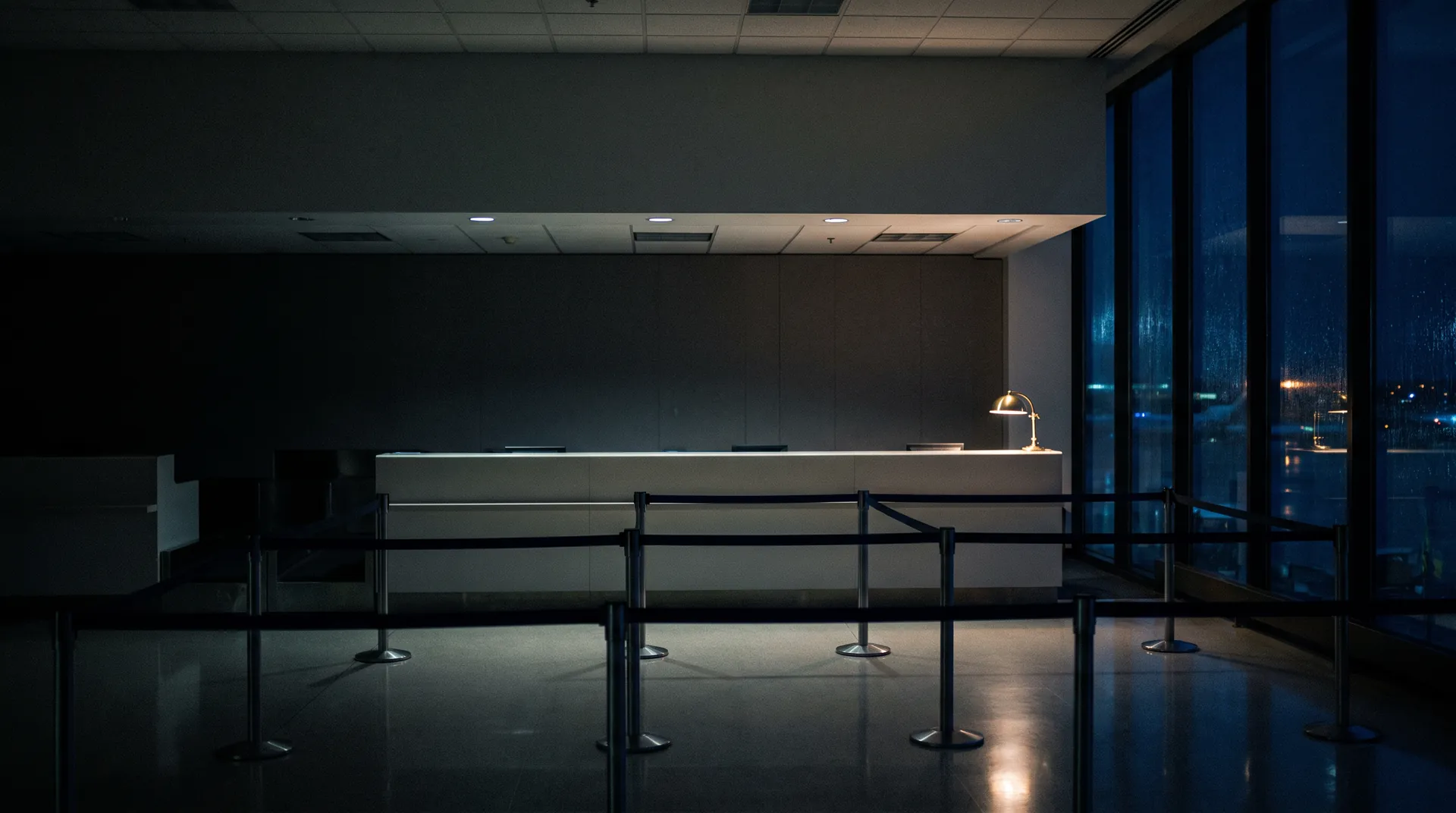
With the service desk closed and the last flight gone, your traveler is on the phone to an agent, which is the line of the fee schedule most comparisons price at an average.
Walkthrough
An industrial equipment maker with 6,800 employees books about $33.1M a year through one TMC, on a contract that renews next spring.
The TMC's transaction report for the last 12 months, its invoices, the contract and the unused ticket report. It finds what a renewal would otherwise leave alone.
Every bidder prices this table, so a bidder's guess at your online adoption stops being part of its price. Your travel manager confirms the count first.
| Line of the schedule | Count, last 12 months | Share |
|---|---|---|
| Online air, domestic | 13,400 | 33.2% |
| Online air, international | 1,700 | 4.2% |
| Online air, NDC or direct connect | 1,500 | 3.7% |
| Online hotel or car only | 7,200 | 17.8% |
| Agent air, domestic | 4,800 | 11.9% |
| Agent air, international | 3,200 | 7.9% |
| Agent hotel or car only | 1,300 | 3.2% |
| Exchange, online | 1,600 | 4.0% |
| Exchange, agent | 2,700 | 6.7% |
| Refund or void | 2,100 | 5.2% |
| After-hours call with a booking or change | 900 | 2.2% |
| Transactions | 40,400 | 100% |
Online share is online air bookings over all air bookings: 16,600 of 24,600. A profile update or a question that books nothing is not a transaction here, and a bidder that charges for one says so in the schedule. Where a report bundles or miscodes a line, it goes back to your travel manager rather than being guessed, and a split ticket counts as the bookings it really is.
Each line becomes a field in the bid. A bidder can decline a line, and that shows too.
The incumbent first, then the global and regional TMCs your team approves. Security, finance and HR see the list before anyone is contacted.
Three bids on the same counts. Bid B has the lowest online fee and the most carriers on NDC, and it stops being the cheap one once the agent lines, exchanges and refunds are priced.
The fee on each line
| Line | Count | Bid A | Bid B | Bid C |
|---|---|---|---|---|
| Online air, domestic | 13,400 | $7.00 | $3.75 | $6.00 |
| Online air, international | 1,700 | $7.00 | $3.75 | $6.00 |
| Online air, NDC or direct connect | 1,500 | $11.00 | $11.75 | $6.00 |
| Online hotel or car only | 7,200 | $4.00 | $3.75 | $3.00 |
| Agent air, domestic | 4,800 | $26.00 | $33.00 | $19.00 |
| Agent air, international | 3,200 | $30.00 | $41.00 | $24.00 |
| Agent hotel or car only | 1,300 | $12.00 | $15.00 | $9.00 |
| Exchange, online | 1,600 | $7.00 | $9.00 | $6.00 |
| Exchange, agent | 2,700 | $26.00 | $36.00 | $19.00 |
| Refund or void | 2,100 | $0.00 | $12.00 | $0.00 |
| After-hours call with a booking or change | 900 | $36.00 | $46.00 | $28.00 |
| Bid AThe incumbent | Bid BGlobal TMC | Bid CAdded by Zinit | |
|---|---|---|---|
| Transaction fees, 40,400 transactions | $501,200 | $588,550 | $387,000 |
| Fixed fee | Reporting fee | None | Dedicated team, $8,500 a month |
| Fixed fees, one year | $24,000 | $0 | $102,000 |
| Supplier revenue | Not disclosed, none credited | Stated in part, some credited | Reported, half credited |
| Supplier credit, one year | $0 | −$22,000 | −$60,000 |
| Net cost, one year | $525,200 | $566,550 | $429,000 |
| Signing incentive | $0 | −$60,000 | $0 |
| Three years, leveled | $1,575,600 | $1,639,650 | $1,287,000 |
| Volume floor | None | 36,000 transactions a year | None |
| Of your 12 carriers, book and service on NDC or direct connect | 5 | 9 | 8 |
| Unused ticket credits | Monthly report to the travel manager | Alert to the traveler | Applied in the tool at the next booking |
Bid AThe incumbent
Bid BGlobal TMC
Bid CAdded by Zinit
Each fee is multiplied by the count on its line and the lines are added. All three bids hold their prices flat for three years, because the schedule asks for any step as a priced line. Supplier credits are the figures each bidder states, and your finance team confirms them in the contract: Bid C reports $120,000 a year earned on your account and credits half, Bid B credits $22,000 and does not say what share that is. Bid B's signing incentive of $60,000 is paid once and comes off its three-year total.
The total assumes next year looks like last year, which nobody in finance believes, so the award is tested against less travel, more online adoption and what happens to unused tickets.
VERIFIED BENCHMARKS
| Category / Lever | Savings Range |
|---|---|
| TMC services (competitive re-sourcing) | 12–20% |
| Hotel program re-negotiation | 8–15% |
| Meetings and events services | 12–22% |
| Ground transportation programs | 10–18% |
| Expense management technology | 10–16% |
The TMC touches most of your business travel and owns little of it, so each part of T&E goes to market on its own object and often on its own cycle. The savings table above follows the same split.
| What you buy | How it prices | What a fair comparison holds constant | |
|---|---|---|---|
| Travel management company | Booking, ticketing, servicing and reporting. | A fee per transaction, sometimes with a management fee. | Your transaction counts, line by line. This page. |
| Hotel program | Negotiated rates at the hotels your travelers use. | A rate per room night, or a discount off the day's best rate. | Room nights by city and the terms around the rate. The federal FedRooms program prints its own: at or below per diem, no early departure fee, and cancellation until 4 p.m. on the day of arrival in the US. |
| Airline program | Corporate discounts on the routes you fly. | A discount by route and cabin, often tied to your share of spend. | Your route volumes and how much share you can really move. The federal City Pair program covers more than 17,000 routes with fully refundable tickets and no change fees, which shows how much flexibility is worth pricing. |
| Rental cars and rides | A negotiated daily rate and a ride account. | A daily rate plus fees, or a fee per ride. | Rental days by airport, with insurance and fuel rules written the same way. |
| Corporate card and expense | A card program and the software that reconciles it. | A rebate on spend, and a fee per user or per report. | Spend and speed of pay. GSA SmartPay's minimum refunds are a single rate that considers both. |
| Meetings and events | Venues, planners and group air. | A fee per event, or a commission from the venue. | The room block, attrition and who keeps the commission. Grand Valley State's schedule charges 10% of net, or nothing if the TMC receives a commission. |
Some neighbors have pages of their own: company fleets and fuel cards, bank fees and card acceptance and hotel companies buying for their own properties.
A corporate travel program usually touches several of these. Amex GBT completed its acquisition of CWT on September 2, 2025, so check who owns your incumbent before you assume the contract's account team stays. Regional agencies are invited from the database, so they do not appear here by name.
transactions, service and reporting across countries



dedicated teams and regional traveler bases



the tool your travelers book in, the report they file and the hotel RFP


bought by your TMC, and worth knowing because they pay it



tracking, assistance and medical support


ground programs



Established suppliers in each category, shown to illustrate the market, not as a list of Zinit's customers or partners.
A mining customer's result across its recent RFPs and the logo row from the homepage, both as the rest of the site shows them.
Saved over 12% across 28 recent RFPs
A mining customer's recent RFPs, across its categories. The customer is not named.
RFPs published from






As shown on the homepage.
Zinit is supplier-funded and free to buyers: only the supplier your team selects as the winner pays a commission, the losing bidders pay nothing, and nothing is owed until you award. The commission rates are published openly on our site, and because the fee is tied to the award your team makes rather than to who competes, Zinit earns the same whichever qualified supplier you choose.
It can, the way any cost a supplier carries can, which is why the tab compares every bid at its full cost on your counts, so whatever a bidder has built in shows in its number. It is also a different size, since under the fee schedule in Zinit's terms of service an award the size of the example's three-year $1.29M in TMC fees carries a $1,875 flat fee plus 0.125% of the RFP volume, about $3,500 once, which is about 3 cents a transaction over its 121,200 transactions, against the $19 the same bid charges for one agent exchange. If your CFO would rather keep it out of the bids altogether, the same terms let the buyer elect to carry the fee when the RFP is published.
Zinit runs the sourcing event for a company that buys travel services. It sells no travel, books and tickets no trips and holds no traveler's money, and it claims no seller of travel or ticket agent registration of its own. The TMC your team awards carries those, so the schedule asks each bidder for its registrations in your states. State definitions differ, so your counsel reads how they apply to your program.
Whatever your contract says, which is why the schedule asks. Each bidder states what it earns on your account from airlines, hotels and the GDS and what it credits back with a payment date, and a bidder can decline to say, which shows on the tab with its credit at zero. The University of Texas System asked for the same lines in its 2012 RFP, so the question is not new to the market. Zinit takes no share of those payments.
On fees alone you may well not. The example's gap between renewing and the lowest bid is $96,200 a year on $33.1M of travel, which would not justify moving thousands of traveler profiles by itself. The event also puts the volume floor, the supplier credit, unused ticket handling and NDC reach in front of you before the renewal, and the incumbent is invited first, so renewing on better terms is a good result.
Your team negotiates and signs them. Zinit can run a hotel or airline program as its own event, with your room nights or route volumes as the count every bidder prices, and the offers laid out side by side for your team to take forward. Each bidding TMC says how it will load and audit those deals.
Then the event can wait, and the count can start now, because 12 months of transactions tell you where you stand before the renewal notice arrives. Read the contract's volume floor, termination fee and any signing incentive first, since those decide what leaving early would cost.
Nothing moves because an event runs. The incumbent is invited first and prices the same counts, and each bidder states its transition: profiles, unused ticket credits, open trips, parallel running and a date. Your travel manager and IT decide whether and when to move, and whether to pilot one region first.
That is a line in the schedule. Each bidder says whether it supports the tool you run, what it charges to do so and what you would lose or gain by moving, so a change of tool is a decision your team makes with the price beside it.
Not yet, and we would rather say so. The results we can show come from other categories, so the fair way to test this is on your own 12 months of transactions, against your own renewal, before anything bigger.
Bring the contract and 12 months of your TMC's transaction report. Zinit builds the count, runs the event and levels the bids into one annual number, with your team directing and approving every step.