Zinit Categories Packaging

Packaging suppliers and manufacturers, compared on one spec sheet and one index month.

A packaging quote is one price per thousand sitting on a board grade, an index month, a set of plates and a truck, and two quotes rarely share any of them. Zinit's AI agents build the bid from your own spec sheets, ask every packaging manufacturer for the same split of material, conversion, tooling and freight, and widen the field to converters inside your plants' freight radius, while your team directs and approves.

  • 103M+ supplier and company database
  • First RFP in under an hour
  • Your team directs and approves
  • SOC 2
Spec sheetExampleCase C-1147, rev. D · pet food maker · 8 × 3 lb pouches, 25 lb filled
Length 18Width 12Length 18Width 12610661.5 × 22 in = 9.396 sq ft
Style
Regular slotted, inside 18 × 12 × 10 in
Board
44 ECT C flute, 57/26/42 kraft
Print
2-color flexo, 6 print versions
Tooling
12 plates, and no die on a slotted case
Pallet
8 a layer, 6 layers, stored 2 pallets high
Volume
2,400,000 cases a year, 3 plants

What $1,102 per thousand cases is made of

  • Board at the contract index $756
  • Conversion $310
  • Freight $36
$346 of every $1,102 is what converters compete on.The other $756 is board, which moves with an index no bidder controls and with the grade your engineer writes on this sheet, so the sheet decides more of the price than the bid does.

What the input did, and what the package did

US producer price indexes, change from January 2020 to September 2026 (June to September preliminary)

  1. Paperboard millsInput+47.5%
  2. Corrugated boxesPackage+48.5%
  3. Folding cartonsPackage+36.8%
  4. Plastics resinInput+23.3%
  5. Packaging film and sheetPackage+54.1%
  6. Plastic bottlesPackage+27.3%
  7. Metal cansPackage+51.5%
  8. Glass containersPackage+44.5%
  9. Wood palletsPackage+30.7%

Boxes tracked board almost point for point, while film rose more than twice as far as resin, and that gap is conversion and everything else rather than polymer. In 2026 resin peaked in May and film in July. These are industry indexes, not contract prices.

The pallet decides the board, which is where most of the price sits

A freight minimum says what a carrier will take, and a warehouse asks for much more. Your packaging engineer works back from the stack to the strength the case needs, and that number picks the board. It is also the largest lever in the category, so we start here rather than with the bid.

Top view: 8 cases on a 48 × 40 in pallet, 6 layers, column stacked, no overhang
  1. Load on the bottom case281 lb11 cases above it × 25 lb + 6 lb of top pallet
  2. What storage leaves41.8%83% at 70% humidity × 60% after 30 days × 84% column stacked
  3. Strength the empty case needs672 lb281 lb ÷ 41.8%

Estimated strength by board, against the 672 lb the stack needs

32 ECT, 35/26/35107.18 lb per MSF580 lb · misses by 92
40 ECT, 42/26/42121.18 lb per MSF739 lb · clears by 67
44 ECT, 57/26/42, today's spec136.18 lb per MSF827 lb · clears by 155

Estimate: 5.87 × ECT × √(caliper × perimeter), the simplified McKee formula, with C flute at 0.159, 0.165 and 0.171 in and a 60 in perimeter. McKee reported 97% of its data within 15%, and the 40 ECT margin sits inside that, so the example's engineer has conditioned cases tested before signing, and they crush at 752 lb. The storage factors are this example's allowances from published tables, and yours will differ.

Six things two packaging quotes rarely hold constant

Each line below is a place where a lower number can come from a different question rather than a better price. The record column comes from company filings and from terms of sale that packaging companies publish, which a negotiated contract can change.

1Board or film grade

One bid prices the grade you run today, and another prices a lighter one it calls equivalent.

NMFC Item 222 asks only 26 ECT for a 25 lb case of this size, which tells you what a carrier accepts and nothing about a stack two pallets high.

Every bidder prices the spec your engineer approved, and an alternate goes in its own column with its compression or barrier data.

2Index and base month

A quote built in June and a quote built in October can differ by a price move that neither bidder earned.

Many Smurfit Westrock contracts adjust on published indices, Graphic Packaging is moving from semi-annual to quarterly price openers, and Sealed Air's formula pricing lags resin by about six months.

One named index, one base month, and each bidder's formula and lag written beside its price.

3Conversion

The one part a bidder controls is usually folded into a single price, so you cannot see it move.

Fastmarkets launched a corrugated box cost benchmark in October 2026, which measures changes in a modeled cost basket and not the price of a box.

Conversion stated per thousand square feet or per thousand units, apart from the material.

4Plates, dies and cylinders

One bid includes them, one bills them later, and one keeps them after you have paid.

One box maker invoices plates and dies with the first shipment and they stay its property until paid. Another bears replacements from wear. One flexible converter keeps cylinders whether or not it charges and scraps them after 18 months without a repeat order.

Tooling as a one-time line, with who owns it, who replaces it and what happens when the contract ends.

5Overs, unders and storage

A price per thousand is only as firm as the quantity you must accept, and the time you may leave it in the bidder's warehouse.

Published terms allow 10% over or under and bill what ships, one flexible seller allows 20% on short runs, and one box maker can store goods at the buyer's cost after 30 days.

The tolerance and the free storage period are bid lines, and a tighter tolerance is priced.

6Plant and freight

A national quote can come from a plant four hundred miles from your line, or be priced at the seller's dock.

PCA says each of its plants serves about 150 miles and that box makers generally sell within that radius. One printer's terms quote F.O.B. its plant. The European Commission put the supply distance for cases at 200 to 300 km.

A delivered price to each of your plants, from a named plant, so an award can split by plant.

Who can stop a packaging award, and what each one needs to see

Sourcing owns the award and three other people can end it. A supplier that reaches the line trial without their documents loses weeks, so the event collects what each of them asks for before anyone is shortlisted.

Category manager or packaging sourcing lead

HoldsThe award, the contract and the index clause

Needs to seeOne bid tab per format, leveled by plant, with the split awards priced

Packaging engineer

HoldsThe spec sheet, and the veto on any board or film change

Needs to seeEvery bidder on the approved spec, and each alternate in its own column with test data

Quality and regulatory

HoldsThe veto on food contact, migration and supplier approval, and for drugs the container and closure standards

Needs to seeThe compliance statement and guaranty for each structure before a bidder is shortlisted, since an FDA food contact notification is only effective for the manufacturer or supplier it names

Plant and line operations

HoldsThe veto after a trial run: feeding, erecting, sealing and filling at speed

Needs to seeSamples on an agreed date, and a trial slot booked before anyone promises a cut-over week

Brand and marketing

HoldsArtwork, the color standard and the press approval

Needs to seePrint files moved once, a proof before cut-over, and a plan for the old printed stock

Finance and sustainability

HoldsIndex exposure, tooling spend and state packaging fees

Needs to seeThe exposure per $10 a ton, one-time tooling shown apart, and each pack's weight and material class for fee reporting

How Zinit runs a packaging event

Three moves, in the order a packaging team would do them with enough hours in the week.

Read the sheets and split the price

Zinit reads your spec sheets, a year of invoices and your plant list, then builds one bid sheet per format that asks every bidder for the same split: material at one index month, conversion, tooling, freight and terms. Getting the sheets into one place is often the long part for a multi-plant maker, so Zinit lists the revisions and missing fields for your engineer. First RFP in under an hour once that is done, and the bids take the time they take.

Spec sheet, invoices, plant list

Widen the field inside the radius

Integrated producers and independent converters are both invited, found in a 103M+ supplier and company database and limited to plants that can reach your plants and meet your quality team's list. Nobody is invited until your team approves the list.

Approved list of plants

Level, then let the vetoes run

Every quote is set on the approved spec at one index month, delivered to each plant, so the award can split wherever a plant does better. The compression test, the guaranty, the proof and the line trial are tracked to a week beside the price. Your team directs and approves every award.

Leveled tab and a cut-over plan

Zinit does not make packaging, test cases, approve a food contact statement or run your line trial. Your engineer, your quality team and your plant decide those, and the award is your team's.

The bottom case on the lower pallet carries 281 lb for a month, and that number picks the board.

One case and one pouch, from the spec sheet to the award

Zinit is connected to your ERP and your shared drive, where your team already keeps these files, and your team chooses which ones it reads. Every figure below prints its basis so your team can redo the sum.

Example: pet food maker, 2 lots

What Zinit read

  • Shared driveSpec sheets Case C-1147 rev. D, pouch P-220 rev. FRead
  • ERPInvoices 12 months, 3 plants, $2.65M of cases, $4.11M of pouchesSynced
  • ERPShip-to list Plant 1, plant 2, plant 3, with yearly volumeSynced
  • Shared driveBox contract Index clause, tolerance, tooling termsRead

Clause that sets the bid: Board reference resets monthly on the named index, with a one-month lag. Quantities within 10% over or under are accepted.

Two lots, one bid sheet each

Case C-1147

A year: 2,400,000 cases

Board at 40 ECT and at today's 44 ECT, one index month, conversion per MSF, plates, delivered price to each plant

Pouch P-220

A year: 19,200,000 pouches

Today's structure, one resin reference month and the lag, conversion per thousand, cylinders for 12 print versions, delivered price

The 40 ECT line is in the bid because the engineer ran the stack sum first and asked for it. Nobody prices a lighter board until the person who signs the spec has asked for it.

Who was invited

  • 31Plants proposed
  • 11Approved by your team
  • 3 shown of 6Quoted the case
  • 2 shown of 4Quoted the pouch

Each plant screened on

  • Miles to each of your 3 plants
  • Press and flute range for this spec
  • Food contact documents for the pouch structure
  • Capacity against your monthly releases
  • Certificates, references and financial checks your team asks for

Each bidder sends

  • Priced bid sheet
  • Compliance statement and guaranty
  • Samples for the compression test and the line trial

Bidder C, an independent box plant, and Bidder E, a flexible converter, were added by Zinit. Nobody was contacted until your team approved the list.

The case, as quoted and leveled

Bidder AIncumbent, integratedBidder BIntegrated, national quoteBidder CIndependent, added by Zinit
As quoted, per thousand$1,102.12$794.12$990.03
Board it quoted44 ECT32 ECT40 ECT
Index month in the quoteOctoberJuneOctober
Freight in the quoteDeliveredAt its dockDelivered
Its conversion per MSF$33.00$26.00$28.50
Leveled at 40 ECT, October, delivered$1,018.40$1,001.17$990.03
Plant 1, 1,200,000 cases$1,014.6264 mi$1,020.72412 mi$977.2988 mi
Plant 2, 800,000 cases$1,020.4092 mi$994.70286 mi$986.17131 mi
Plant 3, 400,000 cases$1,025.77118 mi$955.4696 mi$1,035.95372 mi

Quoted gap, B against A −27.9%Leveled gap −1.7%

The first row is each bidder's own headline offer, and the split it had to state on the bid sheet is what lets the rest be set on one basis. Board at 40 ECT costs $672.49 per thousand for everyone: 84 lb of liner at $1,080 a ton plus 37.18 lb of medium at $1,060 a ton, ÷ 2,000, × 1.10, × 9.396 MSF, using the example's own contract reference. A truck carries 13,800 flat cases at $260 plus $2.85 a mile, and the plants' volumes weight the freight. Before tooling.

The pouch, on one resin month

Bidder D Incumbent
Per thousand, September resin, delivered$214.00
A year, 19,200 thousand pouches$4,108,800
Cylinders, 12 versions, one timeOn file, paid
Resin formula lag it quoted6 months
Bidder E Added by Zinit
Per thousand, September resin, delivered$197.00
A year, 19,200 thousand pouches$3,782,400
Cylinders, 12 versions, one time$9,800 × 12 versions
Resin formula lag it quoted3 months

Each price is that bidder's reply on the same structure, weight and print count. The 3-month lag means Bidder E's price follows resin sooner in both directions, which your finance team reads as exposure rather than as a saving.

The checks that set the date

  1. Compression on conditioned casesPackaging engineer

    CaseWeek 2: 752 lb against 672 lb

    PouchNot needed

  2. Compliance statement and guarantyQuality

    CaseNot needed

    PouchWeek 3

  3. Plates or cylinders, then a proofBrand

    CaseWeek 2

    PouchWeek 8, after 6 weeks to engrave

  4. Line trialPlant

    CaseWeek 3, case erector

    PouchWeek 11 at plant 1, week 15 at the other two

  5. Old printed stock runs outPlanning

    CaseWeek 6

    PouchWeek 18

The pouch sets the date, because a case can move in six weeks while engraved cylinders, three filler slots and 18 weeks of printed stock hold the pouch until week 18. Running the old stock out also means no write-off, which is why the example waits.

What the award does in a year

Case

Bidder C for plants 1 and 2, Bidder B for plant 3

Today, a year$2,645,088

Award, a year$2,343,868

Saving, a year$301,220

Weeks of the first year after cut-over46 of 52

First-year saving$266,464

One-time tooling$9,360

Pouch

Bidder E for all three plants

Today, a year$4,108,800

Award, a year$3,782,400

Saving, a year$326,400

Weeks of the first year after cut-over34 of 52

First-year saving$213,415

One-time tooling$117,600

First year, both lots, after tooling $352,919Every year after $627,620

Of the case saving, $200,928 comes from the board change, which Bidder A could have given you on the same sheet, and $100,292 comes from the competition, which is what remains if your engineer keeps 44 ECT for reasons a stack sum cannot see, such as forklift damage or a wet dock.

VERIFIED BENCHMARKS

Proven savings across Packaging Procurement Optimization

Category / LeverSavings Range
Corrugated and secondary packaging12-20%
Flexible packaging10-18%
Primary packaging (glass, plastic, metal)8-16%
Contract packaging services12-22%
Tertiary packaging (pallets, stretch wrap)10-16%
Specification rationalization savings (pre-sourcing)5-15%

What the sheet holds, format by format

The deciding object changes with the format, along with the price it moves on and the person who can stop a switch. Most packaging teams buy several of these from different markets.

Corrugated boxes

The sheet holds
Style, board grade and flute, print colors, die if it is not a slotted case, pallet pattern
Price moves with
A published containerboard index in many contracts, reset by a formula, with a three- to six-month lag at one producer
Tooling
Print plates, and cutting dies for die-cut shapes
Who can stop it
Packaging engineer on compression, plant on the case erector
Where switching bites
The freight radius, plates built for one press, and a plant that closes under you: producers announced nearly 10% of capacity in shutdowns in 2025

Folding cartons

The sheet holds
Board type and caliper, coating, print and varnish, die line, carton count per case
Price moves with
Boxboard indexes and cost pass-through, with Graphic Packaging moving to quarterly price openers as contracts renew
Tooling
Cutting dies, and plates or cylinders
Who can stop it
Brand on color, plant on the cartoner, and quality where the carton touches food, since FDA says PFAS grease-proofing is no longer sold for food contact and New York bans intentionally added PFAS in food packaging
Where switching bites
Press approvals, and printed stock on hand at each artwork change

Flexible film and pouches

The sheet holds
Layer structure and gauge, barrier and seal targets, zipper and gusset, print method
Price moves with
Resin through a formula, about six months behind at one large food packaging maker, and film has risen further than resin since 2020
Tooling
Gravure cylinders or flexo plates, often kept by the converter
Who can stop it
Quality on food contact and migration, plant on the filler or form-fill-seal line
Where switching bites
New cylinders for every print version, and a structure change that restarts the quality file

Rigid plastic and closures

The sheet holds
Resin grade, gram weight, neck finish, color, closure torque
Price moves with
Resin passed through under supply agreements, in many cases with a short lag at one large maker
Tooling
Injection and blow molds, where ownership is often the whole negotiation
Who can stop it
Quality on contact, plant on filling and capping
Where switching bites
Who holds the molds when the contract ends, and how long a new set takes

Glass containers

The sheet holds
Weight, finish, color, mold set, closure fit
Price moves with
Natural gas passed through on more than 89% of O-I's US and Canada volume, and cost-based adjustments in multi-year contracts
Tooling
Mold sets
Who can stop it
Plant on filling and breakage, brand on shape and color
Where switching bites
Weight in the truck, so a plant's distance matters more than it does for a lighter pack, and mold sets that a new maker has to build or receive

Metal cans

The sheet holds
Size and gauge, end type, lining, decoration
Price moves with
Aluminum passed through on contracts covering most of Ball's volume, and a 50% US duty on aluminum and steel under Section 232
Tooling
Decoration plates or sleeves
Who can stop it
Quality on the lining and seam, plant on the seamer
Where switching bites
A short list of makers, and metal timing that can run ahead of or behind the pass-through

Labels

The sheet holds
Face stock, adhesive, liner, print and finish, roll or sheet format
Price moves with
Usually priced per thousand by run length, and a large label maker's terms allow shortages or overruns up to 10%
Tooling
Plates and dies, charged with the first shipment at one large maker
Who can stop it
Brand on color, plant on the applicator
Where switching bites
Many versions on short runs, so tooling and overruns weigh more than the price per thousand

A launch held to a co-packer's run date is a different problem, which is the one the food and beverage page is built around. This page is about buying the category across every brand and plant you run.

State packaging fees are paid by the brand owner, and weight and material set them

They are not a bid line, because the producer pays whichever converter wins. They belong on the spec sheet anyway, since a pack's weight and material class decide the fee, and a structure change moves it.

2027 fees per pound, as Circular Action Alliance published them on October 1, 2026
MaterialOregonColoradoCalifornia
Corrugated$0.02$0.10$0.03
Paperboard$0.05$0.09$0.02
PE film$0.12$0.62$0.53
Plastic laminate pouch$0.56$0.78$0.54
Clear PET bottle$0.19$0.18$0.41
Pigmented HDPE bottle$0.20$0.27$0.42
Glass bottle or jar$0.00$0.05$0.02
Aluminum container−$0.09$0.05$0.01

California's plastic rows add $0.03 of reuse investment and $0.26 of mitigation fund weight to the base fee, plus $0.001 per unit, and CalRecycle was still reviewing the program plan in November 2026. Oregon prices non-consumer transport corrugated at zero and exempts pallets, and its 2027 rates include a drawdown of reserves. An Oregon court upheld the law on August 28, 2026, and the trade group that sued has asked for a stay while it appeals. Maine, Maryland, Minnesota and Washington are also on CAA's list of states, so check the program that applies to you.

The market behind the sheet, with dates

Each figure comes from a filing, an association or a trade report, as dated, and a producer's statement about its own contracts is labelled as that.

  • Nearly 10%

    of North American containerboard capacity, about 3.9 million tons, in shutdowns announced during 2025

    Fastmarkets analysis, in Packaging Dive, June 2026
  • Above 94.5%

    containerboard operating rate for a second quarter running, Q3 2026

    American Forest & Paper Association
  • −1.6%

    box shipments in Q3 2026 against a year earlier

    Fibre Box Association data, in Packaging Dive, November 2026
  • About 1,150

    US corrugated plants run by about 445 companies at the end of 2022, before the closures above

    Packaging Corporation of America, 2022 Form 10-K
  • About 45%

    of Sealed Air's Food sales on formula pricing that lags resin by about six months

    Sealed Air, 2023 Form 10-K
  • $80 to $140

    a ton: the third round of containerboard increases producers announced for 2026

    Packaging Dive, October 2026

Packaging formats and who makes them

A starting map for your approved list, drawn from each company's own site, which your team narrows by plant, by spec and by quality file.

Corrugated boxes

Board grade, plant radius, conversion

Established manufacturers
  • International Paper
  • Smurfit Westrock
  • Packaging Corporation of America
  • Georgia-Pacific
  • Pratt Industries

Folding cartons

Board type, print, press approval

Established manufacturers
  • Graphic Packaging International
  • Smurfit Westrock
  • PaperWorks
  • Sonoco

Film and pouches

Structure, resin formula, cylinders

Established manufacturers
  • Amcor
  • SEE (Sealed Air)
  • ProAmpac
  • Huhtamaki

Rigid plastic and closures

Resin, molds, line fit

Established manufacturers
  • Amcor
  • Silgan
  • Aptar

Glass containers

Weight, gas clause, mold sets

Established manufacturers
  • O-I Glass
  • Ardagh Glass Packaging

Metal cans

Metal pass-through, lining, slots

Established manufacturers
  • Ball
  • Crown
  • Ardagh Metal Packaging
  • Sonoco
  • Silgan

Labels

Versions, overruns, color

Established manufacturers
  • CCL Industries
  • Multi-Color Corporation

Established manufacturers in each format, shown to illustrate the market, not as a list of Zinit's customers or partners.

One result across procurement categories, and the companies RFPs were published from

A manufacturing customer's result and the logo row from the homepage, both as the rest of the site shows them. The ranges above are benchmarks, and we have no packaging-only customer case to show yet.

Manufacturing

23% savings across procurement categories

An industrial manufacturer's events across its indirect categories. The customer is not named.

RFPs published from

  • Magna
  • Avery Dennison
  • Carlsberg Group
  • Ucell
  • JD
  • Cargill

As shown on the homepage.

Questions a packaging buyer asks first

What does it cost?

Zinit is supplier-funded and free to buyers: only the supplier your team selects as the winner pays a commission, the losing bidders pay nothing, and nothing is owed until you award. The commission rates are published openly on our site, and because the fee is tied to the award your team makes rather than to who competes, Zinit earns the same whichever qualified supplier you choose.

Will a converter just build your fee into its price?

It may, and since every bidder prices the same structure, weight and print count, anything it adds shows in the price per thousand your team compares. Under the fee schedule in Zinit's terms of service, the example's pouch award to Bidder E, $3,782,400 a year at $197 a thousand, carries a $4,000 flat fee plus 0.04% of the RFP volume, about $5,500 once, which is about 29 cents a thousand across the year's 19.2 million pouches. Each winner on the case lot pays on its own share the same way, and if your team would rather keep it out of the bids, the same terms let the buyer elect to carry the fee when the RFP is published.

We already buy on an index contract. What is left to bid?

The conversion, the freight, the tooling terms, the tolerance and the formula itself, which together were $346 of the example's $1,102. The index moves for every bidder, so the event sets it aside by fixing one month and lets you compare the rest.

Should we keep the incumbent?

Keep it if it wins, and in the example two-thirds of the case saving was open to the incumbent from the board change alone. The incumbent is invited to every event, so your team can renew at the price the bids set, and if the gap left after the board change is too small to justify a trial at your plants, that renewal is a good result.

Can a converter bid one plant or one format?

Yes, and an independent box plant is often only competitive inside its radius. The bid tab is built per plant so a split award is priced rather than guessed, and an independent's bid says where its sheets or board come from.

Will an integrated box maker really split conversion from board?

Some will and some will not, and we would rather you heard that here. A bidder that declines still quotes a delivered total at the named index month on the approved spec, so the totals compare on the day. What you lose is the view of how that total moves with the index, so your team decides how much that matters when it scores the bid.

Our co-packers buy some of the packaging.

Then the same bid sheet runs on the co-packer's suppliers, with its approval, and Zinit works for whoever places the order. Under a tolling agreement you buy the packaging and pay a fee for each unit, so the suppliers are your choice.

Our plates, dies and cylinders are at the incumbent. Can they move?

Sometimes, and published terms differ on who owns them even after you have paid, so read your contract first. A new plant usually quotes new tooling for its own press, so the event prices it as a one-time line and the print files move once your team approves.

Our film structure belongs to the converter. What do other bidders price?

Then the bid sheet states what the pouch has to do: barrier, seal, gauge, weight and the line it runs on. A different structure goes in its own column, and your quality team treats it as a new file, so the example keeps the same structure to keep the date.

Who approves the food contact statement?

Your quality team. Zinit collects the compliance statement and guaranty from each bidder for the exact structure and tracks what is missing. An FDA food contact notification is only effective for the manufacturer or supplier it names, so a new converter's file has to be read on its own.

Do bidders see our artwork and specifications?

They see only the RFQ package your team approves, and your team decides what goes into it. A converter needs the structure, the size and the volumes to quote, and the print files go to the bidders you shortlist.

Do state packaging fees go in the bid?

No, since the brand owner pays them whichever converter wins. Each bidder states the pack's weight and material class, so your team can add the fee to the comparison and report it later.

Does the fee or a recycled-content rule change the award?

It changes the format and the structure more often than the supplier. In the example the pouch fee is about 1.6% of the lot, the same for both bidders, and a move to mono PE would save a small part of it.

What does Zinit not do?

It does not make packaging, hold inventory, test cases, approve a supplier for your quality team or run your line trial, and it does not replace your spec system or your ERP. Sometimes the incumbent stays the best answer, and then you renew knowing the split.
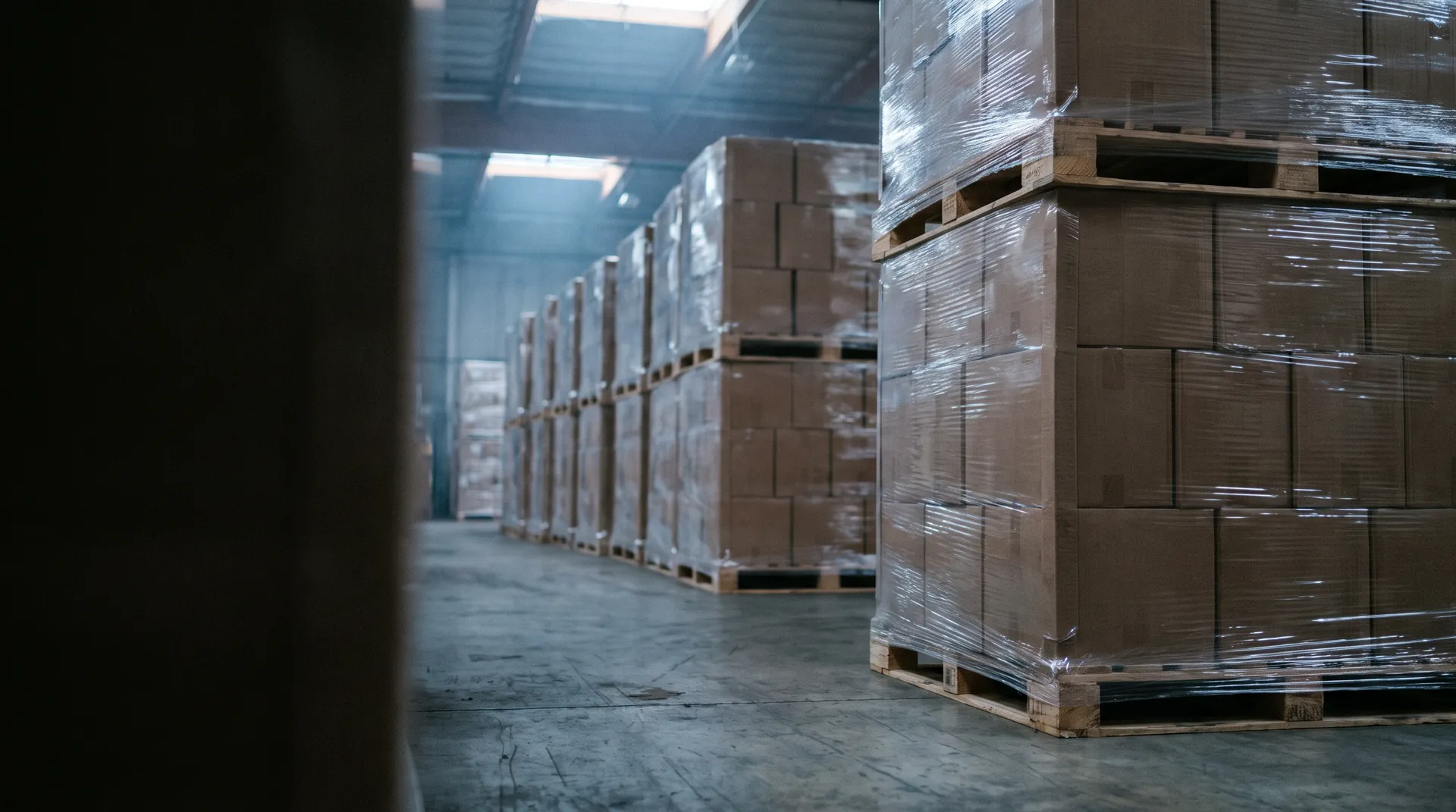
Start with the spec sheet for one pack

Bring one spec sheet, a year of invoices and your plant list. Zinit builds the bid sheet from them and runs the event, with your team directing and approving every step.

Sources

  1. [1] Smurfit Westrock plc, 2025 Annual Report on Form 10-KMany customer contracts adjust on published indices including Pulp and Paper Week; such publications are limited surveys; a three- to six-month lag before higher costs reach customer prices
  2. [2] Packaging Dive, North American containerboard prices stayed flat in October (October 2026)Fastmarkets RISI recognized a net $170 a ton on linerboard and $200 a ton on medium so far in 2026; a third round of announced increases of $80 to $140 a ton; the box cost index launched
  3. [3] Packaging Dive, containerboard prices in September 2026Linerboard up $70 a ton and medium up $100 a ton month over month
  4. [4] Packaging Dive, containerboard prices in June 2026Shutdowns announced in 2025 totaling nearly 10%, about 3.9 million tons, of capacity (Fastmarkets analysis); an analyst puts the index at under 10% of the market, and says box prices also depend on location, freight, supplier dynamics and capacity
  5. [5] Packaging Dive, Fastmarkets corrugated box cost index proposal (September 2026)The Corrugated Cost Benchmark measures changes in a modeled cost basket and not the price of a box
  6. [6] American Forest & Paper Association, Q3 2026 Containerboard Quarterly Report (news listing)Operating rate above 94.5% for the second consecutive quarter
  7. [7] Packaging Dive, Q3 2026 containerboard production and box shipments (November 2026)Fibre Box Association data: quarterly box shipments down 1.6% year over year
  8. [8] Packaging Corporation of America, Form 10-K for 2022 (read on an Internet Archive capture of the SEC copy)Each plant serves a market radius of about 150 miles; corrugated producers generally sell within that radius; about 445 US companies operating about 1,150 plants
  9. [9] European Commission, Case COMP/M.3935 Jefferson Smurfit/Kappa (2005)Economic supply distance of corrugated cases between 200 and 300 km
  10. [10] Sealed Air Corporation, 2023 Annual Report on Form 10-K (read on an Internet Archive capture of the SEC copy)Formula pricing in Food lags raw material moves by about six months; about 45% of Food’s sales are on it
  11. [11] Silgan Holdings Inc., 2025 Annual ReportCustom container agreements pass through resin, in many cases with a short lag; metal container agreements pass through metal
  12. [12] Ball Corporation, Annual Report on Form 10-K for 2024Contracts covering the majority of volume pass aluminum price changes through, with timing differences
  13. [13] O-I Glass, Inc., Form 10-K for 2025 (read on an Internet Archive capture of the SEC copy)More than 89% of US and Canada volume on contracts that pass natural gas through; multi-year contracts adjust on cost changes
  14. [14] Graphic Packaging Holding Company, Form 10-K for 2025Many multi-year contracts pass through raw materials, energy, labor and other manufacturing costs
  15. [15] Packaging Dive, Graphic Packaging reworks customer contracts (November 2026)Moving from semi-annual to quarterly pricing openers as contracts renew
  16. [16] The White House, Further Adjusting the Tariff Regimes for Imports of Aluminum, Steel, and Copper (June 2026)50 percent duty on products made of those metals under Section 232
  17. [17] US Bureau of Labor Statistics, producer price indexes, not seasonally adjusted (January 2020 and September 2026, preliminary)PCU322130322130, PCU322211322211, PCU322212322212, PCU325211325211, PCU326112326112, PCU326160326160, PCU332431332431, PCU327213327213, PCU321920321920
  18. [18] ABF Freight, Packaging Guideline, reproducing NMFC Item 222 Section 3Minimum edge crush by gross weight and size: 26 ECT to 35 lb and 50 in
  19. [19] Urbanik and Frank, Box Compression Analysis of World-Wide Data Spanning 46 Years, Wood and Fiber Science 38(3) (2006)McKee reported 97% of its data within plus or minus 15% of the estimate
  20. [20] Georgia Tech, The Box Compression for Copy Paper Boxes: Applying McKee’s Formula (2020)The McKee form with the 5.87 coefficient for regular slotted containers
  21. [21] Fibre Box Association, The Tech Box (July 2021)Research at RIT: columnar aligned loads lose 12-20% of box compression, interlocked 49-54%; the 84% used is the middle of the columnar range
  22. [22] Packwire, Box stacking strength calculator and Packaging board chart (vendor reference)70% humidity keeps 83% of lab strength and 30 days under load keeps 60%; the simplified McKee form; C flute caliper by grade
  23. [23] ECSA, Terms and Conditions of SalePlates and dies invoiced with the first shipment, Seller’s property until paid; storage at buyer’s cost after 30 days
  24. [24] Green Bay Packaging Inc., Sales Terms and Conditions (November 3, 2023)Initial plates and dies borne by the customer, replacements from wear by the seller
  25. [25] Smyth Companies, Terms and ConditionsOver-runs and under-runs up to 10%, billed on actual quantity; price quoted F.O.B. Seller’s plant
  26. [26] Multi-Color Corporation, Terms and Conditions of Sale (February 9, 2023)Shipments may contain shortages or overruns up to 10%; plates and dies charged with the first shipment
  27. [27] Packaging HQ LLC, TermsOverrun or underrun up to 10%, up to 20% on runs under 2,500 linear feet
  28. [28] Swiss Flex, Terms and ConditionsCylinders remain the company’s property whether or not it charges for them; gravure cylinders stored for 18 months
  29. [29] US Food and Drug Administration, Inventory of Effective Food Contact Substance NotificationsA food contact notification is only effective for the manufacturer or supplier identified in it
  30. [30] 21 CFR 7.13 and 21 CFR 174.5 (Cornell LII)Suggested forms of guaranty; good manufacturing practice for food-contact substances
  31. [31] US Food and Drug Administration, PFAS used in grease-proofing agents (2024)PFAS grease-proofing substances are no longer sold for food contact use in the US; they were used on packaging including pet food bags
  32. [32] New York State Department of Environmental Conservation, PFAS in food packagingProhibition on intentionally added PFAS in food packaging, effective December 31, 2022
  33. [33] 21 CFR 211.94 (Cornell LII)Drug containers and closures must not alter the drug, and their standards must be written and followed
  34. [34] Circular Action Alliance, 2027 Oregon Producer Fees Schedule (October 1, 2026)Final fee rates per pound by reporting category, including zero for non-consumer transport corrugated
  35. [35] Circular Action Alliance, 2027 Colorado Producer Dues Schedule (October 1, 2026)Final dues per pound by reporting category
  36. [36] Circular Action Alliance, 2027 California Producer Fees Schedule (October 1, 2026)Base fees per pound; reuse investment, mitigation fund weight and per-unit fees on plastic components
  37. [37] Circular Action Alliance, Covered Materials and Producer Definitions: Oregon (2026)The brand owner is the obligated producer for primary, secondary and tertiary packaging, pallets excepted
  38. [38] CalRecycle, SB 54 program page (November 2026)Public comments on the producer responsibility plan through November 13, 2026
  39. [39] Holland & Knight, alert on NAW v. Feldon (August 2026)Judgment for the state on August 28, 2026 after a July bench trial
  40. [40] National Association of Wholesaler-Distributors, stay motion (October 17, 2026)Motion to stay the judgment while the Ninth Circuit appeal is pending
  41. [41] International PaperCorrugated packaging
  42. [42] Smurfit WestrockCorrugated packaging and consumer packaging including folding cartons
  43. [43] Packaging Corporation of AmericaCustom corrugated packaging
  44. [44] Georgia-PacificCorrugated packaging
  45. [45] Pratt IndustriesCorrugated packaging from 100% recycled containerboard
  46. [46] Graphic Packaging InternationalFolding cartons
  47. [47] SonocoSteel food cans, aerosol cans, ends and closures, and paper packaging
  48. [48] ProAmpacFlexible packaging
  49. [49] CCL IndustriesLabels, the largest label company in the world by its own account
  50. [50] Multi-Color CorporationLabel solutions
  51. [51] Zinit, Terms of Service, Schedule 1, Service Fee Schedule (effective July 28, 2026)the published supplier fee: flat fee plus a share of the RFP volume, by band; the buyer may elect to carry it when the RFP is published

Related procurement resources

Request a demo
Request a demo