
Saved over 12% across 28 recent RFPs
A mining customer's recent RFPs, across its categories. The customer is not named.
Before you go
One sharp email on procurement markets — what moved, why it matters, what to do about it. Daily or weekly. Unsubscribe anytime.
Zinit Categories Marketing services
Agency search and marketing procurement
A fee is only the part of an agency's income you can see, since a media buying agency can also earn a margin on inventory it resells to you, rebates from media owners and markups on production. In an agency search Zinit's AI agents put every bid on one price sheet, with hours read by level, each plan line marked agent or principal and media priced per qualified thousand, so your team awards marketing services on what each bid really costs.
One media plan, read by how each line is bought
Bid B's year for a US home goods company. Each bar is a flight on the calendar.
What is actually known
Most of what gets repeated about agency transparency traces to one 2016 study built on interviews, so it helps to date a finding before you quote it. The newer work measures other things, either what marketers say in surveys or what log-level data shows about programmatic spend, and none of it tells you what your own agency does.
June 2016ANA, K2 Intelligence
Of 117 sources directly involved in US media buying, 59 reported direct experience of non-transparent practices, 34 of them with rebates and 33 with principal transactions.
Interviews, not a measure of dollars. K2 found the practices across digital, out of home, print and television, and in holding companies and some independents.
January 2022WFA, Ebiquity scorecard
A third of responding advertisers buy inventory from their agency as a principal, on a non-disclosed basis, and 83% have financial audit rights in their contracts.
48 companies among WFA's membership, so read it as direction.
November 2024WFA, MediaSense
75% of advertisers care how their agencies make money and 28% believe they can see it. The study names pooled volume benefits, opaque programmatic chains and inventory media.
More than 80 multinationals, and the question is about belief rather than measured money.
January 2026Forrester
Predicts principal media will grow to one-third of total media billings in 2026, and calls it a useful tool as well as a controversial one.
A forecast, not a count.
March 2026ANA, as Marketing Dive reports it
56% of marketers expect to use principal media this year, against 41% in 2024. 90% call uncertainty over whether it serves them a top concern, 76% name lower cost as its chief benefit, 57% have guidelines, and over a third say their contracts do not address it or are unsure.
114 client-side marketers, surveyed October to December 2025.
A price per thousand, before and after waste
ANA Programmatic Transparency Benchmark, Q1 2026: what each group of advertisers paid per thousand impressions that were fraud-free, measurable, viewable and off made-for-advertising sites.
The ANA reports that a $1.95 difference in quoted CPM became an $11.58 difference once waste was counted. The lower group turned 32.1% of spend into qualified impressions and the higher group 54.0%, which is why this page prices media per qualified thousand.
Programmatic only, from the advertisers in the benchmark. Connected TV carries measurement gaps the ANA itself flags.
The object
Pressing on the fee alone can move the money without removing it. One consultancy that benchmarks agency fees reports clients who won a lower retainer and then paid a premium through how the rate card was applied, and the same logic runs through media, so the price sheet has to cover all six lines before bids go out.
| Where it is earned | How it is set | On your invoice? | What your auditor can see |
|---|---|---|---|
| Fee | Hours at each level times a rate, where the rate is salary with an overhead factor and a margin on top. | Yes | Hours and rates, if the contract says so. |
| Commission | A percentage of media. Public contracts show 3% capped by South Carolina law on lottery media and 4% on a New Jersey plan, cut from 7% for that bid. | Yes | The base and the rate. |
| Markup on production and pass-through | A percentage on third-party costs, or none. South Carolina's lottery bars any markup on what the contractor buys for it. | Sometimes | Third-party invoices, if the contract names them. |
| Unbilled media and credits | The gap between what you were billed and what the media owner invoiced, which the agency holds until it is reconciled. | Only if reported | Aged balances, if the contract asks for them. |
| Rebates and volume benefits | Cash or free media from media owners, tied to agency-wide volume. K2 also found them dressed as service agreements for consulting or research. | No, unless credited | Vendor contracts, if your right to audit reaches them. |
| Margin on principal inventory | The agency buys at its own risk and resells to you at whatever price it can agree, whatever it paid. | The price only | Usually nothing. The WFA says these deals typically come with strict non-audit clauses. |
K2 also reports pressure to direct spend to media suppliers in which an agency group holds equity, which is a seventh thing worth asking about. None of this means your agency does any of it, and the point of the sheet is that you stop having to guess.
How Zinit runs it
A 103M+ supplier and company database, AI agents that build the sheet and run the bidding, and procurement people who work beside your team.
Zinit reads your current contract, your plan and your deliverables and drafts the brief in hours of work, a list of outputs and qualified impressions by line, so every bidder prices the same job. Your marketing team sets the scope, and your marketing and procurement leads confirm the brief before anyone sees it.
One brief every bid prices
Your incumbent and the agencies your team approves, drawn from a 103M+ supplier and company database and narrowed to a short list your team signs off, from holding company networks to the independents and specialists your team has not met. Nobody is contacted until the list is approved.
A reviewed field before the award
The first RFP is drafted in under an hour, and your team then settles the scope, the verifier and the terms, which takes the weeks it takes. Each bid fills the same sheet: media lines marked agent or principal with an agent price beside every principal one, hours by level with the people named, markups, and how rebates and audit are handled, and any line left blank shows as blank.
A number your CFO can read
Your team still chooses the work and the people, and Zinit scores neither. Sometimes the incumbent's re-priced sheet is the best bid, and then your team has done a rate check without losing a relationship.
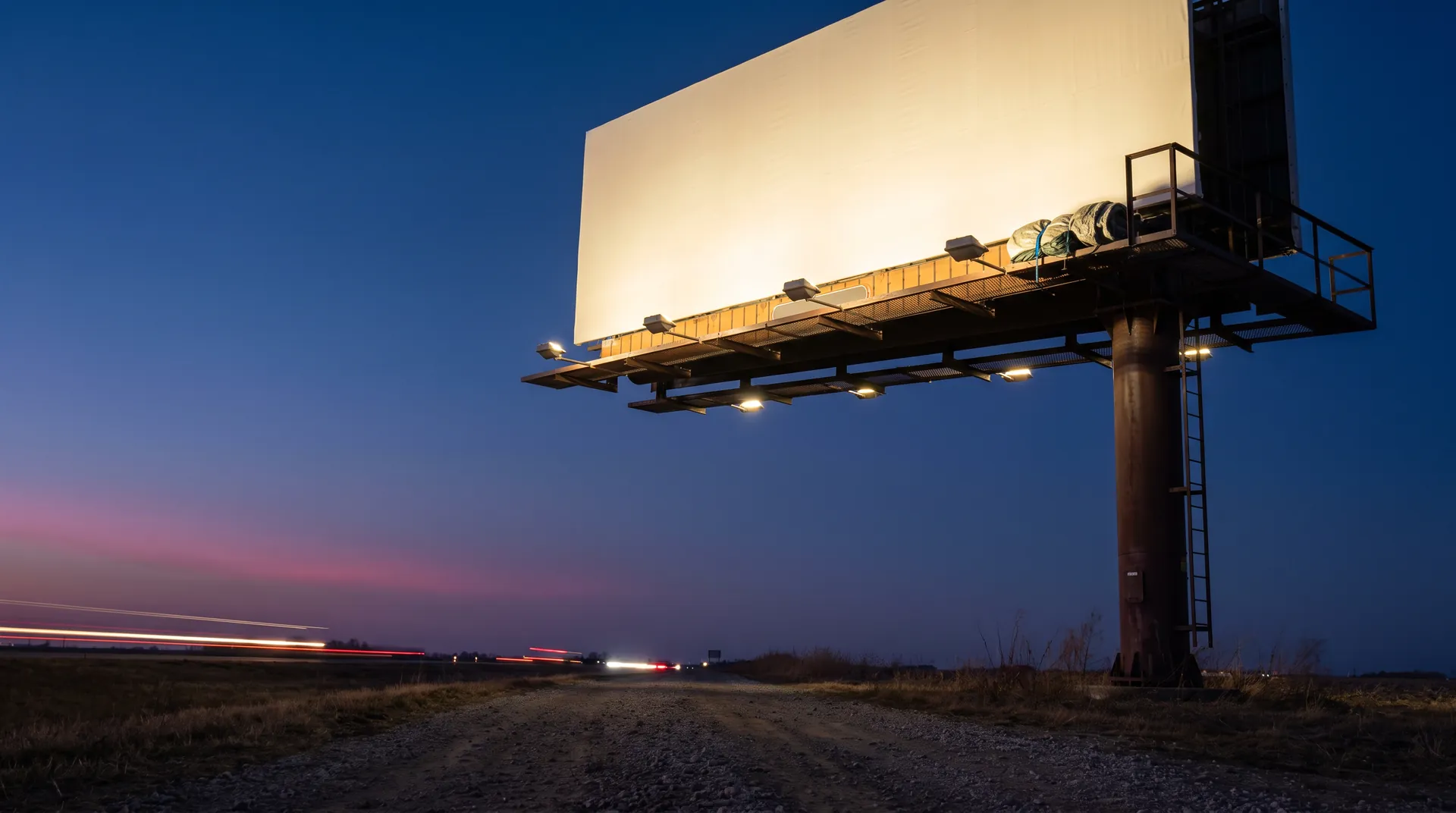
K2 found the same practices across digital, out of home, print and television, so a blank billboard deserves the same question as a stream: who bought it first, and at what price?
Worked example
A US home goods company reviews its media agency for a plan of about $24M a year, and its CFO wants the money read against delivery. Every figure belongs to the example. The agencies are unnamed, and the arithmetic on each line is printed so you can check it.
A plan written in dollars lets each bidder change what the dollars buy, so the brief states the qualified impressions each negotiated line must deliver, meaning fraud-free, measurable, viewable and off made-for-advertising sites, the ANA benchmark's test. Linear TV is posted against its guarantee. Search and social run in platform auctions every bidder buys the same way, so they stay at $6.5M in all three bids and sit outside the comparison.
| Negotiated line | Qualified impressions required | Measured by |
|---|---|---|
| Linear TV | 240 million | Posted against the guarantee |
| Connected TV | 170 million | The verifier your team names, with server-side insertion gaps agreed up front |
| Online video | 180 million | The verifier your team names |
| Open-web display | 300 million | The verifier your team names |
Total required: 890 million qualified impressions on the negotiated lines, the same in every bid.
The incumbent network agency is invited first. A second network comes from the team's own list, and Zinit's database adds an independent the team had not considered. The invitation states the rules before anyone prices, including a cap of 25% on principal inventory, which is the example's own number, and asks for no speculative work.
Part A is media, line by line. Part B is the work, in hours or as a commission. Part C is everything that decides what the first two are worth, and it is where most contracts go quiet.
Open-web display is the clearest case. Bid B offers it as principal at the lowest CPM in the field and, because the invitation asks for one, an agent price beside it. Dividing each CPM by the qualified share it guarantees gives the price of what you actually wanted.
| CPM | Qualified share guaranteed | Per qualified thousand | Cost for 300M qualified | |
|---|---|---|---|---|
| As principal | $5.40 | 60% | $9.00 | $2,700k |
| Its own agent price | $6.10 | 76% | $8.03 | $2,408k |
The principal CPM is $0.70 lower and costs $0.97 more per qualified thousand, which comes to $292k on this one line. A low CPM is not a dishonest number, since it may simply buy less of what you wanted.
Each cell is the qualified impressions the brief requires, divided by the bid's guaranteed share, times its CPM. Bid B's fee is $220k under Bid C's and it has the lowest CPM on three of four lines, and on this tab it finishes $89k above Bid C.
| Bid A | Bid B | Bid C | |
|---|---|---|---|
| How the negotiated lines are bought | All agent | Three lines principal | All agent |
| The work | $1,456,0007.0 FTE on 1,600 hours is 11,200 hours, at $130 | $980,1005.5 FTE on 1,800 hours is 9,900 hours, at $99 | $1,200,0005% commission on $24.0M; 10,800 hours covered |
| Linear TV | $6,000k$25.00 at 100% | $6,120k$25.50 at 100% | $6,180k$25.75 at 100% |
| Connected TV | $6,071k$30.00 at 84% | $5,634k$28.50 at 86% | $6,088k$30.80 at 86% |
| Online video | $3,284k$13.50 at 74% | $3,658k$12.60 at 62% | $3,150k$14.00 at 80% |
| Open-web display | $2,647k$6.00 at 68% | $2,700k$5.40 at 60% | $2,385k$6.20 at 78% |
| Negotiated media | $18,002k | $18,112k | $17,803k |
| Fee plus negotiated media | $19,458k | $19,092k | $19,003k |
| Principal share of the whole plan | 0% | 49% | 0% |
| Rebates and credits | Kept unless audited | Excluded on principal lines | Credited quarterly |
| Audit | Agent lines | Waived on principal lines | All lines, three years after termination |
Each media cell: qualified impressions required, divided by the qualified share, times the CPM, rounded to the nearest thousand dollars. Search and social add $6.5M to every bid. The FTE count and hours differ on purpose, because each agency scopes the work its own way and the sheet shows both.
Principal connected TV is a real saving, at $33.14 per qualified thousand against $35.71 and $35.81. Principal online video and display are not. The team asks Bid B to re-price with connected TV as its only principal line, and its plan drops to 24% principal, inside the cap.
| Bid B as bid | Bid B re-priced | Bid C | |
|---|---|---|---|
| Online video | $3,658k$12.60 at 62% | $3,185k$13.80 at 78% | $3,150k$14.00 at 80% |
| Open-web display | $2,700k$5.40 at 60% | $2,408k$6.10 at 76% | $2,385k$6.20 at 78% |
| Fee | $980,100 | $1,079,100 | $1,200,000 |
| Fee plus negotiated media | $19,092k | $18,426k | $19,003k |
| Principal share of the whole plan | 49% | 24% | 0% |
| Audit | Waived on principal lines | Waived on principal lines | All lines, three years after termination |
Bid B's blended rate rose from $99 to $109 when two principal lines came off, adding $99,000 to its fee, which suggests part of the low fee was being paid for elsewhere.
Your team now has a real choice, since the re-priced Bid B is $577k below Bid C and leaves $5.63M of connected TV outside the audit, while Bid C costs more and lets the auditor read every line. The CMO and the CFO can argue that one on its merits, which they could not do from the fee.
VERIFIED BENCHMARKS
| Category / Lever | Savings Range |
|---|---|
| Creative and full-service agency services | 15-25% |
| Digital marketing and performance media | 12-20% |
| Production (video, photography, print) | 18-30% |
| Market research and consumer insights | 12-22% |
| Events and experiential services | 15-25% |
| Martech stack rationalization | 15-25% |
| PR and communications services | 12-20% |
Fee models
Labor-based fees remain the most dominant method in the ANA's US surveys, and most media agreements now mix several. A WFA study of 2026 puts labor-based pay at 19% of its global sample, from 54% in 2011, so expect a field of bidders who quote in different shapes.
| Model | What sets the price | Hold constant | What moves when you are not looking |
|---|---|---|---|
| Retainer on hours | FTEs times the hours in each, times a blended rate. | The deliverable list, the hours in an FTE, the level mix and the rate for work out of scope. | Hours that go unused, senior people who appear in the pitch and thin out afterwards, and scope that creeps past the list. |
| Project or fixed output | A price per project or per deliverable. In 2022, 53% of ANA respondents spending $500M or more used this, up from 5% in 2016. | What counts as one deliverable, the rounds of revision and the usage rights. | Every change to the brief becomes a change order, and an agency that saves hours keeps them. |
| Commission | A percentage of media or, more rarely, of production. | The budget, what counts as commissionable and which hours the commission covers. | The agency earns more when you spend more, and on the example's $24.0M plan a 15% budget cut takes a 5% commission from $1.20M to $1.02M whether or not the work shrinks. |
| Performance incentive | A base fee with part of it at risk against a metric. ANA use has gone from 61% in 2013 to 41% in 2022 and 15% in 2025. | The base before the bonus, the metric, and who measures it. | Attribution. Most marketers told the ANA in 2022 they did not know whether incentives improved performance. |
| Principal inventory | No fee on the line, since the price on the plan already carries the agency's margin. | Qualified impressions, against an agent price for the same line. | Whether the line would have been on the plan if the agency earned nothing from it, and whether the audit right survives. |
Creative agencies
A retainer starts as a resource plan, priced at salary with an overhead factor and a margin, so two creative agency bids can be compared only once each FTE is turned back into hours. Conventions differ, since one benchmarking consultancy treats about 1,650 billable hours as the accepted year and notes some use 1,600, while bid Y here counts 1,800 and bid Z quotes outputs and no hours at all. The same brief goes to each: two campaigns, 40 video cut-downs and 240 social assets, each with two revision rounds, with $1.6M of third-party production.
| Creative bid X | Creative bid Y | Creative bid Z | |
|---|---|---|---|
| As quoted | 8.0 FTE on 1,600 hours | 7.5 FTE on 1,800 hours | Fixed price for the list |
| Hours | 12,800 | 13,500 | Not stated |
| Blended rate | $172 | $148 | Not stated |
| Fee | $2,201,600 | $1,998,000 | $2,050,000 |
| Markup on production | 10%, $160,000 | 15%, $240,000 | 0%, $0 |
| Fee plus markup | $2,361,600 | $2,238,000 | $2,050,000 |
| Hours from creative directors and above | 2,048, 16% | 1,215, 9% | Not stated |
| The named team after the pitch | Named people, with a credit if a role sits vacant | Named at the pitch only | Named lead, the rest at the agency's choice |
| Work out of scope | $190 an hour | $225 an hour | A priced change order |
| When generative AI saves hours | Reconciled yearly, unused hours credited | Not stated | Agency keeps the saving until the list is re-priced |
The bid with more FTEs brings fewer hours, and the one with the lowest rate adds the largest markup, so the fee on its own ranks them in an order the total does not keep. Your team still chooses the work, and this table only says what the choice costs and who is promised. Consulting and legal work is read on the professional services page.
The AI row is the new one to read. In 2024, 58% of advertisers in a WFA study saw a direct link between AI deployment and fee reduction, and in the ANA's 2025 survey no respondent said AI was yet having a significant effect on compensation agreements, with 16% calling it moderate. An hours-based retainer can pass that saving on only if it is reconciled.
Who pays for a pitch
The ANA and the 4A's measured it in 2023, from more than 300 interviews with US marketers and agency executives. Forrester separately estimated that US agencies spend up to 17% of annual revenue going after new business, about $12 billion a year. Our reading is that this comes back to clients eventually, since overhead is the factor on a rate card and an agency has nowhere else to recover it.
Average cost of one agency review, three finalists
No incumbent in the review$1,021,883
Incumbent defending$1,188,484
The ANA and 4A's Positive Pitch Principles, reported in June 2026, ask both sides to define the role and value of speculative work, including scope, pay and who owns the ideas, and to compensate for pitch labor and ideas. Zinit's invitation asks for none by default, and if your team wants it, those three terms go out with the request.
The price sheet, the named team and credentials take the field from a long list to two or three, so finalists only meet your people once the money already compares. Your team keeps the chemistry sessions and the choice of work.
The ANA and 4A's conclude that the need for a review should be well considered, and half of marketers named motivating the incumbent as its main short-term benefit. A re-priced sheet can get you that without a review.
The buying group
Marketing often owns the relationship and procurement owns the comparison, and the two can read one review differently: half of marketers in the ANA and 4A's study said the incumbent's performance was the key reason for a review, while only one in three procurement respondents agreed. Bring legal and finance in before bids are priced, because each objection turns into a line on the sheet.
Can stop it on
The work and the people, which no price sheet can settle.
Needs to see in the bid
The named team and how much of it stays after the pitch, with the money read so the argument can be about the work.
Can stop it on
A plan that hits its CPM and misses its audience, or a principal line chosen for the agency's margin.
Needs to see in the bid
Qualified share by line, the verifier, the agent price beside each principal line, and log-level access.
Can stop it on
A comparison that does not hold.
Needs to see in the bid
One sheet with every bid on the same brief, each figure traced to the place in the bid it came from.
Can stop it on
Ownership and disclosure. Commissioned work is a work made for hire only in nine listed categories with a signed writing, so much of a campaign needs a signed assignment, and the Copyright Office says purely AI-generated material is not protected and prompts alone are not enough. New York now requires ads to disclose synthetic performers, and the FTC holds advertisers liable for undisclosed endorser connections.
Needs to see in the bid
Assignment terms, a statement of where generative AI is used, indemnities, talent and music usage, and who monitors influencers.
Can stop it on
Money it cannot trace: unbilled balances, rebates and principal lines where the audit right is waived.
Needs to see in the bid
A right to audit that reaches the whole agency group and runs for three years after termination, and quarterly reports on balances.
Before anyone bids
None of these is new. Public buyers and advertiser bodies have written them down, and the invitation can state them as terms, so every bid prices them instead of negotiating them after the award.
Mark every plan line agent or principal, and keep principal lines apart.
The ANA's 2026 advice forbids mixing principal buys with standard agent buys, and the WFA and FirmDecisions guide wants inventory disclosed on the plan.
Cap principal inventory, and require sign-off above an opt-in.
The ANA, ISBA and the WFA and FirmDecisions guide each suggest a cap. The example's 25% is its own number.
Credit every discount, rebate and free placement your spend earns, wherever in the group it lands.
South Carolina's lottery RFP says the contractor must fully disclose and credit discounts and special offers, and the WFA guide adds that digital rebates are borderless.
Audit every entity in the group, with your choice of auditor, for three years after termination, and give your verifier log-level delivery data.
The WFA and FirmDecisions guide, which also prefers a fixed-fee auditor. South Carolina keeps records for three fiscal years past the contract, and the ANA benchmark credits log-level transparency for the advertisers who convert more of their spend.
Return permanent differences in the month they are realized, and unclaimed balances after 12 months.
The WFA and FirmDecisions guide calls the 12-month return common practice, and asks that credits not be offset across campaigns without approval.
Name the key people and the hours each commits, and credit the retainer when a role sits vacant.
TrinityP3 notes that an FTE on a retainer can be several people, or part of someone, which is the reason to write the names down. The credit is our suggestion, and no public buyer we read goes that far.
Assign the work in a signed writing, and state where generative AI was used.
17 U.S.C. 204(a) requires a signed writing to transfer copyright, and the Copyright Office's January 2025 report is why the second half matters.
Boundaries
An event is one tool, and the ANA and 4A's cost figures are a good reason to reach for it deliberately. These are the cases we would talk you out of a full review.
| Your situation | The better answer | Where Zinit fits |
|---|---|---|
| The agency is doing good work and the question is the price. | Keep the relationship and ask for a re-priced sheet with the contract lines above. | One sheet, your incumbent only, no competing bids. If the answer is thin, you have your reason for a review. |
| A launch lands before a review could finish. | Do not change agencies in the run-up. The ANA and 4A's name delayed campaigns and launches as a real cost of a review. | Schedule the event for after the launch, and use the time to fix the contract. |
| Your work spans several specialist disciplines. | A roster with a rate card and call-off terms, so each brief does not become a pitch. | One event sets the roster's rates and terms, and your team calls off work from it after that. |
| The buying is a one-off: a shoot, a study, an event, a translation run. | This is the easy case, because a clear brief and a short list suit a sourcing event well. | A single event on the brief, with no relationship at stake. |
| Your CEO has already chosen. | Save the agencies the cost of pitching against a foregone conclusion. The same principles ask marketers to stop the pitch once a decision has been made. | A price check and contract markup, if anything. |
By what you are buying
The sheet changes with the discipline, since each one prices in its own unit and keeps its money in a different place. Printed collateral sits with print and document management, and if your company is itself a studio or broadcaster, the production side of your buying is on the media and entertainment page.
| Discipline | The object you read | What a fair comparison holds constant |
|---|---|---|
| Media buying | The media plan and flowchart, line by line. | Qualified delivery, how each line is bought, audit and rebates. This page's example. |
| Creative and brand | The resource plan against the deliverable list. | Hours per FTE, level mix, outputs, revision rounds and ownership. |
| Production | The AICP Bid Form, the commercial production standard since 1975, in its revised edition. | Shoot days, crew, post and usage rights, plus whether the agency's own in-house unit is bidding against independents. |
| Public relations | A monthly retainer against a named team. | Senior hours, the people on the account, pass-through costs and measurement that is not a promise of coverage. |
| Research and insights | A study specification priced per completed interview. | Sample, incidence, interview length, data ownership and whether a syndicated study would answer the question. |
| Events and experiential | A production fee over venue, hotel and exhibition costs. | Attendance, room block attrition, labor rules at the venue, and what is passed through at cost. |
| Marketing technology | A subscription schedule by contact or seat. | Contacts or sends, implementation, integrations, data export and the price at renewal. |
The market
US advertising, public relations and related firms took in about $59 billion in revenue in the second quarter of 2026, by the Census Bureau's preliminary estimate. Omnicom closed its purchase of Interpublic in late 2025, which moved scale in media buying into fewer hands, and the many independents and specialists are invited from the database rather than named here.
creative, media, production and PR under one group





media planning and buying outside the holding companies


corporate, consumer and crisis communications

panels, tracking, survey platforms and consumer data



automation, content, customer data and analytics platforms



Established suppliers in each category, shown to illustrate the market, not as a list of Zinit's customers or partners.
Proof
A mining customer's result across its recent RFPs and the logo row from the homepage, both as the rest of the site shows them.
Saved over 12% across 28 recent RFPs
A mining customer's recent RFPs, across its categories. The customer is not named.
RFPs published from






As shown on the homepage.
Zinit is supplier-funded and free to buyers: only the supplier your team selects as the winner pays a commission, the losing bidders pay nothing, and nothing is owed until you award. The commission rates are published openly on our site, and because the fee is tied to the award your team makes rather than to who competes, Zinit earns the same whichever qualified supplier you choose.
It can, which is why you should read ours the same way, and it differs from a rebate in being stated up front. Under the fee schedule in Zinit's terms of service an award the size of the example's $1,079,100 fee carries a $1,875 flat fee plus 0.125% of the RFP volume, about $3,200 once, which is about 1.4 cents on every $100 of the media it runs. Counted on the whole plan of $24.9M, the schedule's lower rate for a larger volume gives about $12,500, or 5 cents per $100, and the rate keeps falling, so a $100M plan counted whole would carry $20,000. The schedule does not say whether media passed through counts as RFP volume, so your team and Zinit agree that in the RFP. If your CFO would rather keep it out of the bids altogether, the same terms let the buyer elect to carry the fee when the RFP is published.
It is close enough that you should ask. VoxComm warned in 2025 about intermediaries who charge agencies to reach a shortlist, and TrinityP3 describes free consultants paid by the winning agency, often 5% to 15% of its first-year revenue, and both say the cost comes back to the client. VoxComm speaks for agencies and TrinityP3 sells client-funded reviews, so weigh that, and the argument still applies to Zinit in proportion, since on the example the fee is about 0.3% of the agency's own fee. The rest differs: registering and bidding are free with no subscription, your team approves who is invited, and the fee schedule is public. If your agencies or your CFO would rather see no such payment, the buyer can carry the fee instead, on the same schedule.
No. Forrester calls it a useful tool, three in four marketers in the ANA's survey name lower cost as its chief benefit, and in the example its connected TV line wins on qualified delivery. The trouble is that you cannot tell a good principal line from a poor one unless each is marked and has an agent price beside it, which is the only thing this page asks for.
You should not, if that means choosing the work by price. The sheet says what each bid costs and what it brings, and your CMO and brand team choose the work and the people. Zinit scores neither, and if your team wants a final round on the work, that sits outside the sheet and goes ahead on terms you set.
Keep them. The ANA and 4A's found 46% of marketers use consultants when reviewing agencies. The event gives yours a comparable price sheet to work from, and they can help you write it.
Neither. Zinit runs the sourcing event, so it does not audit delivered media, place media or make work. After the award your verifier and your auditor read delivery against each guaranteed share, and the sheet and contract lines decide what they are allowed to see. Zinit also buys from firms and does not book individual performers or models.
Some will not, and it is better to know early. Agencies decline when the brief is vague, the budget is hidden or the work is unpaid, which is the ground the ANA and 4A's principles cover, so the invitation states the budget range, the decision date and that no speculative work is asked for. A network that will not quote an agent price beside a principal line can say so, and the blank shows on the sheet. Procurement people at Zinit work the field with your team, and an agency that declines is recorded as declining.
Not yet, and we would rather say so. The results we can show come from other categories, so the fair way to test this is one discipline or one project, on your own numbers, before anything bigger.
Nothing moves because an event runs. The incumbent is invited first and prices the same sheet, and if it wins, your team renews on the market's terms. If another agency wins, each bid has stated its transition plan and which named people it would put on the account, and your team decides.
Bring the current contract and one year of invoices, plans or estimates. Zinit builds the brief and the price sheet, runs the event and levels the bids, with your team directing and approving every step.