Market intelligence · daily brief
Battery declaration push, Suez service returns and BRICS trade friction
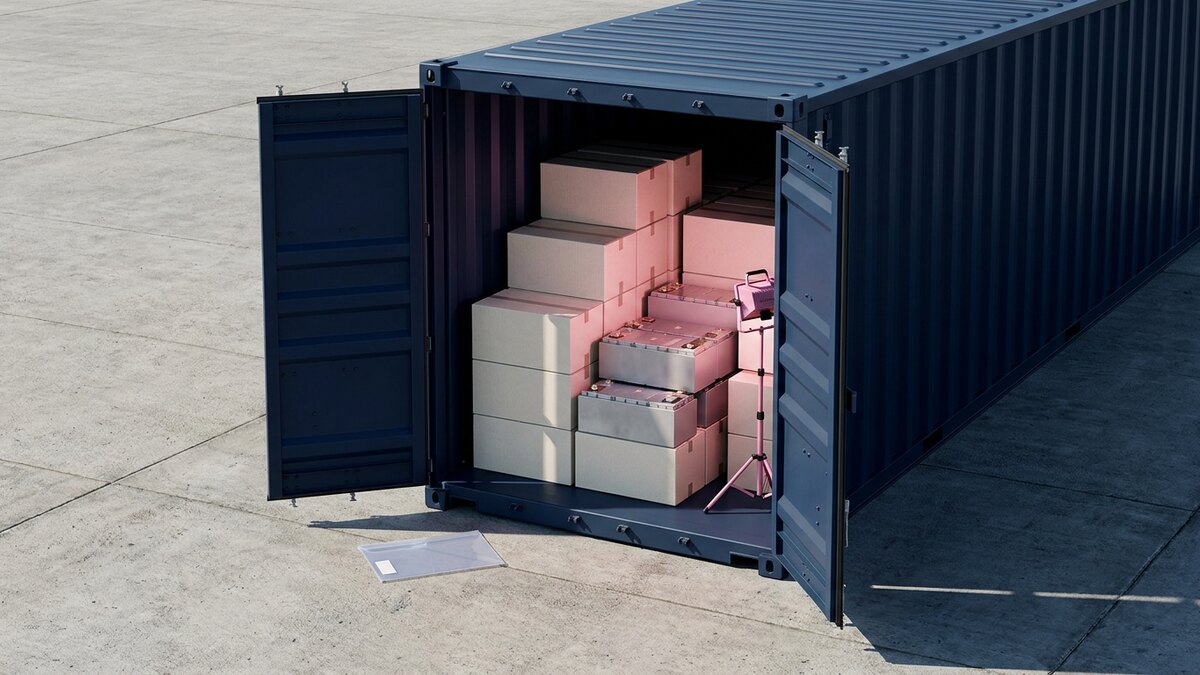
Battery declarations, route restoration and export standards moved together across today’s freight and trade news, giving procurement teams three concrete points to test against carrier instructions, route plans and supplier-payment terms.
WSC seeks a container-level battery threshold
CSCMP's Supply Chain Quarterly reports that the World Shipping Council wants governments to close a dangerous-goods rule gap that can leave carriers uninformed when containers hold thousands of lithium batteries.
The council says Special Provision 188 exempts smaller batteries that meet testing, packaging and capacity criteria, yet it does not cap how many exempt batteries may be consolidated in one container. Its example puts about 4,200 laptops and roughly 416 kWh of stored energy in a container without dangerous-goods documentation or placarding. The proposed response is a container-level threshold backed by five governments and industry groups, above which shipments would need declaration and could require placards.
Why it matters: Buyers can ask logistics providers how battery content is disclosed before a booking reaches the carrier, because a shipment that is compliant at device level may still create a concentrated container-level risk.
Maersk and Hapag-Lloyd restore Suez services
SupplyChainBrain reports that Maersk and Hapag-Lloyd are restoring four joint container services through the Suez Canal. The returning services connect Asia with Northern Europe and the Mediterranean, plus India with Europe.
Six of the Gemini network’s 11 Europe-bound links serving Asian and Middle Eastern origins now use the canal again after months of diversions around the Cape of Good Hope. The carriers say further service changes will depend on stability in the Red Sea region.
Why it matters: Procurement teams can compare current route guides with contracted transit assumptions and contingency clauses, since a service restoration changes available options without removing the need for disruption planning.
EEPC India presses BRICS on barriers and payments
The Economic Times reports that EEPC India is calling for common standards on non-tariff barriers and a smoother payment mechanism among BRICS members. The group’s chairman said eliminating those barriers and improving payments in national currencies could solve around 75% of the problems exporters face.
EEPC’s request places regulatory procedures and settlement mechanics in the same trade-facilitation discussion, and the group describes engineering goods as a major Indian export sector.
Why it matters: Buyers sourcing engineering goods across BRICS markets can map which documentation, conformity and payment steps are driven by national rules, because those are the points a shared standard or settlement arrangement would change first.
The thread
All three stories concern information that has to reach an operating decision: what is inside a container, which route a service will take and which rules or payment process an exporter must satisfy. Procurement teams can turn each headline into a named check with a carrier, supplier or trade-compliance owner while the underlying proposals and route conditions continue to move.