Market intelligence · daily brief
Panama draft limits tighten as Target and Caterpillar recast tariff costs
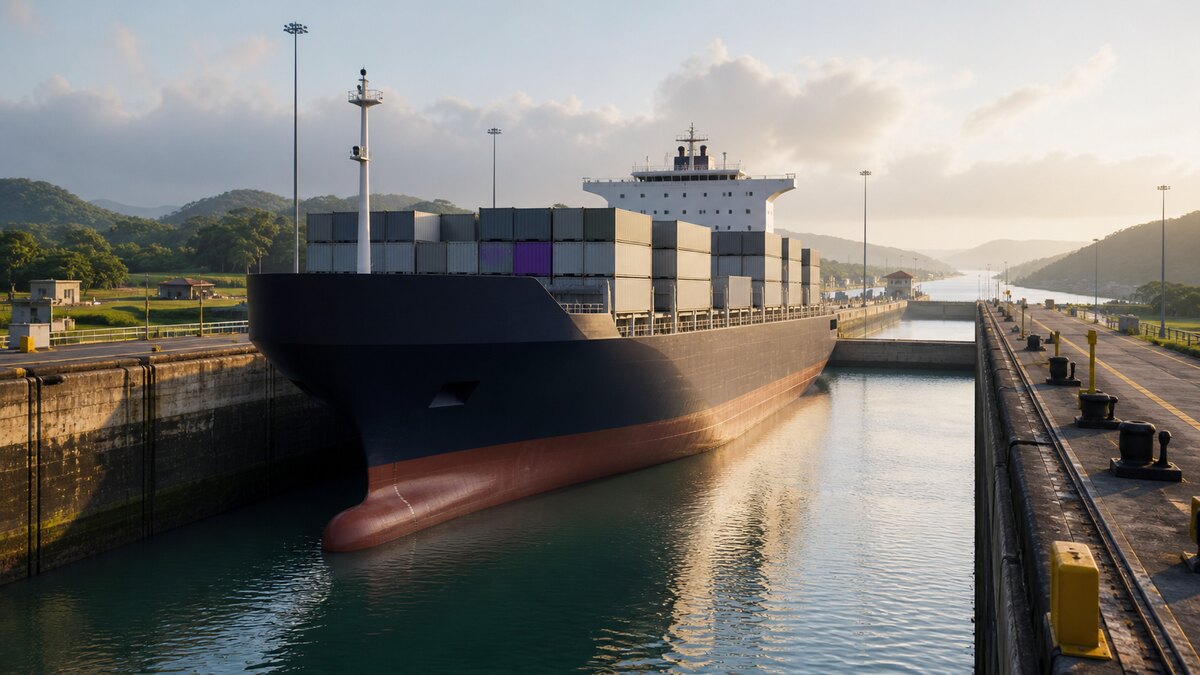
Capacity risk and tariff refunds are moving on different clocks. Panama's water constraints are narrowing load flexibility, while Target and Caterpillar are deciding how returned duty costs affect prices, sourcing, and forecasts.
Panama Canal draft limits narrow cargo flexibility
CSCMP's Supply Chain Quarterly reports that the canal's existing optimal maximum draft of 50 feet will fall to 48 feet on August 26 and then to 47.5 feet on September 3. The restriction lets scheduled transits continue with less cargo weight, while some carrier notices put the added mid-September fee between $200 and $1,000 for each forty-foot equivalent unit.
Why it matters: Buyers should treat usable vessel capacity and surcharge quotes as live variables. An unchanged transit schedule does not guarantee the same payload or landed freight cost.
Target links its tariff refund to price investment
SupplyChainBrain reports that Target received a $994 million pre-tax tariff reimbursement and said it has continued to invest in price. Operating income for the quarter was $2.6 billion, twice the $1.3 billion recorded in the comparison period.
Why it matters: Category teams should separate a returned historic cost from the continuing duty baseline. A refund can create room for price action, but it does not by itself reset future supplier economics.
Caterpillar separates refunds from continuing tariff exposure
Supply Chain Dive reports that Caterpillar booked a $392 million refund against invalidated duties. Separate tariff expense for the quarter came to roughly $400 million, below an earlier $700 million estimate. Mitigation has combined sourcing adjustments, price changes, and cost controls.
Caterpillar forecast around $600 million in tariff costs for the current quarter and about $2.2 billion for the full year, with half of the near-term cost assigned to Construction Industries and a quarter to each of its other two operating segments.
Why it matters: Procurement forecasts need separate lines for refunds, current levies, and mitigation. Netting them into one tariff figure can hide which sourcing actions are still required.
The thread
The canal story changes the cost of physical capacity; the corporate stories change the accounting and commercial treatment of duties already paid. Across both, procurement teams need to preserve the timing and direction of each cost rather than collapse a surcharge, a refund, and a forecast into one baseline.
Watching
Watch canal lake projections and carrier fee notices, plus how tariff refunds flow into price, supplier, and sourcing decisions. Continue with the previous Global Procurement Brief.