Company news
Zinit’s advisory board
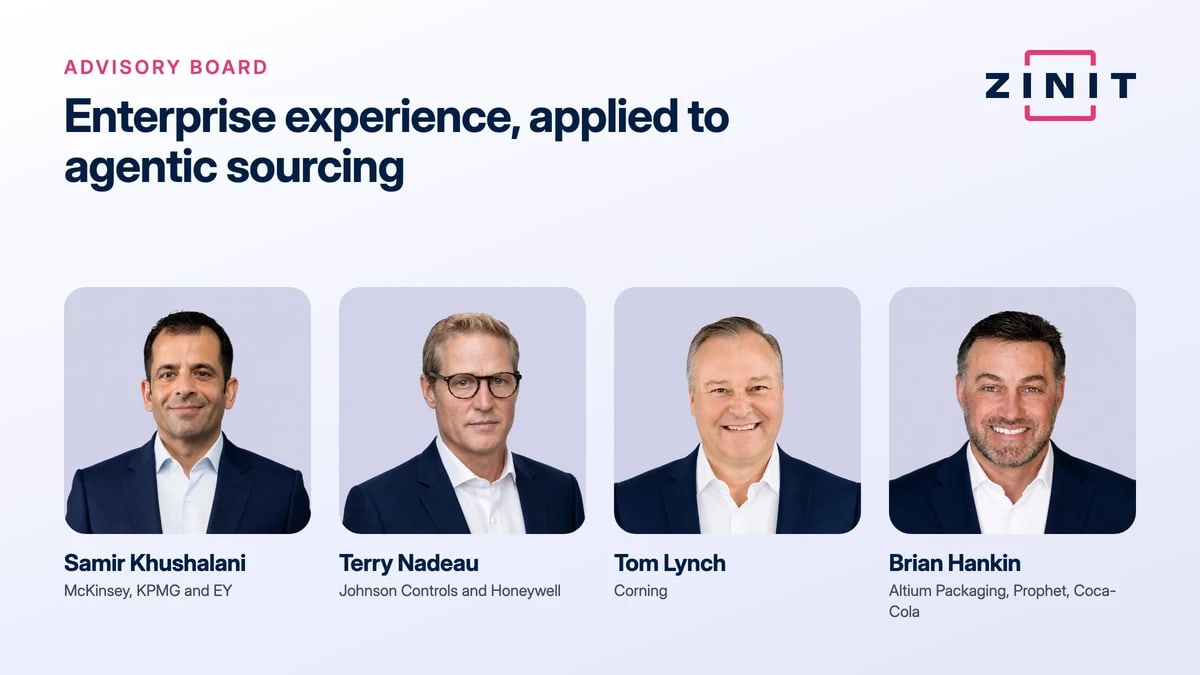
Samir Khushalani, Terry Nadeau, Tom Lynch and Brian Hankin have joined Zinit’s advisory board. Here is who they are, and the one question each of them holds us to.
Zinit is an AI-native procurement platform: AI agents perform the sourcing work — supplier discovery, RFx drafting — while your team directs and approves.
Whether that holds up inside a real procurement function is hard to judge from inside a product team, which is why we have spent the past few months putting our thinking in front of these four before it reaches a customer, and now we can introduce them properly.
The board

Samir Khushalani
Seasoned procurement executive and trusted advisor to CPOs and AI start-ups, after 30+ years at McKinsey, KPMG and EY.
“For the first time in history, we are moving from software that enables people to do the work to software that does the work for the people.”
Samir holds the operating model, since something has to change in a procurement function once software performs the sourcing work itself.
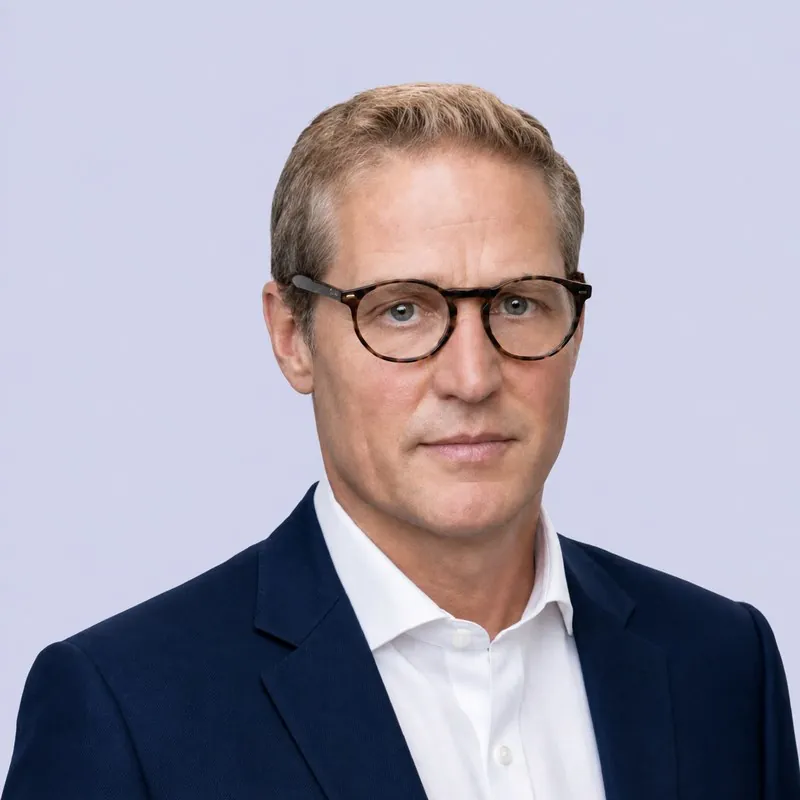
Terry Nadeau
30+ years of procurement leadership across Johnson Controls and Honeywell.
“I have worked in procurement at global and business-unit levels. The value of new technology depends on whether it helps teams make better sourcing decisions in day-to-day operations.”
Terry holds the practical test: whether new technology works inside complex procurement operations.

Tom Lynch
More than 30 years leading global businesses and transformations, 25 of them running multibillion-dollar operations at Corning across four continents and multiple industries.
“In my twenty-five years of running businesses at Corning, I have seen significant sourcing and savings opportunities go untapped. Not because the opportunities weren’t there, but because competing priorities, limited staffing, and the resources required to pursue them made many areas of spend difficult to address. Zinit has the potential to change that equation, enabling companies to pursue opportunities that were previously out of reach while exposing them to a much broader universe of suppliers capable of meeting their needs.”
Tom holds the opportunities a business could see and never had the people to pursue.

Brian Hankin
Growth and innovation executive — Altium Packaging, Prophet, Coca-Cola.
“Value creation is never about the tools and technologies alone. A tool can be perfectly good and still never change how a team works. Zinit’s solution is easy to engage with, adds measurable value quickly, and works with existing systems.”
Brian holds adoption, because procurement technology fails there far more often than on capability.
What they are actually for
Their mandate is specific: pressure-test where agents may act, where a person must decide, and whether what we are building survives contact with how enterprise sourcing actually runs.
That is a narrower job than it sounds, because what breaks procurement technology is usually invisible from a roadmap — the exception that does not fit the workflow, the approval that has to survive an auditor six months later, the supplier who quietly stops bidding, the category team that keeps its spreadsheet because the system cannot be trusted with the awkward case. Four people who have lived on different sides of that will see those coming earlier than we will.
What happens next
We will introduce each of them across this week, in their own words, and in October three of them join a public discussion about where agentic sourcing actually belongs inside an enterprise, which is a conversation we would rather have in front of people who will push back. Registration opens once the date is confirmed.
You can meet the full board, and each advisor’s own page, at the advisory board page. If you run procurement at scale, which of those four questions is your team living with right now?
More from the Journal: all articles · company news