Market intelligence · daily brief
Kimberly-Clark unifies procurement, US restricts foreign robots, and an Arctic cargo lane opens
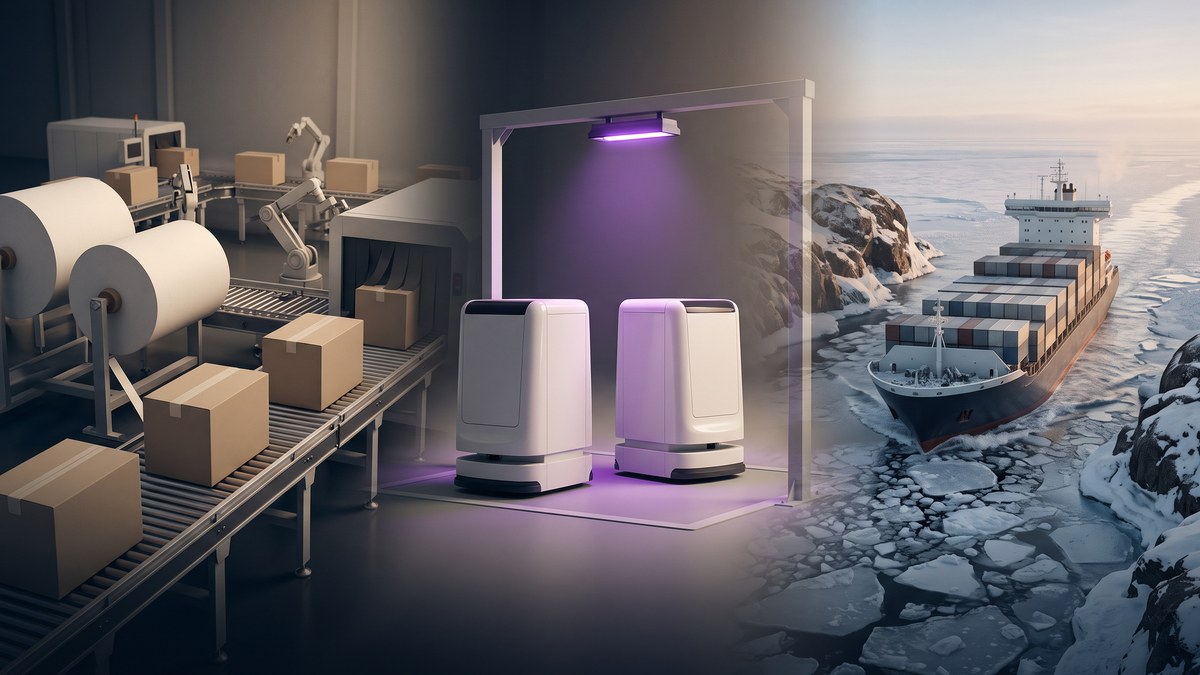
Procurement teams gained a wider digital toolkit today while supplier choice narrowed in one emerging equipment market and a new freight lane opened in another. A consumer-goods group connected its technology rollout to operating adoption, US regulators changed the entry conditions for foreign mobile robots, and a Chinese carrier put an Arctic route into regular service. Together, the moves make implementation, vendor eligibility, and route risk more immediate parts of the buying brief.
Kimberly-Clark ties procurement software to AI and workforce skills
Kimberly-Clark completed a worldwide procurement-software rollout, introduced a manufacturing knowledge agent, and opened a digital training program in the first half of the year, Supply Chain Dive reported. The company says nine of every ten suppliers now use the procurement platform, which it is applying to automation, working-capital management, and compliance. An initial manufacturing-agent deployment produced a 40% to 50% productivity gain for knowledge-search work before the company began expanding it across the network. Its training academy covers 17 skill areas, while a spokesperson reported average skill growth of 60% among people who completed the program.
For procurement leaders, the useful pattern is the linkage: platform access, workflow assistance, and employee capability are being measured as one change program. Technology selection alone is not the finish line; adoption evidence belongs in the value case from the outset.
US restrictions narrow the field for imported mobile robots
The Federal Communications Commission added foreign mobile robots and connected power inverters to its restricted equipment list on July 28, Supply Chain Dive reported, citing national-security concerns. Qualifying new products can no longer secure the authorization needed for US import or sale, though a supplier may seek conditional approval. The restriction extends beyond China to suppliers in Japan, Germany, South Korea, and other countries, while licensed equipment already in the market is unaffected.
The move arrives against a large production gap: China installed 295,000 industrial robots in 2024, more than half of the worldwide total, and the International Federation of Robotics estimated Chinese installations at about ten times the US level. Buyers planning new warehouse or factory automation now need equipment-authorization status in supplier qualification, alongside cyber review, service coverage, and total cost.
A regular Arctic cargo service tests a shorter China-Europe lane
Chinese carrier Sea Legend is starting what it describes as the first regular Arctic cargo service to Europe, according to SupplyChainBrain. The Northern Sea Route runs for 3,500 miles and cuts sailing time between China and Europe by more than half. A comparison in the report puts the reduction in Arctic summer sea-ice coverage at one-third since 1979. The carrier says the shorter passage could halve emissions and reduce fuel expense, while the report warns that a spill would be unusually difficult to clean up in icy water.
For logistics buyers, this is an option to evaluate rather than a mature lane to assume. Transit savings need to be tested against seasonal access, environmental exposure, insurance, and recovery plans before the route earns a place in a resilient freight portfolio.
Watching
The procurement signal across all three stories is conditional access: value depends on whether suppliers, equipment, and routes remain usable under real operating constraints. Continue with the previous Global Procurement Brief.