Antidumping and Countervailing Duty Exposure in Sourcing Plans
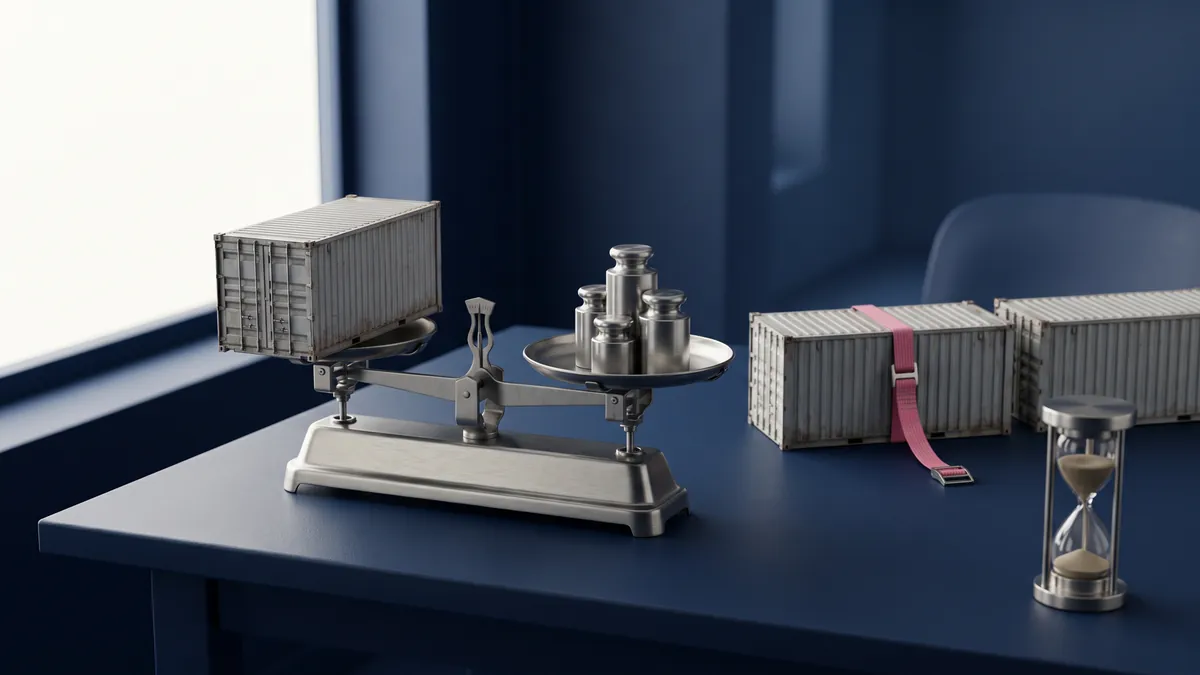
“A cash deposit is a provisional number on someone else's timetable. Plan it as an open liability with dates, not a settled price, and the final duty bill becomes less of a surprise.”
| Statistic | Source |
|---|---|
| Commerce's June 12, 2026 final results for tubing from India (A-533-873) covered entries from June 1, 2023, to May 31, 2024. | Commerce final results notice, 2026 |
| A preliminary determination is due 140 days after initiation in antidumping cases and 65 days in countervailing duty cases, unless extended. | ITA initiation FAQ, 2026 |
| Preliminary review results are due 245 days after the anniversary month and final results 120 days after those, unless extended. | 19 CFR 351.213, eCFR, 2024 |
| In 2011, Commerce noted that less than two percent of all US entries were subject to AD or CVD duties. | Commerce final rule, 2011 |
| In 2003, CBP upheld double antidumping duties on 12 entries lacking reimbursement certificates before liquidation. | CBP ruling HQ 229859, 2003 |
Each row restates one official source in its own scope and date; deadlines can be extended or tolled.
What is antidumping and countervailing duty exposure?
According to CBP's page on the Enforce and Protect Act, antidumping and countervailing duties are intended to offset dumping and subsidization for injured domestic industries. In the Commerce Department's FAQ on new investigations, an antidumping (AD) case asks whether goods are dumped and a countervailing duty (CVD) case whether they are subsidized, and a CVD case also questions the exporting government. In this guide, exposure is the deposits, assessment differences and interest those duties add.
How does an investigation timeline reach landed cost?
In the same Commerce FAQ, the International Trade Commission (ITC) makes its preliminary injury decision within 45 days of the petition, and a negative decision ends the investigation; Commerce's preliminary determination is due 140 days after initiation for AD and 65 days for CVD, unless extended. According to the FAQ's answer on duty collection, cash deposits normally start once both agencies' preliminary findings are affirmative, from the date Commerce publishes its determination.
According to the FAQ's answer on critical circumstances, duties can reach entries made up to 90 days before the preliminary determination if both agencies find critical circumstances, which petitioners may allege until three weeks before the final determinations. In this guide's view, buying ahead of a preliminary determination is a cost to model, not a safe hedge.
On the ITA's statutory timeline page, Commerce's final AD determination comes 215 days after initiation, the ITC's final 45 days after an affirmative Commerce final, and the order 7 days later, unless extended. Under the same page, an order needs affirmative final determinations from both agencies.
Under a 2011 Commerce rule on provisional measures, the security posted after an affirmative preliminary determination is normally a cash deposit, for a provisional period of at most six months. In the same rule's reading of the statute, the difference is refunded if the final margin is lower and disregarded if it is higher.
In this guide's view, turn those dates into a cash plan for each supplier route, with deposits at the preliminary rate and then at each later final rate, and re-run it whenever a deadline moves.
According to the abstract of a 2024 peer-reviewed study by Wang and Ng, which used US customs data and a difference-in-differences design for US imports from China, antidumping measures had substantial trade-dampening effects at the product level and raised import prices by more than the cost increases the duties caused. In this guide's view, plan for price effects beyond the deposit when goods fall within an order, without assuming that finding holds elsewhere.
Why is the cash deposit not the final duty?
Under 19 CFR 351.212, Commerce's assessment rule, the United States assesses retrospectively: final AD and CVD liability is set after import, generally in a review of a discrete period. Where no review is requested, entries are assessed at the latest completed review's rate or, failing that, the deposit rate at entry, according to the same rule.
In Commerce's administrative review rule, 19 CFR 351.213, an importer may request a review of an exporter or producer whose goods it imported, in the order's anniversary month, and an AD review normally covers the preceding 12 months. Under the rule's time limits, Commerce's preliminary results are due within 245 days after that month and final results within 120 days after them, extendable to 365 and 180 days.
In Commerce's final results notice of June 12, 2026 for cold-drawn mechanical tubing from India (A-533-873), the review covered entries from June 1, 2023, to May 31, 2024, and its deadlines had moved through shutdown tolling of 47 and 21 days and a 52-day postponement. According to the same notice, Commerce's assessment instructions go to CBP no earlier than 35 days after publication. In this guide's reading, June 2023 entries from the reviewed exporters waited roughly three years for final assessment.
Under the assessment rule's deposit cap, for entries before the ITC's final injury notice, any excess of the final duty over the provisional duty is disregarded, and a lower final duty is assessed instead. Under its interest provision, interest on over- or underpayments for entries after the order's publication runs from the deposit date to liquidation.
In this guide's view, carry two figures for each open entry, the deposit paid and a planning range for the final duty, until it liquidates, and do not budget a lower rate from the latest review for entries in periods that review did not cover.
Which supplier and origin facts decide the rate?
Under Commerce's cash deposit instructions in the tubing notice, a reviewed company gets its new margin, an exporter covered in an earlier segment keeps its latest company-specific rate, an unreviewed exporter whose producer was reviewed takes the producer's rate, and all others deposit at the all-others rate, 5.87 percent ad valorem in that June 12, 2026 notice for A-533-873. In this guide's view, the producer and exporter pair, not just the country, sets the deposit rate.
In a 2021 client alert by the law firm Arent Fox, which predates later rule changes, goods completed or assembled in a third country may still owe US AD/CVD duties even if their origin differs from the order's country, and Commerce and CBP origin tests occasionally reach different conclusions. According to the same alert, supplier evasion is attributed to the US importer regardless of the importer's knowledge.
Under the Enforce and Protect Act process that CBP describes, an interested party can allege that an importer is evading AD/CVD duties, and CBP may collect information from that party, the importer, the foreign producer or exporter and its government. In the Arent Fox alert's account, CBP typically follows an allegation with a CF-28 asking the importer about origin and supply chain.
In this guide's view, origin evidence is a sourcing record first: ask each affected supplier to name the producer and plant and show where order-country inputs enter its bill of materials. Inquiry responses and scope questions belong with a licensed customs broker or trade counsel.
How should contracts treat duty changes and reimbursement?
Under 19 CFR 351.402(f), Commerce's reimbursement rule, Commerce deducts from the export price any AD or CVD duty that the exporter or producer paid for the importer or reimbursed to it, and the importer must certify to CBP before liquidation whether it has been reimbursed or has any agreement for payment or refund. Under the rule's presumption clause, Commerce may presume reimbursement when no certificate is filed. In this guide's reading, a supplier that absorbs the duty lowers the export price Commerce uses and can raise the duty, so it rarely helps the importer.
In the tubing notice's reminder to importers, a missing certificate could lead Commerce to presume reimbursement and assess double antidumping duties. In CBP's protest ruling HQ 229859 of December 31, 2003, double antidumping duties on Chinese-origin castings from a Canadian supplier were upheld because the importer filed no certificates before liquidation.
In this guide's view, settle three commercial questions with trade counsel before signing: who is importer of record and funds deposits, how a new deposit or final rate reaches future prices, and what each party may do when a case starts. Any term under which a supplier pays or refunds these duties can be an agreement of the kind covered by the certification rule, and whether a specific term is one is a question for trade counsel.
For index-linked price changes, use the guide to contract escalation clauses.
What should a trade remedy exposure map contain?
The map below lists fields to review for each affected supplier route after each new notice; it is a planning aid, not a compliance determination.
| Field | What to record | Where from | Review when |
|---|---|---|---|
| Case | Product, country, AD or CVD, case number, stage | Federal Register; ACCESS | A petition names the category |
| Next deadline | Next statutory date, extensions, review-request month | Latest case notice | A date moves or a request month opens |
| Route | Producer, exporter, countries of production and export | Supplier declaration, invoice | The route changes |
| Applicable rate | Own, prior-segment, producer's or all-others rate and notice date | Latest order or final results | New final results |
| Open entries | Entries by review period, deposit paid, liquidation status, planning range | Importer of record's entry data | Assessment instructions issue |
| Origin evidence | Producer, plant, where order-country inputs enter the bill of materials | Supplier records before award | Inputs or finishing move to a third country |
| Reimbursement certificate | Filed before liquidation, linked to entry lines | Importer of record | Every entry; also when a supplier refund term is proposed |
| Contract terms | Importer of record, rate pass-through to price, rights when a case starts | Signed contract | A case starts |
An authored planning aid; it sets no thresholds and does not decide scope, origin or classification.
In the Journal's guide library, related guides cover next steps: test a second source with the readiness checks in the dual sourcing guide before moving volume, and if a case reopens the choice of country, compare locations with a nearshoring total-cost model.
How do AI agents change trade remedy monitoring?
Frequently asked questions
What is the difference between antidumping and countervailing duties?
According to CBP's page on the Enforce and Protect Act, antidumping duties are intended to offset dumping and countervailing duties to offset subsidization. In Commerce's FAQ on new investigations, a CVD case also sends a questionnaire to the exporting government.
When do importers start paying cash deposits?
According to Commerce's initiation FAQ, deposits start when Commerce publishes an affirmative preliminary determination, provided the ITC's preliminary finding is also affirmative. With critical circumstances, duties can reach entries made up to 90 days earlier, under the same FAQ.
Can a supplier agree to pay the antidumping duty for the importer?
Usually not to the importer's benefit. Under the reimbursement rule, Commerce deducts any AD or CVD duty that the exporter or producer pays for, or reimburses to, the importer when it calculates the export price, and the importer must certify before liquidation whether any such payment or agreement exists. In a June 2026 Commerce notice, a missing certificate could lead Commerce to presume reimbursement and assess double antidumping duties. Have trade counsel review any term that touches who bears these duties.
Sources
- FAQs for the Initiation of an Antidumping Duty and/or Countervailing Duty Investigation — International Trade Administration, U.S. Department of Commerce (Enforcement and Compliance), International Trade Administration (trade.gov), U.S. Department of Commerce; page metadata last changed 2 February 2026, 2026. Contextual evidence (official report): ITC preliminary injury decision within 45 days of the petition, a negative one terminating the investigation; Commerce preliminary determinations 140 days (AD) and 65 days (CVD) after initiation, extendable; cash deposits only after affirmative preliminary determinations, from publication; critical circumstances reaching back 90 days and allegeable until three weeks before the final determinations; the CVD questionnaire to the foreign government.
- Using Third-Country Components? Buyer Beware – New AD/CVD Orders Target Third Country Production — Nancy A. Noonan; Diana Dimitriuc Quaia; Jessica DiPietro (Arent Fox LLP, now ArentFox Schiff), Arent Fox LLP (now ArentFox Schiff, afslaw.com), client alert, Section 4: Trade Litigation, 5 January 2021, 2021. Contextual evidence (practitioner article): Goods completed or assembled in a third country may still owe AD/CVD duties; Commerce and CBP origin tests occasionally differ; CBP typically answers an EAPA allegation with a CF-28 to the importer on country of origin and supply chain; the firm's caution that supplier evasion is attributed to the importer regardless of knowledge.
- How antidumping measures affect US imports from China: A mesoeconomic perspective of the excess price changes — Shuying Wang; Yew‐Kwang Ng, Pacific Economic Review 29(1):127-156, February 2024 (Wiley Blackwell; published online 2023; DOI 10.1111/1468-0106.12430); read as the IDEAS/RePEc abstract record, 2024. Current empirical evidence (peer reviewed journal): For US imports from China, antidumping measures had substantial trade-dampening effects at the product level and raised import prices by more than the cost increases the duties caused (US customs data, difference in differences).
- Statutory Time Frame for AD/CVD Investigations — International Trade Administration, U.S. Department of Commerce, International Trade Administration (trade.gov), U.S. Department of Commerce; page metadata last changed 23 January 2025, 2025. Contextual evidence (official report): Commerce's final AD determination 215 days after initiation; the ITC's final decision 45 days after an affirmative Commerce final; an order 7 days after an affirmative ITC final; an order needs affirmative final determinations from both agencies.
- 19 CFR 351.212 - Assessment of antidumping and countervailing duties; provisional measures deposit cap; interest on certain overpayments and underpayments — International Trade Administration, U.S. Department of Commerce, Electronic Code of Federal Regulations (eCFR), title 19 up to date as of 6 November 2026; section last amended at 89 FR 101762 (16 December 2024), 2024. Foundational evidence (official report): The US retrospective assessment system (final liability set after import, generally in a review of a discrete period; without a review, the latest completed review's rate or the deposit rate at entry); the provisional measures deposit cap; interest from the deposit date through liquidation.
- 19 CFR 351.213 - Administrative review of orders and suspension agreements under section 751(a)(1) of the Act — International Trade Administration, U.S. Department of Commerce, Electronic Code of Federal Regulations (eCFR), title 19 up to date as of 6 November 2026; section last amended at 89 FR 101762 (16 December 2024), 2024. Contextual evidence (official report): Who may request an administrative review and when (anniversary month; an importer for its exporter or producer); the AD review period (the 12 months before the anniversary month); the 245- and 120-day time limits and their extensions to 365, 180 or 300 days.
- 19 CFR 351.402 - Calculation of export price and constructed export price; reimbursement of antidumping and countervailing duties — International Trade Administration, U.S. Department of Commerce, Electronic Code of Federal Regulations (eCFR), title 19 up to date as of 6 November 2026; section last amended at 89 FR 20837 (25 March 2024), 2024. Contextual evidence (official report): Commerce deducts from the export price any AD/CVD duty the exporter or producer paid on the importer's behalf or reimbursed to it; the importer's certification before liquidation of any reimbursement, or agreement or understanding for payment or refund, of AD/CVD duties by the supplier side; Commerce may presume reimbursement when no certificate is filed.
- Modification of Regulations Regarding the Practice of Accepting Bonds During the Provisional Measures Period in Antidumping and Countervailing Duty Investigations (final rule) — Import Administration, International Trade Administration, U.S. Department of Commerce, Federal Register, 76 FR 61042 (FR Doc. 2011-24666), published 3 October 2011, effective 2 November 2011; read on federalregister.gov, 2011. Historical evidence (official report): Provisional measures normally take the form of a cash deposit; the provisional period lasts at most six months; the difference is refunded when the final margin is lower and disregarded when it is higher; Commerce's 2011 statement that less than two percent of US entries were subject to AD or CVD duties.
- Certain Cold-Drawn Mechanical Tubing of Carbon and Alloy Steel From India: Final Results of Antidumping Duty Administrative Review; 2023-2024 (A-533-873) — Enforcement and Compliance, International Trade Administration, U.S. Department of Commerce, Federal Register, 91 FR 35662 (FR Doc. 2026-11862), published 12 June 2026; official PDF on govinfo.gov, 2026. Current empirical evidence (official report): Period of review and publication date showing the lag from entry to final results for the two reviewed exporters (Goodluck and TII); shutdown tolling of 47 and 21 days and a 52-day postponement; assessment instructions no earlier than 35 days after publication; the cash deposit rules for reviewed, previously reviewed, producer-linked and all other exporters, with the 5.87 percent all-others rate; the reminder that a missing reimbursement certificate could lead to double antidumping duties.
- Enforce and Protect Act (EAPA) — U.S. Customs and Border Protection, Office of Trade, U.S. Customs and Border Protection (cbp.gov); page last modified 26 October 2026; read from the Internet Archive capture of the exact URL taken 26 October 2026, 2026. Contextual evidence (official report): AD and CVD duties are intended to offset dumping and subsidization; an interested party may allege that an importer is evading AD/CVD duties; CBP may collect information from the alleging party, the importer, the foreign manufacturer or exporter and the foreign government.
- HQ 229859: Protest 3004-02-100148; Westview Sales Ltd.; Scope Determination; Liquidation of Entries — U.S. Customs and Border Protection, Office of Regulations and Rulings (Myles B. Harmon, Director, Commercial Rulings Division), U.S. Customs and Border Protection headquarters ruling of 31 December 2003, read in the CustomsMobile rulings database (customsmobile.com), a commercial mirror of CBP rulings, 2003. Historical evidence (official report): Historical example: CBP upheld liquidation with double antidumping duties on 12 entries of Chinese-origin castings from a Canadian supplier because the importer filed no reimbursement certificates before liquidation.