Long-Lead Switchgear and Transformer Procurement: Securing Factory Slots
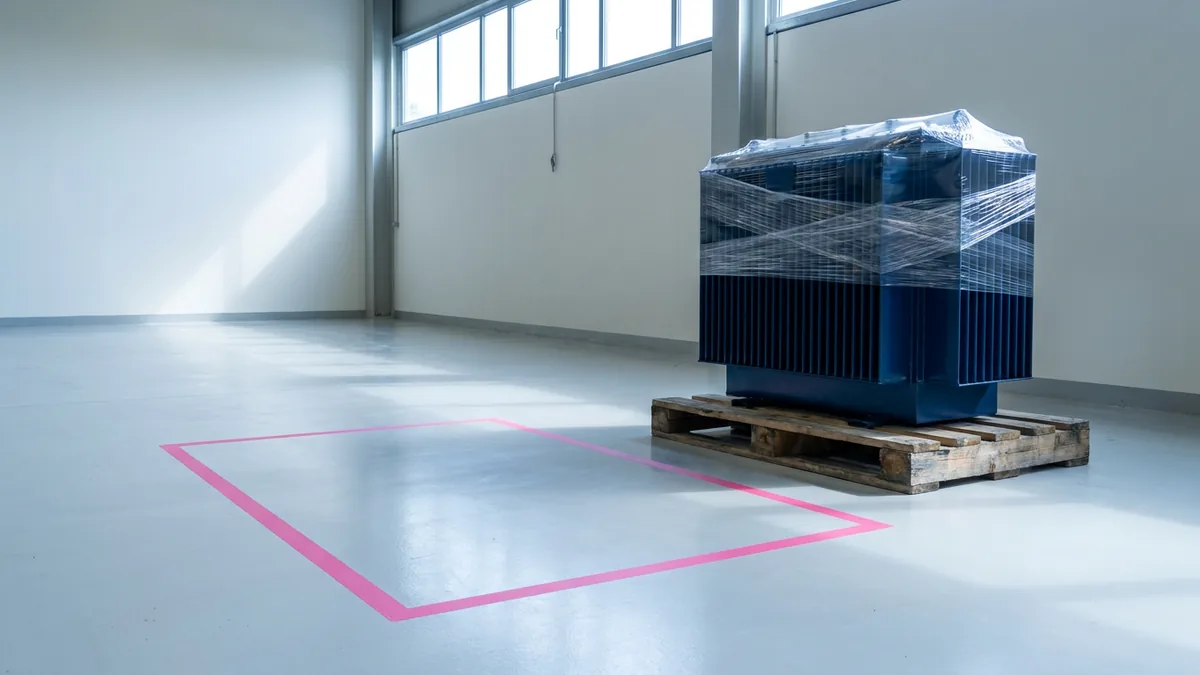
“A factory slot is a promise about time, not price. Name it, watch it being used and agree in advance who pays when the project moves.”
| Statistic | Source |
|---|---|
| FRED, updated November 13, 2026: the BLS producer price index for electric power and specialty transformer manufacturing (PCU335311335311) read 483.910 for October 2026, with June 1981 as 100. | FRED series PCU335311335311, 2026 |
| DOE, updated October 29, 2026: distribution transformer lead times went from three to six months in 2019 to 12 to 30 months in 2023. | DOE Office of Electricity, 2026 |
| DOE, July 2024: 36-month lead times commonly quoted for large power transformers; maximum lead times as much as 60 months. | DOE report to Congress, 2024 |
| DOE, July 2024, citing a 2020 Commerce survey: electrical steel and transposed copper wire are each roughly 25 percent of large power transformer production costs. | DOE report to Congress, 2024 |
| DOE, April 2014: copper and electrical steel are more than half of a large power transformer’s cost; about 1.3 units are built per design, per an industry source. | DOE transformer study, 2014 |
Rows come from different documents, transformer classes and periods; they are not compared or trended, and the index level is not read as a price change. No switchgear row appears because no official source acquired here gives a switchgear figure.
What does securing a switchgear or transformer factory slot involve?
Securing a factory slot means turning a place in a supplier’s build calendar into a dated commitment, tied to the project’s construction schedule, before the full order exists. This guide covers reservations and deposits, specification freeze, factory milestones and copper and electrical-steel indexation. Lifecycle cost belongs to the Journal’s guide to capital equipment TCO, and a supplier already short of capacity belongs to the Journal’s capacity-risk escalation method.
How long are transformer lead times, and what do the figures measure?
Read each published lead time as one equipment class at one date. In DOE’s report to Congress of July 2024, a large power transformer is defined as one rated 100 MVA or greater, and before the COVID-19 pandemic a large transformer could be ordered with a lead time of less than a year. According to the same report, a backed-up ordering queue or trouble obtaining key inputs may add further delay.
Read distribution transformer figures separately. On the Office of Electricity’s supply chain page, last updated October 29, 2026, DOE says supply and labor constraints and material shortages drove distribution transformer lead times from three to six months in 2019 to 12 to 30 months in 2023, its latest available data.
Do not trend these figures against each other or older studies; their equipment, dates and methods differ. Ask each bidder for a dated, written delivery window, ex-works or delivered, and the event that starts it, such as order acceptance or receipt of approved drawings, then back-schedule from the date the unit must be on site. No official source acquired here reports switchgear lead times, so none is stated.
What should a slot reservation agreement and deposit secure?
Judge a reservation by what it fixes in the factory calendar. In DOE’s July 2024 report on large power transformers, factories have a set number of build slots, usable for a large unit, a smaller transformer or a core refurbishment, and adding capacity is hard short of building a new plant. In this guide’s method, the agreement names the plant, production window, equipment class and the event that starts the delivery clock.
Ask for a cancellation-charge schedule by stage, from reservation only to core and coil in production, so the cost of releasing the slot is known on any date, and agree separately what a deferral costs. Treat a slot as real only once the factory holds the minimum specification, set by the owner’s engineer, that it needs to assign a production line and a test bed.
Agree exactly what a fee buys, such as a dated slot, queue priority or a materials pre-buy. In a refereed 2021 model by Shan, Dai, Men and Yang, capacity in a decentralized channel tends to be lower than in a centralized one, and a contract that shares sales revenue and compensates the supplier’s capacity cost can coordinate the channel. With examples from high-tech, apparel and organic agriculture in the model’s abstract, it is a rationale here, not evidence of practice.
One regulatory filing shows deposits planned years ahead. In Manitoba Hydro’s March 13, 2025 responses to the Public Utilities Board of Manitoba, the utility says suppliers will require deposits in 2025 for a 2029/30 need date, including for generator step-up transformers, with terms still under development.
Do not anchor a deposit to a percentage seen in market reports; no official source acquired for this guide sets one. Size it to what the supplier commits for the buyer, and secure it with an advance payment guarantee or standby letter of credit that reduces as payments are earned, plus title to paid materials marked at the factory, and have counsel review the security terms. Agree the capital approval and accounting treatment with finance before paying.
Record what the fee is credited against, when the reservation becomes an order and what a schedule slip on the buyer’s side triggers: deferral, transfer or release. Write the supplier’s side too: delay damages and their cap, and a right to terminate and recover the secured deposit if the slot slips beyond an agreed period. Have counsel review refund, forfeiture, transfer and termination terms.
Structure multi-unit programs separately. In DOE’s April 2014 study of large power transformers, multiyear blanket agreements lock in volumes and price points with one supplier for two to five years, and after the first unit, later ones can be built and shipped faster. List each project’s slot separately so one delay does not release the block, and keep the right to move a slot between sites.
Why freeze the specification and approve alternates early?
Freeze early what the factory needs to build, and send every technical choice to the owner’s engineer. On DOE’s distribution transformer supply chain page, the agency reports that a March 2023 workshop concluded the lack of consistent specifications across utilities is one contributing factor to longer production times, and that DOE identified over 80,000 distribution transformer varieties.
In the Energy Department’s 2014 grid transformer study, large power transformers are tailored to customers’ specifications and rarely interchangeable, with about 1.3 transformers built per design, according to an industry source. In this guide’s method, the owner’s engineer signs off the items frozen at reservation and the alternates approved for named components, and every later change carries the supplier’s written statement of its effect on slot and price.
Write the buyer’s own obligations into the order as well, such as a turnaround time for drawing approval, and state what a buyer-caused delay does to the slot, the index dates and the delay-damages clock.
Treat switchgear on its own terms. In this guide’s method, a switchgear slot is read as a production or assembly window for a configured product line unless the supplier confirms a unique design, and the owner’s engineer approves the line-up and named component alternates, such as breakers and protection relays, at the stage the freeze schedule sets.
Which factory milestones show that a reserved slot is being used?
Track milestones a buyer can witness, ending in a booked factory acceptance test. In DOE’s February 2022 supply chain deep dive, testing can take a week for a large power transformer, test space can limit output where a facility has only one or two test beds, and stakeholders put the build itself at 12 to 16 weeks on average if all the materials are available.
Put procurement on the inspection team. In the UN Environment Programme’s 2019 model specification for distribution transformers, the purchasing or contract department should preferably be represented during factory inspections, and authorized customer personnel should review and approve the supplier’s test protocol, including acceptance criteria. The owner’s engineer sets those criteria, and procurement checks dates and notices against the contract.
In this guide’s method, an inspection and test plan in the order lists hold points, where work stops until the buyer witnesses or waives in writing, and witness points, where the supplier may proceed after notice if the buyer does not attend.
Write inspection rights into the order. In the inspection terms of a 2023 tender by the Indian transmission utility Odisha Power Transmission Corporation for a 500 MVA transformer, the purchaser’s representative may inspect and test during manufacture, the supplier gives at least two weeks’ written notice, and the firm pays the inspectors’ expenses if a unit is not presented on the offered date.
Decide what the test result means commercially. In this guide’s method, passing the factory acceptance test releases the unit to ship and is not final acceptance, while a failure brings a retest at the supplier’s cost, no reset of the delivery date and a right to reject after failed retests. Tie each payment to a witnessed or evidenced milestone; more on payments is in the Journal’s method for milestone payments and acceptance.
How should copper and electrical-steel indexation be governed?
Index only the material content the supplier can evidence. In DOE’s 2014 transformer study, copper and electrical steel account for more than half of a large power transformer’s total cost, and currency and material price swings during manufacture can quickly change the bid price. Ask for the supplier’s cost breakdown before any weight enters a formula.
In the IEEMA price variation clause of September 2021 that the Odisha tender annexes, copper wire bars carry a weight of 32 and CRGO electrical steel laminations 27 of 100 parts, with base prices from a month before tender opening and current prices from two months before delivery. Under the tender’s own terms, increases are capped at 20 percent, more than 15 percent is allowed only in exceptional cases, decreases have no limit and late delivery is priced at the purchaser’s least-cost date.
In this guide’s method, state whether the reservation carries a firm price, an indexed price or a price set at order, and which events reset the base date. Ask for evidence of the supplier’s actual steel purchases.
Treat the steel index as the weakest term. In a 2019 Transformers Magazine column on commodity risk, the author writes that no globally accepted index exists for grain-oriented electrical steel and that escalation weightings should match the actual cost structure. In the same column, copper is put at roughly 10% of a transformer’s cost, a different scope from DOE’s large-unit figures, so ask for the supplier’s own breakdown.
Do not copy a transformer formula onto switchgear. In BEAMA’s October 2017 Standard Formulae, the large power transformer formula has separate terms for LME copper and a T&D Europe index for grain-oriented electrical steel, while the switchgear formulas use only labor and basic electrical equipment indices.
Use a finished-equipment index as a cross-check, not a substitute. On FRED’s page for the BLS producer price index for electric power and specialty transformer manufacturing, the index is monthly, not seasonally adjusted and set to 100 in June 1981, and all data are subject to revision. In this guide’s view, adding it to copper and steel terms would count materials twice. Name the series, base month and revision rule, and take caps, collars and reopeners from the Journal’s guide to escalation clause mechanics.
What belongs in a slot-reservation and milestone checklist?
Use the checklist below from reservation to delivery; it shows what to ask for, not what any supplier will accept.
| Control | What to record | Owner | Evidence to ask for |
|---|---|---|---|
| Slot | Plant, production window, equipment class, clock start | Category manager | Written slot confirmation |
| Fee or deposit | Amount, credit against the price, refund and forfeiture triggers | Category manager, finance and counsel | Signed terms, with no assumed percentage |
| Deposit security | Guarantee or letter of credit, reduction schedule, title to paid materials | Category manager with finance and counsel | Guarantee text and factory marking record |
| Conversion | Date and conditions for becoming an order | Project lead sets the trigger; category manager converts under delegated authority | Dated conversion notice and finance’s capital approval |
| Slip terms | Deferral, transfer or release | Category manager with counsel; project lead agrees | Clause text and notice periods |
| Specification freeze | Items fixed at reservation and at order | Owner’s engineer | Signed specification and change log |
| Approved alternates | Named components with pre-approved alternates | Owner’s engineer | Signed alternates list |
| Witness points | Stages agreed with the owner’s engineer | Owner’s engineer with procurement | Dated notices and inspection reports |
| Factory acceptance test | Test-bed date, approved protocol, repeat-test costs | Owner’s engineer | Protocol and booking confirmation |
| Index terms | Indices, weights, dates, caps, revision rule | Category manager with finance | Index publications and cost breakdown |
| Release and site acceptance | Release to ship after the test, retention, storage | Project lead with the owner’s engineer | Release note and site acceptance record |
This is this guide’s method, not an industry standard or legal template; agree fields and owners with the owner’s engineer, counsel and finance.
How will AI agents change long-lead equipment procurement?
Frequently asked questions
How long are lead times for large power transformers?
In DOE’s July 2024 report to Congress on large power transformers, 36-month lead times were commonly quoted for units of 100 MVA or greater, and maximum lead times reached as much as 60 months. Those are dated observations, not a quotation for any order, so ask each bidder for a dated delivery window.
Is a transformer slot reservation deposit refundable?
Treat it as refundable only if the signed agreement says so; no official source acquired for this guide sets a standard rule. In Manitoba Hydro’s March 13, 2025 filing with its regulator, the utility said its deposit terms for long-lead equipment were still under development. Secure any deposit with a guarantee or standby letter of credit, and have counsel review refund, forfeiture and credit terms.
Should a transformer price be indexed to copper and electrical steel?
In this guide’s method, index only the cost share the supplier can evidence, with indices, base dates and caps in writing. In a 2019 Transformers Magazine column by Ufuk Kivrak, the author writes that no globally accepted index exists for grain-oriented electrical steel. Have finance and counsel review the clause.
Sources
- Large Power Transformer Resilience: Report to Congress — U.S. Department of Energy, U.S. Department of Energy, Report to Congress, July 2024 (energy.gov PDF); read November 18, 2026, 2024. Current empirical evidence (official report): 36-month lead times commonly quoted and maximum lead times as much as 60 months for large power transformers; the 100 MVA definition; pre-pandemic lead times under a year; delays when the ordering queue is backed up or key inputs are hard to obtain; GOES and CTC copper wire each roughly 25 percent of production costs (2020 Commerce survey); factories have a set number of build slots and capacity cannot easily be expanded except by building a new facility.
- Coordinating a decentralized supply chain with capacity cost compensation — Feifei Shan; Xiaopei Dai; Jinqi Men; Feng Yang, RAIRO-Operations Research 55 (2021) S1789-S1802, EDP Sciences, DOI 10.1051/ro/2020056; published PDF on numdam.org; read November 18, 2026, 2021. Foundational evidence (peer reviewed journal): Capacity in a decentralized channel tends to be lower than in a centralized one, and a contract in which the retailer keeps a portion of sales revenue and compensates the manufacturer’s capacity cost can perfectly coordinate the channel; the model is framed on organic agriculture, apparel and high-tech firms.
- Manitoba Hydro Preliminary Estimate for Dispatchable Capacity Resource - Responses to Information Requests — Manitoba Hydro, Manitoba Hydro responses to Public Utilities Board of Manitoba information requests, dated March 13, 2025 (pubmanitoba.ca PDF); read November 18, 2026, 2025. Current empirical evidence (official report): Suppliers will require deposits in 2025 to meet a 2029/30 need date; deposits would be required for turbines, generators and generator step-up transformers; expected deposit terms under development.
- Supply Chain and Market Analysis — U.S. Department of Energy, Office of Electricity, U.S. Department of Energy, Office of Electricity web page, last updated October 29, 2026 (energy.gov); read November 18, 2026, 2026. Current empirical evidence (official report): Distribution transformer lead times from three to six months in 2019 to 12 to 30 months in 2023 (latest available data); a March 2023 workshop concluded that inconsistent specifications across utilities contribute to longer production times; over 80,000 distribution transformer varieties; page last updated October 29, 2026.
- Large Power Transformers and the U.S. Electric Grid (April 2014 Update) — U.S. Department of Energy, Office of Electricity Delivery and Energy Reliability, Infrastructure Security and Energy Restoration, U.S. Department of Energy, April 2014 update (energy.gov PDF); read November 18, 2026, 2014. Foundational evidence (official report): Copper and electrical steel account for more than half of a large power transformer’s total cost; large power transformers are tailored to customer specifications and rarely interchangeable, with approximately 1.3 transformers produced per design (industry source); multiyear blanket agreements lock in volumes and price points with one supplier for two to five years and speed later units; currency and material price swings during manufacture can change the bid price.
- Electric Grid Supply Chain Review: Large Power Transformers and High Voltage Direct Current Systems (Supply Chain Deep Dive Assessment) — U.S. Department of Energy, U.S. Department of Energy response to Executive Order 14017, February 24, 2022 (energy.gov PDF); read November 18, 2026, 2022. Historical evidence (official report): Testing can take a week for a large power transformer and 24 hours for other types; test space can limit output where a facility has only one or two test beds; building a large unit takes 12 to 16 weeks on average if all materials are available.
- Producer Price Index by Industry: Electric Power and Specialty Transformer Manufacturing (PCU335311335311) — U.S. Bureau of Labor Statistics; Federal Reserve Bank of St. Louis (FRED), FRED, Federal Reserve Bank of St. Louis, series page updated November 13, 2026 (source: U.S. Bureau of Labor Statistics); read November 18, 2026, 2026. Current empirical evidence (official report): Series identity and units (index June 1981 = 100, not seasonally adjusted, monthly); the October 2026 value of 483.910 as updated November 13, 2026; all data are subject to revision.
- Model Liquid Immersed Distribution Transformer Technical Specification (Procurement Guidelines) — United Nations Environment Programme - Global Environment Facility, United for Efficiency (U4E), UN Environment Programme - GEF United for Efficiency (U4E), supplement to the U4E Transformers Policy Guide, July 2019 (united4efficiency.org PDF); read November 18, 2026, 2019. Foundational evidence (official report): The purchasing or contract department is among the departments that should preferably be represented during factory inspections; the supplier’s FAT protocol, including acceptance criteria, should be reviewed and approved by authorized personnel on the customer side.
- Tender Specification No. Sr. G.M-CPC-500 MVA-ICT-45/2022-23: Procurement of one 500 MVA, 400/220 kV ICT (with Annexure-XV IEEMA price variation clause) — Odisha Power Transmission Corporation Limited (OPTCL), Central Procurement Cell, Odisha Power Transmission Corporation Limited (state-owned transmission utility, India), tender specification with bidding documents available January 20 to February 20, 2023 (optcl.co.in PDF); read November 18, 2026, 2023. Contextual evidence (official report): The purchaser’s right to inspect and test during manufacture, two weeks’ notice and the firm bearing costs if a unit is not presented for inspection; IEEMA weights of 32 for copper and 27 for CRGO laminations of 100, base prices one month before tender opening and current prices two months before delivery; increases limited to 20 percent, beyond 15 percent only in exceptional cases, no limit on decreases; least-cost date if delivery is late.
- BEAMA Indices, Issue 577 (October 2017), Section C: BEAMA Standard Formulae — BEAMA Ltd, BEAMA (UK electrotechnical trade association), BEAMA Indices Issue 577, October 2017, pages 33-35 (beama.org.uk PDF asset); read November 18, 2026, 2017. Foundational evidence (industry analysis): The large power transformer formula carries separate terms for the LME copper settlement price and a T&D Europe price index for GOES; the switchgear formulas use only the electrical labour and basic electrical equipment cost indices.
- Commodity risk management in transformer industry — Ufuk Kivrak, Transformers Magazine, Volume 6, Issue 2, 2019 (column, pages 52-58); PDF hosted by SCM Consulting at scmconsulting.ch; read November 18, 2026, 2019. Contextual evidence (practitioner article): No globally accepted index exists for GOES; escalation weightings should match the actual cost structure; copper is roughly 10% of a transformer’s cost.