Verify Supplier Technical Capability Before Award
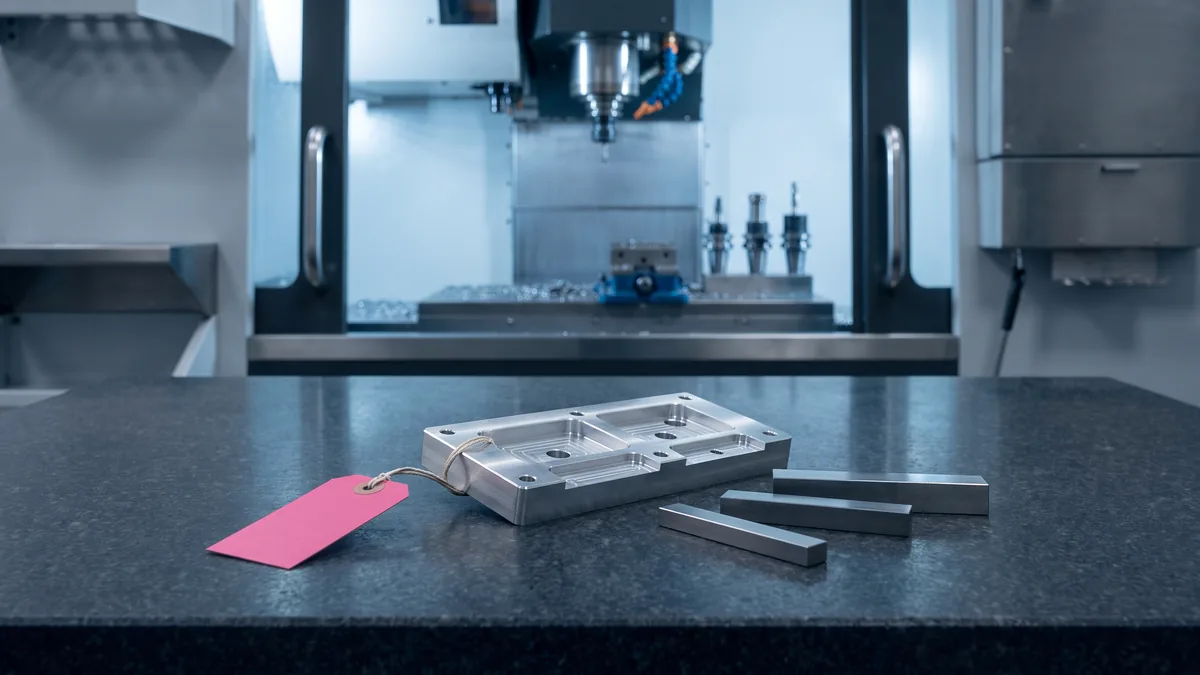
“An agent can read every certificate and capability study a supplier sends, but releasing production after a first article stays with the engineer who signs for the part.”
| Statistic | Source |
|---|---|
| First article testing and approval ensures that a contractor can furnish a product that conforms to all contract requirements for acceptance. | FAR Subpart 9.3 |
| DOD estimates that over 200,000 suppliers help produce its weapon systems and other goods, yet the federal government's primary procurement database shows little about whether parts suppliers are domestic or foreign. | GAO-25-107283, 2025 |
| A pre-award survey typically requires an on-site visit and can assess a prospective contractor's technical, production, quality and financial capabilities. | DoD M&Q Body of Knowledge, 2021 |
| Most process capability index estimates are valid only with a large enough sample, generally thought to be about 50 independent data values. | NIST/SEMATECH e-Handbook |
| Traceability alone does not guarantee fitness for purpose; the measurement uncertainty must be small enough for the need. | NIST traceability policy |
| Wear, mishandling, environmental factors and the way an instrument is used all affect its performance. | Ehrlich and Rasberry, 1998 |
Each row restates one source's own words or figures for its own scope; the rows are not comparable with one another.
Why isn't a certificate or directory listing enough to qualify a supplier?
In this guide's view, a certificate tells you which quality-system standard a supplier was audited against, not whether it can hold the tolerances on your drawing. Federal buyers treat those standards as contract requirements for complex or critical items: in FAR 46.202-4, the examples include ISO 9001, SAE AS9100 and ISO/TS 16949. The same rule names documentation control and advanced metrology among the technical requirements that make such standards necessary. Check that a certificate is current, names the producing site and covers the product or process you are buying.
In this guide's view, a directory listing or a certificate is the entry ticket to an evaluation, not its result. Use it to build the shortlist in a structured RFQ workflow, then ask each shortlisted supplier for evidence produced on comparable parts, in its own plant, by the people and equipment that would make yours.
What evidence shows a supplier can make the part?
In this guide's view, the strongest evidence is a part made on the production process and measured against every requirement. Under FAR Subpart 9.3, first article testing and approval ensures that a contractor can furnish a product that conforms to all contract requirements for acceptance. The rule says it may be appropriate for a product the contractor has not supplied before, or after changed processes or specifications, a long production pause or a problem with an earlier product. Solicitations must state the first article's relationship to the contract quantity, so in federal buying it follows award.
For a commercial buyer, split the evidence in two. Before award, ask for first article reports on comparable parts the supplier already makes. A first article on your own part number then comes either after award, as the gate to production release, or under a separately priced sample order placed before the volume award.
The same logic applies when a supplier moves work to another plant. In the Defense Department's manufacturing and quality guidance, first article inspections are expected when a product is built for the first time at any facility, and first article inspection and first article testing appear as separate activities, conducted as necessary. Ask for a report on your part number from the plant that will ship it, listing each drawing characteristic, its measured value and the gauge used, with material and special-process certificates and any functional tests the specification calls for.
When can first article testing be reduced or waived?
First article testing costs time, so before requiring it the contracting officer must weigh the impact on cost or delivery time, the risk of forgoing the test and whether less costly ways of ensuring quality exist. FAR Subpart 9.3 normally does not require it for products normally sold in the commercial market, or for products covered by complete and detailed specifications unless those requirements are so novel or exacting that conformance is questionable. In this guide's view, a part made to your drawing by a new source usually sits closer to the rule's first case, a product not supplied before.
A waiver can be reasonable when the supplier has already delivered identical or similar items that were accepted, a condition that the regulation requires solicitations to state. Before first article approval, the same subpart normally places material purchases and production at the contractor's sole risk. In this guide's view, a waiver or shortened first article is for quality and engineering to decide, and customer or design-authority requirements may rule it out. Agree in writing who pays for parts, tooling and samples made before approval.
How should a cross-functional team run an on-site capability review?
Visit the site that will make the part, with people who can judge what they see. In defense sustainment, the DoD guidance describes a pre-award survey under FAR 9.106 as an evaluation of a prospective contractor's capability to perform under the proposed contract. It typically requires an on-site visit and can assess technical, production, quality and financial capabilities, each with its own survey form.
A commercial team can mirror that split: an engineer for process and equipment, a quality lead for inspection and records, procurement for capacity and terms, and finance for the supplier's stability. Ask for a self-assessment and the key documents before the visit, so the visit verifies them instead of collecting them. Record what was observed separately from what was only described, and feed the result into a tiered supplier risk assessment so the depth of review follows the part's criticality.
On the floor, follow a comparable part from receiving to shipping. Pick a gauge at a machine and trace it to its calibration record, and follow a recent nonconformance through to closure. Use these checks to see how the quality system works on an ordinary day.
Which process and measurement data indicate scrap and defect risk?
Ask for capability data on comparable features, and read it with its assumptions. According to the NIST/SEMATECH e-Handbook, process capability compares the output of an in-control process with the specification limits using capability indices such as Cp and Cpk. The handbook notes that most index estimates are valid only if the sample is large enough, generally thought to be about 50 independent data values, and that capability studies in general need 100 or more. It also says the common indices assume normally distributed data.
In this guide's view, capability data shows what a process can hold, not how a supplier has performed or what it can hold at your volume, so also ask for a year of internal scrap, rework and first-pass yield on comparable parts and a few closed corrective-action reports, and judge the root-cause work. Before a volume award, ask for a run at the quoted rate on the intended equipment.
A capability index is only as good as the measurements behind it. The handbook's gauge study section sets out how to characterize gauges and instruments used in production in terms of the errors that affect measurements, including repeatability, reproducibility and stability. Ask whether the supplier has studied the gauges it would use on your critical features, and ask for the raw readings rather than one summary figure. Read the result against your part tolerance, and set acceptance criteria with your quality lead rather than taking the supplier's own threshold.
What should calibration and maintenance records show?
A calibration sticker shows that a check happened, not that it was good enough. NIST's traceability policy defines metrological traceability as an unbroken chain of calibrations to specified reference standards, and says the provider of a result must support a traceability claim while the user must assess whether it is valid. The policy also stresses that traceability alone does not guarantee fitness for purpose, because the uncertainty must be small enough for the measurement need. Treat the uncertainty on a calibration certificate as one input, and the gauge study as the in-use check.
Instruments also change between calibrations. In a peer-reviewed NIST paper on traceability over time, Ehrlich and Rasberry note that wear from frequency of use, mishandling, environmental factors such as corrosion and the way an instrument is used all affect its performance. They suggest setting recalibration intervals from control charts of routine checks against control standards. Ask how the supplier sets its gauge intervals and, when a gauge was last found out of tolerance, what it did about parts measured since the previous good calibration.
For the equipment that would run your part, ask for preventive-maintenance records and unplanned-downtime history, and for a machine capability study where the equipment is new or rebuilt.
How far below the first tier should verification go?
Expect to see little beyond your direct suppliers unless you ask. In a 2025 report, GAO found that the federal procurement database gives the Defense Department little visibility into where goods are made or whether materials and parts suppliers are domestic or foreign, though DOD estimates that over 200,000 suppliers help produce its weapon systems and other goods. Its visibility efforts were uncoordinated and gave little insight into most suppliers, including those that provide raw materials and parts.
Requiring disclosure has limits too: According to the GAO report, contractually requiring suppliers to disclose the information is one untested approach to more visibility into foreign dependency risks, and some DOD officials warned it may be too costly or that suppliers may not be willing to share. The DoD guidance calls for deciding whether surveillance is needed on critical products and processes made at a sub-tier supplier, especially those rated high or moderate risk. Keep routine lot traceability and certificates of conformance for every part, and scope deeper sub-tier disclosure to the critical materials and special processes you name.
What should a supplier capability verification register contain?
Use the register below to agree which evidence each check requires, what it cannot prove and what stays on hold until it arrives. Scale the depth to the part: a commodity item may need only the first rows, while a safety-critical or novel part needs all of them.
| Check (owner) | Evidence to request | What it does not prove | Hold until complete |
|---|---|---|---|
| Shortlist (procurement) | Quality-system certificate with its scope, site and issuing body; directory or reference data | That the supplier can hold your tolerances | Invitation to quote |
| Desk review and site visit (engineering, quality, procurement, finance) | Self-assessment and key documents before the visit; findings from walking a comparable part, a gauge and a nonconformance on site | Performance on your part number | Award |
| Performance history and capacity (quality, procurement) | Internal scrap, rework and first-pass yield on comparable parts; closed corrective actions; a run at the quoted rate | Results on a new design or a new process | Volume award |
| Measurement system (quality) | Gauge study results for the gauges used on critical features, read against your tolerance | That the process itself is capable | Acceptance of capability data |
| Calibration and maintenance (quality, engineering) | Calibration certificates showing traceability and uncertainty; recalibration intervals and out-of-tolerance actions; machine maintenance records | Fitness for your tolerances if the uncertainty is too large | Acceptance of capability data and first article |
| Process capability (engineering, quality) | Raw measurements and capability indices on comparable features, with sample size and stability evidence | Results on a new design or a new process | Award for critical features |
| First article (quality, engineering) | Report on your part from the shipping facility: every drawing characteristic, material and special-process certificates, functional tests where specified | Consistency across later lots | Production release |
| Sub-tier traceability (quality, procurement) | Lot traceability for every part; named sources and certificates for critical materials and special processes; contractual change notification | Visibility into every lower-tier component | Production release for critical items |
| Customer or design-authority approval (regulated sectors) | Approval of the new source where the customer or design authority requires it | Technical capability on its own | Shipment to that customer |
An authored register for planning, not a standard or a universal sequence; set the rows and holds with your engineering, quality and legal owners for each part.
How do AI agents change supplier capability verification?
Frequently asked questions
What is first article inspection in supplier qualification?
It is a check of a part made on the production process against every drawing requirement before production quantities are released. Under FAR Subpart 9.3, first article testing and approval ensures that a contractor can furnish a product that conforms to all contract requirements for acceptance. The DoD guidance lists first article inspection and first article testing separately, conducted as necessary. A commercial buyer can apply the same idea when a supplier, site or process is new.
Is an ISO 9001 certificate proof of supplier capability?
Not by itself. FAR 46.202-4 treats ISO 9001 and similar standards as quality-system requirements a buyer can impose for complex or critical items, so they describe a management system rather than the ability to make a specific part. Pair the certificate with capability data, measurement records and a first article.
How many data values does a valid process capability index need?
According to the NIST/SEMATECH e-Handbook, most capability index estimates are valid only if the sample is large enough, generally thought to be about 50 independent data values, and capability studies in general need 100 or more. The common indices also assume normally distributed data from an in-control process, so check stability before trusting the number.
Does a calibration certificate prove a supplier's measurements are good enough?
Not on its own. NIST's traceability policy says traceability alone does not guarantee fitness for purpose, because the uncertainty must be small enough for the measurement need. Compare the stated uncertainty with the tolerances on your drawing.
Sources
- FAR Subpart 9.3 First Article Testing and Approval — FAR Council (General Services Administration, Department of Defense, NASA), Acquisition.gov (U.S. General Services Administration), 2026. Contextual evidence (official report): Purpose of first article testing, when it is appropriate, exceptions, the waiver condition for previously accepted similar supplies and the contractor's risk before approval.
- FAR 46.202-4 Higher-level contract quality requirements — FAR Council (General Services Administration, Department of Defense, NASA), Acquisition.gov (U.S. General Services Administration), 2026. Contextual evidence (official report): Quality-system standards (ISO 9001, SAE AS9100, ISO/TS 16949) as contract requirements for complex or critical items, and the controls they address.
- Manufacturing and Quality Body of Knowledge (M&Q BoK), Chapter 6: Operations and Support (O&S) Phase — Office of the Under Secretary of Defense for Research and Engineering, U.S. Department of Defense, 2021. Contextual evidence (official report): Pre-award surveys with on-site visits across technical, production, quality and financial capability; first article inspections at new facilities; surveillance of critical items made at sub-tier suppliers.
- NIST/SEMATECH e-Handbook of Statistical Methods, 6.1.6 What is Process Capability? — NIST Information Technology Laboratory and SEMATECH, National Institute of Standards and Technology, 2026. Contextual evidence (official report): What capability indices compare, the approximate sample size for valid estimates and the normality assumption.
- NIST/SEMATECH e-Handbook of Statistical Methods, 2.4 Gauge R & R studies — NIST Information Technology Laboratory and SEMATECH, National Institute of Standards and Technology, 2025. Contextual evidence (official report): Purpose of gauge studies and the variability components they examine.
- NIST Policy on Metrological Traceability — NIST Physical Measurement Laboratory, Calibration Services, National Institute of Standards and Technology, 2024. Contextual evidence (official report): Definition of metrological traceability, who supports and who assesses a traceability claim, and why traceability alone does not establish fitness for purpose.
- Defense Industrial Base: Actions Needed to Address Risks Posed by Dependence on Foreign Suppliers (GAO-25-107283) — U.S. Government Accountability Office, 2025. Current empirical evidence (official report): Supplier tiers, limited visibility into lower-tier and parts suppliers, the scale of DOD's supplier base and the cost and willingness limits of contractual disclosure.
- Metrological Timelines in Traceability — Charles D. Ehrlich; Stanley D. Rasberry, Journal of Research of the National Institute of Standards and Technology, 103(1):93-105 (PubMed Central copy), 1998. Foundational evidence (peer reviewed journal): Why instruments change over time, factors that affect instrument performance and setting recalibration intervals from control charts.